You just finished your acupuncture session, feeling relaxed and hopeful. Then you notice a small dark spot on your forearm or ankle. Bruising from acupuncture is one of the most common questions patients ask after their first few treatments, and the concern is completely understandable. Most of the time, it is not a sign that something went wrong.
This article covers what causes bruising after acupuncture, the bruising medical term behind it, who is more likely to experience it, how long it typically lasts, and the specific signs that should prompt you to call a healthcare provider. You will also learn how to tell the difference between a routine needle site reaction and something that needs more attention, including unrelated concerns like spider bite symptoms or swollen fingers that patients sometimes confuse with post-treatment bruising.
Key Takeaways
- Bruising from acupuncture occurs in roughly 3 to 5 percent of treatments and is considered a minor, expected side effect.
- The bruising medical term for this type of skin discoloration is ecchymosis, which refers to blood leaking into surrounding tissue from a tiny vessel.
- Small bruises typically resolve within 5 to 10 days and often respond well to a cold compress in the first 24 hours.
- People who bruise easily, take anticoagulants, or use supplements like fish oil, ginkgo, or vitamin E face a higher risk of post-needling bruises.
- Certain symptoms, including spreading redness, red streaks, fever, or signs resembling spider bite symptoms, are not normal and require prompt medical attention.
- Swollen fingers or persistent swelling near a needle site that does not improve within two weeks should be evaluated by a provider.
- Tetanus symptoms such as jaw stiffness, muscle spasms, or difficulty swallowing after any skin puncture are a medical emergency.
Are Bruising and Marks From Acupuncture Normal? Here Is What the Research Says

Bruising from acupuncture is well-documented in systematic reviews of acupuncture safety. It ranks among the most frequently reported minor adverse effects, alongside temporary soreness and occasional lightheadedness. The good news is that these small subcutaneous hemorrhages are not dangerous for most people and resolve on their own without treatment.
Clinically, bruising at a needle site is classified under the bruising medical term ecchymosis, which simply describes blood that has leaked from a small, damaged vessel into the surrounding tissue. This is different from a systemic clotting problem. A single bruise after a needle session is a localized event, not a signal that your blood is not clotting properly, unless you are noticing large, frequent bruises appearing without any clear trigger across your body.
The areas most prone to post-needling bruising are spots where veins run close to the skin surface. Think hands, forearms, ankles, and shins. If your practitioner works points in those zones, a small bruise is more likely, not because of poor technique, but because of anatomy.
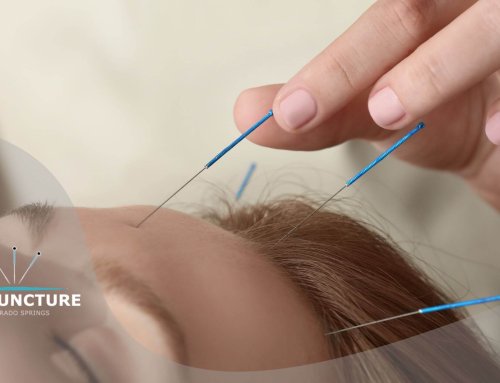
Not every mark is a bruise, and most people have no visible marks at all after a session. When marks do appear, small red dots at needle sites are the most common reaction and usually fade within a few hours. Some patients notice a light pink or faintly reddish tint around needle sites, which reflects increased local circulation. The face carries a higher risk of minor bruising than some other areas because facial skin is thinner and more vascular.
Why Bruising From Acupuncture Happens and Who Is at Higher Risk for Bruising Easily
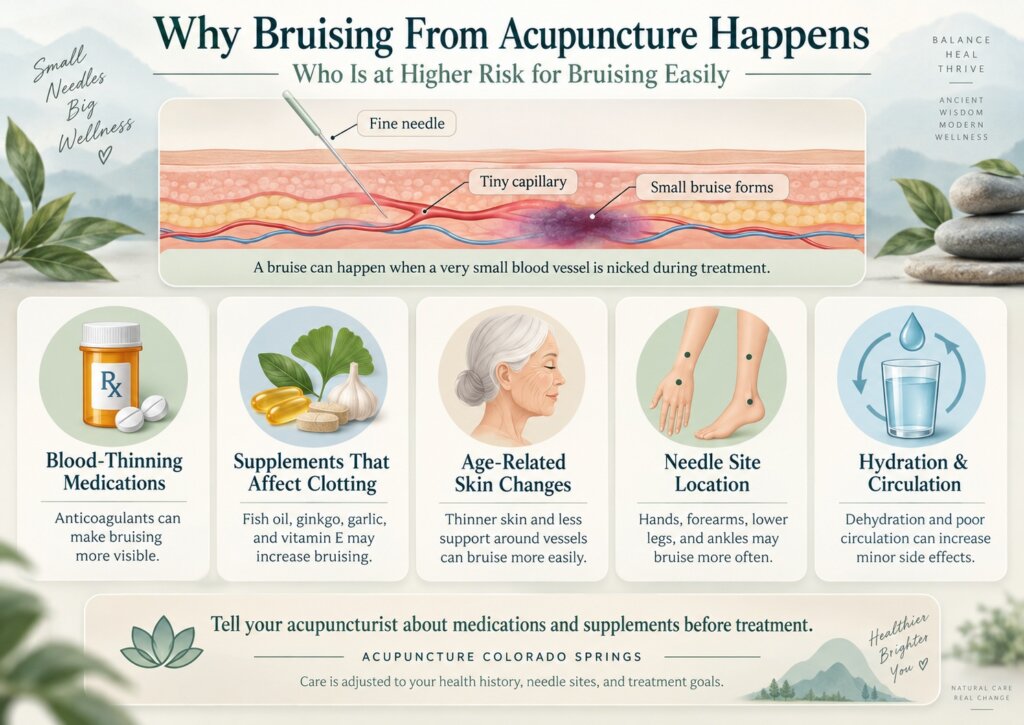
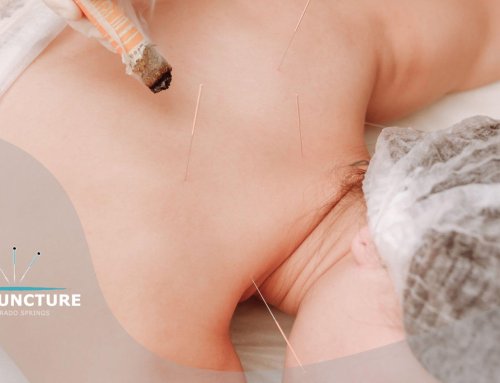
Acupuncture needles are extremely fine, far thinner than the needles used for blood draws or injections. Even so, they do pass through skin and occasionally nick a tiny capillary or small vein. When that happens, a small amount of blood seeps into the tissue beneath the skin, creating the discoloration you see. This is the same basic mechanism behind any minor bruise from a bump or pressure.
Some people bruise easily regardless of acupuncture. If you already notice bruises appearing from minor contact, you may see them more often after needling. Several factors increase that tendency.
1. Blood-Thinning Medications
Prescription anticoagulants like warfarin or newer blood thinners reduce your blood’s ability to clot quickly after a vessel is nicked. Even a tiny needle puncture can result in a more visible bruise. Always tell your acupuncturist what medications you take before your session begins.
2. Common Supplements That Affect Clotting
Fish oil, ginkgo biloba, garlic supplements, and high-dose vitamin E are all associated with increased bleeding time. Many patients take these daily without realizing they affect how easily they bruise. Your practitioner needs to know about supplements, not just prescriptions.
3. Age-Related Skin Changes
As skin thins with age, the connective tissue supporting blood vessels becomes less protective. Older adults often find they bruise more easily from any minor trauma, including acupuncture needles. This does not mean acupuncture is unsafe for older patients, it just means the practitioner should be aware.
4. Needle Site Location
Points on the hands, forearms, lower legs, and ankles have more superficial veins than areas like the back or thigh. Bruising from acupuncture is simply more likely in these zones. A skilled practitioner adjusts technique based on the area being treated.
5. Hydration and Circulation Status
Dehydration and poor peripheral circulation can make veins more fragile and harder to avoid. Colorado Springs’ dry, high-altitude climate means many patients arrive mildly dehydrated without realizing it. Drinking water before your appointment is a practical step that can reduce minor side effects.
At Acupuncture Colorado Springs, David W. Armstrong, L.Ac., reviews your health history, current medications, and supplement use before every session. This intake process helps us adjust needle placement, depth, and technique to minimize the risk of bruising while still reaching the points your treatment plan requires. If you are curious about how we approach your first visit, you can learn more about what acupuncture involves or book a consultation to talk through your concerns directly.
How Long Does Bruising From Acupuncture Last and What Helps It Heal
Most bruises from acupuncture clear within 5 to 10 days. The timeline depends on the size of the bruise, the location on your body, and your individual healing rate. Smaller bruises on the limbs tend to fade faster than larger ones in areas with less circulation.
Here is a simple comparison of what is typical versus what warrants a closer look.
| Feature | Typical Post-Acupuncture Bruise | Bruise That Needs Evaluation |
|---|---|---|
| Size | Small, dime to quarter-sized | Large or rapidly expanding |
| Color progression | Dark purple to yellow-green, then fades | Stays dark red or grows darker |
| Pain level | Mild tenderness at most | Severe or worsening pain |
| Timeline | Resolves in 5 to 10 days | Persists beyond two weeks |
| Surrounding skin | Normal color and texture | Red streaks, warmth, or swelling spreading outward |
| Systemic symptoms | None | Fever, chills, or muscle spasms present |
For a fresh bruise, applying a cold compress during the first 24 hours can reduce swelling and limit the spread of blood under the skin. After 48 hours, gentle warmth may help the tissue reabsorb the pooled blood more quickly. Avoid massaging the bruise directly in the first day or two, as that can worsen discoloration.
When Bruising From Acupuncture Crosses Into Warning Territory: Swollen Fingers, Spider Bite Symptoms, and More
Most bruises after acupuncture are nothing more than a cosmetic nuisance. But patients sometimes notice other symptoms near a needle site and wonder whether they are connected. Knowing the difference between a healing bruise and a sign of something more serious is genuinely useful.
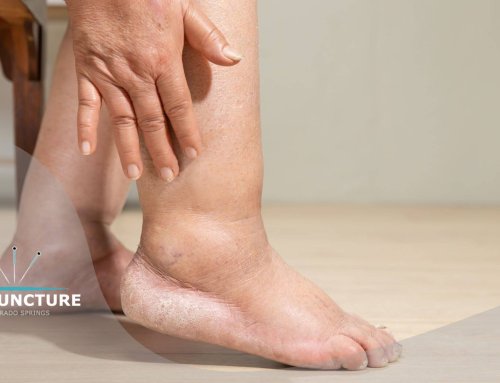
You might be wondering whether swelling near the needle site is normal. Mild puffiness directly at the puncture point can occur and usually settles within a day. Swollen fingers or persistent swelling in the hand that does not improve within a few days, especially if accompanied by warmth, redness, or pain that is getting worse rather than better, should be evaluated. Swollen fingers have many causes ranging from minor injury and heat to gout, infection, or circulation issues, and a provider can help identify which applies to your situation.
Spreading redness, red streaks moving away from the needle site, growing pain, or a wound that appears to be breaking down are not typical bruising. These signs can resemble spider bite symptoms, particularly those associated with more serious bites that cause tissue damage. If you see red streaks radiating outward from any skin puncture, fever developing alongside it, or severe muscle cramps, that warrants urgent medical care, not a wait-and-see approach.
One concern that occasionally comes up in conversations about skin punctures is tetanus. Tetanus symptoms develop days after a wound and look nothing like a bruise. They include jaw muscle stiffness often called lockjaw or trismus, neck and back rigidity, painful generalized muscle spasms, difficulty swallowing, and in severe cases, breathing problems. These are distinct from anything you would experience after a routine acupuncture session. Licensed acupuncture clinics in Colorado use sterile, single-use needles for every patient, which eliminates the contamination risk associated with tetanus. If you ever experience jaw stiffness or muscle spasms after any skin injury, seek emergency care immediately.
Our clinic follows all Colorado state safety and hygiene regulations, including the exclusive use of sterile, single-use needles. We never reuse needles, and all sharps are disposed of properly after each session. This is a non-negotiable standard of practice, not an optional add-on.
Practical Steps to Reduce Bruising From Acupuncture Before and After Your Session
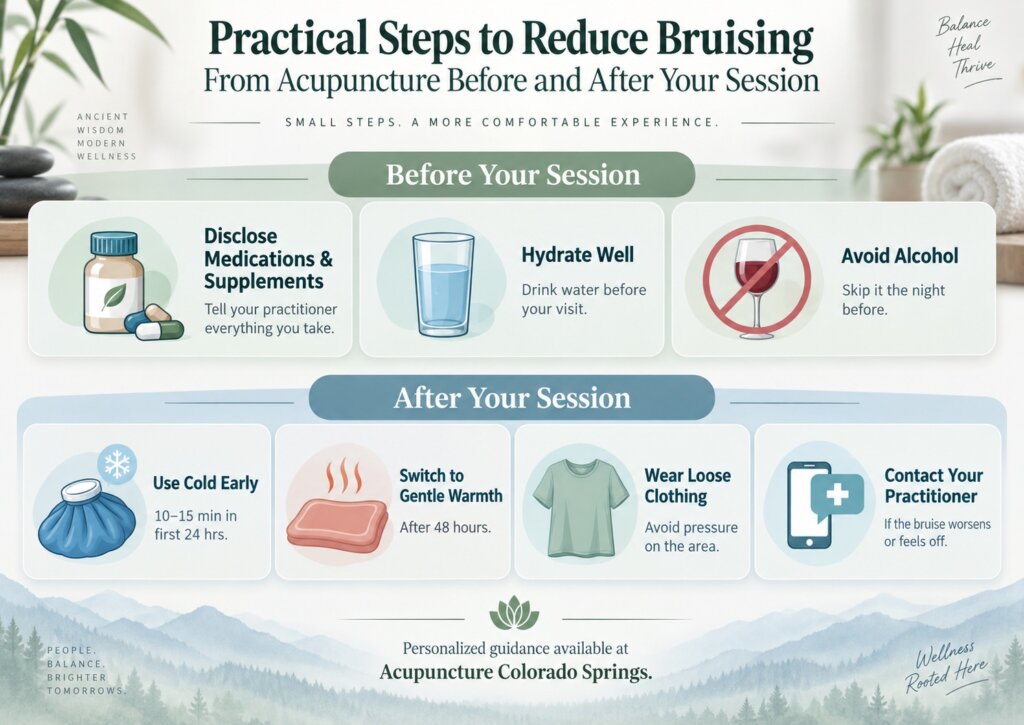
There are things you can do before and after treatment to lower your chances of bruising and support faster healing if a bruise does appear.
1. Disclose All Medications and Supplements
Tell your practitioner about every medication and supplement you take, including fish oil, ginkgo, garlic, and vitamin E. This information directly shapes how your treatment is planned.
2. Hydrate Well Before Your Appointment
Drink water in the hours before your session. In Colorado Springs’ dry climate, staying hydrated keeps your tissues and vessels in better condition going into treatment.
3. Avoid Alcohol the Night Before
Alcohol temporarily thins the blood and can increase bruising risk. Skipping it the evening before your appointment is a small step that makes a difference.
4. Apply Cold Immediately After Noticing a Bruise
If you see a bruise forming within the first few hours after your session, apply a cold compress for 10 to 15 minutes. Do this a few times in the first 24 hours to limit swelling.
5. Switch to Gentle Warmth After 48 Hours
Once the bruise is established, a warm compress can help your body reabsorb the pooled blood. Apply it gently for short periods a few times per day.
6. Avoid Tight Clothing Over the Area
Compression from tight sleeves, socks, or waistbands over a bruised area can slow circulation and delay healing. Wear loose, comfortable clothing around needle sites while the bruise resolves.
7. Contact Your Practitioner if Something Feels Off
If the bruise is expanding, the skin around it is getting warmer, or you are developing any systemic symptoms, reach out to your practitioner or a medical provider. Do not wait two weeks to mention something that is worsening.
If you are managing a chronic condition, taking multiple medications, or simply new to acupuncture and unsure what to expect, our team at Acupuncture Colorado Springs is glad to walk through your health picture before your first needle is placed. We offer personalized consultations that cover your full health history, current supplements, and treatment goals. You can reach us directly or schedule your first appointment online.
What Bruising From Acupuncture Tells You About Your Body and Your Treatment
A bruise after acupuncture is not a sign that the treatment failed or that your practitioner made an error. In Traditional Chinese Medicine, some practitioners view minor bleeding at a needle site as a signal that the point was active and that qi and blood were engaged in that area. Western physiology explains it more simply as a capillary nick. Either way, the outcome is the same: a small, temporary mark that heals on its own.
What bruising can tell you is useful information about your body. If you bruise easily and frequently, that pattern is worth discussing with both your acupuncturist and your primary care provider. Frequent, large, or unexplained bruises unrelated to treatment may point to nutritional gaps, medication effects, or conditions affecting how blood vessels function. Bruising easily is not always just a cosmetic issue, and a root-cause approach to understanding it can be worthwhile.
At our clinic, we do not treat bruising as an isolated event. We look at the full picture, your circulation, your diet, your stress load, your sleep, and how your body responds to treatment over time. That kind of individualized attention is what separates a personalized care plan from a generic one. If you are in the Colorado Springs area and want care that takes your whole health history seriously, we would be glad to be part of that conversation. Explore our full range of services, including acupuncture, cupping therapy, and Chinese herbal medicine guidance, to find what fits your needs.
Final Thoughts on Bruising From Acupuncture
Bruising from acupuncture is common, usually minor, and resolves within a week or two for most people. Knowing the difference between a normal bruise and symptoms that need medical attention, like spreading redness, swollen fingers that worsen, spider bite-like skin changes, or tetanus symptoms, gives you the confidence to make informed decisions about your care. When treatment is delivered by a licensed, experienced practitioner using sterile technique, acupuncture remains one of the safest options available for pain relief, stress support, and whole-body wellness.
Acupuncture Colorado Springs is led by board-certified acupuncturist David W. Armstrong, L.Ac. He uses sterile, single-use needles and personalized techniques to minimize bruising risks. Get started today—call us!
FAQs
Is bruising from acupuncture normal?
Yes, small bruises can occur after acupuncture and are generally considered a minor, expected side effect. They usually happen when a fine acupuncture needle nicks a tiny capillary or blood vessel beneath the skin.
How long does bruising from acupuncture last?
Most acupuncture bruises fade within about 5 to 10 days. The exact healing time can depend on the size and location of the bruise as well as your individual healing rate.
Why do I bruise after acupuncture?
Bruising occurs when an acupuncture needle contacts a small blood vessel and a small amount of blood leaks into the surrounding tissue. Areas with superficial veins, such as the hands, forearms, ankles, and lower legs, may be more prone to bruising.
What is the medical term for bruising after acupuncture?
The medical term for this type of bruising is ecchymosis. It describes discoloration caused by blood leaking from a small damaged blood vessel into nearby tissue.
Who is more likely to bruise from acupuncture?
People who naturally bruise easily may notice acupuncture bruises more often. The risk may also be higher for older adults and people taking blood-thinning medications or supplements that can affect clotting.