You scheduled your first acupuncture appointment. Maybe you have chronic lower back tension, stress that won’t quit, or persistent discomfort around the acupuncture points for back pain that no amount of stretching seems to fix. Then the question creeps in: does acupuncture hurt? It is one of the most common concerns people bring to our clinic, and it deserves a straight, honest answer.
This article breaks down exactly what sensations are normal during and after acupuncture treatment, what post-session soreness typically looks like, and which symptoms deserve a closer look from your practitioner. Whether you are curious about foot acupuncture points, wondering about acupuncture points on lower back treatment, or just trying to decide if this therapy is right for you, you will find clear answers here.
Key Takeaways
- Acupuncture needles are hair-thin and solid, designed to pass between tissues rather than cut through them.
- A mild ache, heaviness, or tingling at the needle site is a normal therapeutic response called de qi.
- Soreness lasting 24 to 48 hours after treatment is common and generally not a cause for concern.
- Sharp, persistent, or worsening pain during or after a session is not typical and should be reported immediately.
- Serious complications from acupuncture are rare when treatment is performed by a licensed, board-certified practitioner using sterile, single-use needles.
- Knowing the difference between normal and abnormal responses helps you get more from each session and stay safe throughout your care plan.
Does Acupuncture Hurt? What Normal Sensations Feel Like
The short answer is that acupuncture is not meant to be painful. According to Kaiser Permanente, acupuncture needles go between tissues rather than through them, which is why most people feel far less than they expect. Houston Methodist notes that these needles are solid and hair-thin, much smaller than the hypodermic needles used for injections or blood draws, and the experience is typically described as mild dullness, heaviness, or tingling rather than sharp pain.
That tingling or heavy sensation has a name in Traditional Chinese Medicine: de qi. It signals that the needle has engaged the acupuncture point and that Qi, or the body’s functional energy, is responding. Most patients describe it as something between a mild pressure and a gentle pulse.
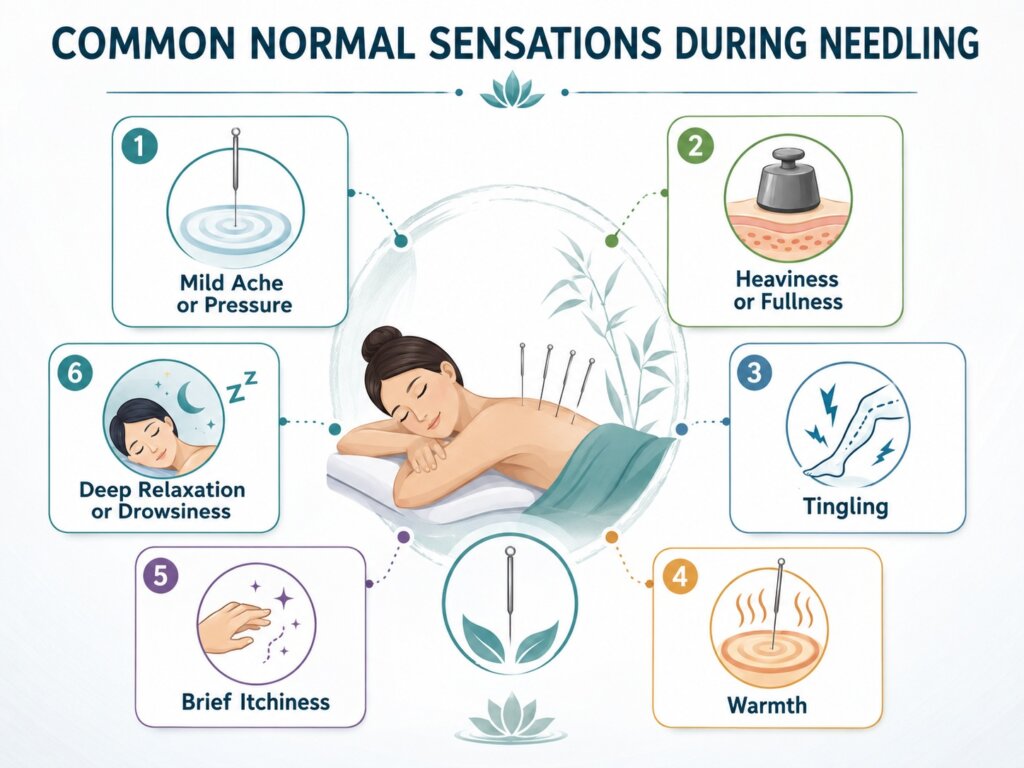
East-West Healing Solutions describes the full range of normal needle sensations this way: a brief ache, warmth, itchiness, or a feeling no worse than a light mosquito bite. These sensations usually settle within seconds of needle placement. If they do not, your practitioner can adjust the needle depth or angle immediately.
Common Normal Sensations During Needling
- Mild ache or pressure at the insertion site, especially near active acupuncture points for low back pain or foot acupuncture points
- Heaviness or fullness in the surrounding tissue
- Tingling or a light electric sensation that may travel along the limb
- Warmth spreading from the needle site
- Brief itchiness that fades within moments
- Deep relaxation or drowsiness during the session
None of these sensations should feel alarming. They are signs the treatment is working. The moment something feels sharp, burning, or genuinely uncomfortable, speak up. A good practitioner will adjust right away, and that is exactly what we do at every session.
Post-Treatment Soreness Around Acupuncture Points for Back Pain: What to Expect
Now let’s talk about what happens after the needles come out. Post-treatment soreness is one of the most misunderstood parts of acupuncture care, and it causes unnecessary worry for a lot of patients. Understanding it ahead of time makes the whole experience easier to navigate.
It is fairly common to feel mild soreness, bruising, or tenderness at needle sites for up to 24 to 48 hours after a session. This is especially true when treating acupuncture points on lower back tissue, where the muscles are dense and often already holding tension. Think of it like the mild soreness you feel the day after a good stretch or a therapeutic massage. The tissue was engaged, and now it is integrating.
Some patients also notice light fatigue or a feeling of being emotionally wrung out after their first few sessions. This is not unusual. The body is recalibrating, and rest is part of that process. Drinking water, avoiding strenuous activity for the remainder of the day, and eating a light meal before your appointment all help reduce post-session fatigue.
| Sensation | Normal or Not? | What to Do |
|---|---|---|
| Mild ache or heaviness during needling | Normal (de qi response) | Breathe through it; let your practitioner know if it intensifies |
| Tenderness at needle sites for 1–2 days | Normal post-treatment response | Apply a cool compress if needed; rest |
| Light bruising at the site | Usually normal, especially on thin-skinned areas | Monitor; mention it at your next visit |
| Fatigue or emotional release after session | Normal, especially in early treatment | Rest, hydrate, avoid overexertion |
| Sharp or burning pain during needling | Not normal | Tell your practitioner immediately |
| Worsening pain or swelling after 48 hours | Not normal | Contact your practitioner or seek medical attention |
| Signs of infection at needle site | Not normal | Seek medical attention promptly |
At Acupuncture Colorado Springs, David W. Armstrong, L.Ac., walks every new patient through what to expect before the first needle is placed. That conversation alone reduces a lot of post-session confusion and helps patients distinguish between the body healing and something that actually needs attention.
Red Flags: When Acupuncture Hurt Goes Beyond Normal
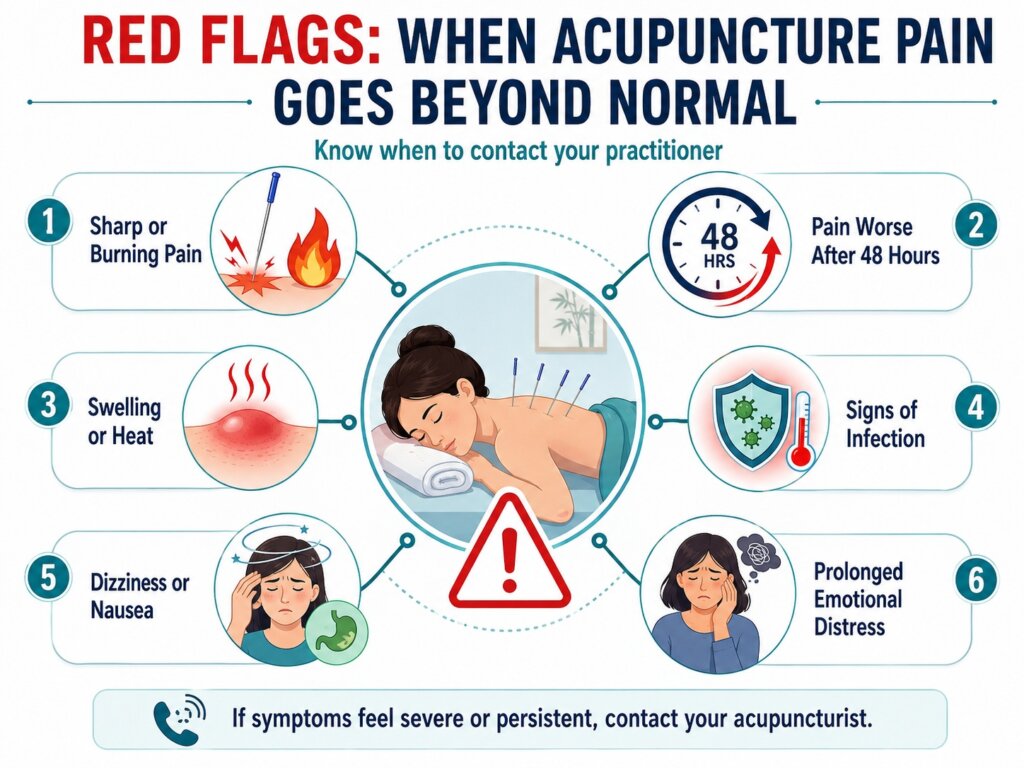
Most people tolerate acupuncture well. A 2023 overview of systematic reviews published in Frontiers in Pharmacology found that while acupuncture is generally safe, the most common adverse effects are transient pain at the needle site, minor bleeding or bruising, dizziness, and small hematomas. Serious complications like organ puncture or infection are rare, particularly when treatment is performed by a qualified, licensed practitioner using sterile, single-use needles.
That said, certain symptoms after acupuncture warrant prompt attention. You might be wondering what exactly crosses the line from normal soreness into a red flag. Here is what to watch for.
1. Sharp or Burning Pain During the Session
A needle placed correctly should not produce a sharp, stabbing, or burning sensation. If it does, this may indicate the needle has contacted a nerve or blood vessel and needs immediate repositioning. Tell your practitioner right away rather than waiting it out.
2. Pain That Worsens After 48 Hours
Normal post-treatment soreness fades within one to two days. If tenderness around the acupuncture points for low back pain or other treated areas is getting worse rather than better after 48 hours, that is worth reporting. It could indicate an unusual tissue response or a need to adjust your treatment protocol.
3. Significant Swelling or Heat at the Needle Site
Minor bruising is common. Significant swelling, warmth, or redness that spreads beyond the needle site is not. These can be early signs of a localized inflammatory response and should be evaluated.
4. Signs of Infection
Infection from acupuncture is rare when sterile, single-use needles are used, but it is not impossible. Pus, increasing redness, or fever following a session are signs that require medical attention, not a wait-and-see approach.
5. Dizziness, Fainting, or Nausea During Treatment
Some patients feel lightheaded during their first session, particularly if they came in on an empty stomach or are especially anxious. Mild dizziness that passes quickly is manageable. Fainting, prolonged nausea, or a sudden drop in blood pressure are less common and need to be addressed immediately by your practitioner.
6. Prolonged Emotional Distress After a Session
Acupuncture can bring up emotional responses, especially when treating acupressure points for back pain that carry stored tension. A brief wave of emotion is normal. Prolonged anxiety, mood disruption, or emotional instability lasting more than a day or two after treatment is worth discussing with your practitioner so the approach can be adjusted.
If you experience any of these red flags, the right move is to contact your acupuncturist directly. At our clinic, patients can always reach out between sessions if something feels off. That open line of communication is part of how we keep care safe and responsive.
Why Practitioner Skill Matters for Acupuncture Points on Lower Back and Foot Acupuncture Points
Not all acupuncture experiences are equal. The skill, training, and attentiveness of your practitioner make a significant difference in how treatment feels and how your body responds. Areas like foot acupuncture points and acupuncture points on lower back tissue tend to be more sensitive, and they require precise needle placement and depth to produce therapeutic results without unnecessary discomfort.
Harvard Health reports that acupuncture can relieve multiple pain conditions, citing a 2021 study showing benefits for low back pain lasting up to two years after treatment, likely through endorphin release and changes in serotonin pathways in the brain. Those results depend on accurate point selection and proper technique, not just the number of needles used.
This is where personalized care makes a real difference. At Acupuncture Colorado Springs, every treatment plan is built around your specific health history, pain patterns, and goals. David Armstrong does not follow a generic needle protocol. He assesses which acupuncture points for back pain are most relevant to your presentation, adjusts needle depth based on tissue type and sensitivity, and monitors your response throughout the session. If you are dealing with chronic tension around the acupuncture points for low back pain or sensitivity at foot acupuncture points, that context shapes how treatment is delivered from the start.
If you are ready to experience acupuncture that is genuinely tailored to your body, we invite you to book an appointment at our Colorado Springs clinic. We serve patients throughout El Paso County, including Manitou Springs, Old Colorado City, and Woodland Park.
How to Reduce Discomfort and Support Recovery After Acupuncture Treatment
There are practical steps you can take before and after each session to minimize soreness and help your body integrate the treatment more smoothly. These are not complicated, but they make a noticeable difference, especially in the early weeks of a new care plan.
1. Eat a Light Meal Before Your Appointment
Coming in on an empty stomach increases the chance of lightheadedness or nausea during treatment. A small meal or snack about an hour before your session helps stabilize your blood sugar and keeps your nervous system calm.
2. Stay Hydrated Before and After
Colorado Springs’ dry, high-altitude climate already puts extra demand on your hydration. Drinking water before and after your session supports circulation and helps the body clear any metabolic byproducts released during treatment.
3. Rest After Your Session
Avoid intense exercise or demanding physical work on the same day as your appointment. The body is doing quiet, internal work after acupuncture, and giving it space to do that supports better outcomes.
4. Communicate With Your Practitioner
If something felt unusually uncomfortable during your session or you notice unexpected soreness afterward, say so at your next visit. This feedback helps your practitioner refine the approach and make each session more effective and comfortable.
5. Consider Complementary Support
For patients managing ongoing pain or stress, our clinic also offers cupping therapy alongside acupuncture. These modalities can help release muscle tension around treated areas, reduce post-session soreness, and support longer-lasting relief. Explore our full range of holistic services to see what might work best alongside your acupuncture care plan.
Conclusion
Acupuncture is not meant to hurt, and most of what people feel during and after treatment falls well within the range of normal therapeutic response. Knowing the difference between expected soreness and genuine red flags helps you stay informed, stay safe, and get more from every session. If you are in Colorado Springs and want acupuncture care that is precise, personalized, and genuinely attentive to how your body responds, reach out to Acupuncture Colorado Springs and let us build a plan that works for you.
Acupuncture Colorado Springs offers board-certified, personalized acupuncture care to keep your treatment safe and effective. David W. Armstrong, L.Ac. addresses your concerns with expert, root-cause-focused guidance. Get started today—call us!
FAQs
Does Acupuncture Hurt When the Needles Go In?
Most people feel little to no pain when needles are inserted. You may notice a quick pinch or pressure, but it typically fades within seconds as the needle is placed gently and precisely.
How Painful Is Acupuncture Supposed to Be?
Acupuncture is generally not “supposed” to be painful. Common, normal sensations include mild pressure, warmth, heaviness, or a dull ache—often a sign the point is responding—rather than sharp or lasting pain.
What Does Acupuncture Feel Like?
It varies by person and point, but many describe a light pinch at insertion followed by a spreading, tingling, dull ache, or relaxed “melting” feeling. During treatment, it’s also common to feel calmer, sleepier, or looser in the body.
Why Does Acupuncture Hurt Sometimes?
Temporary discomfort can happen if a muscle is tense, a sensitive area is treated, or the needle contacts a tight trigger point. In a well-run clinic, sharp or persistent pain is not ignored—your practitioner should adjust or remove the needle right away.
Is Acupuncture Painful for First-Timers?
Most first-time patients are surprised by how gentle it feels. If you’re nervous or sensitive, let your practitioner know—an experienced acupuncturist can use fewer needles, choose milder points, and adjust techniques to keep you comfortable.