You’re lying on the treatment table, relaxed, maybe halfway asleep, and then you feel it—a needle shifting, loosening, or sliding out entirely. It catches you off guard. Your first thought might be that something went wrong, or that the practitioner made a mistake. But before you assume the worst, it helps to understand what’s actually happening beneath the skin.
This article breaks down why acupuncture needles sometimes fall out during a session, whether it signals a problem, and what it means for your treatment. We’ll also cover how your body’s response to needling connects to broader questions people often ask—like does acupuncture work, what is acupuncture good for, and how needle placement relates to your body’s current state of balance.
Key Takeaways
- Acupuncture needles can fall out for several reasons, and it is not always a sign that something went wrong.
- Muscle tension, body movement, skin texture, and needle depth all play a role in whether a needle stays in place.
- In Traditional Chinese Medicine, a needle releasing early can sometimes reflect the body’s energetic response.
- A licensed acupuncturist will assess and reinsert needles as needed without disrupting your session.
- Consistent, personalized treatment helps reduce unpredictable responses over time.
Why Do Acupuncture Needles Fall Out and Is It Actually Normal?
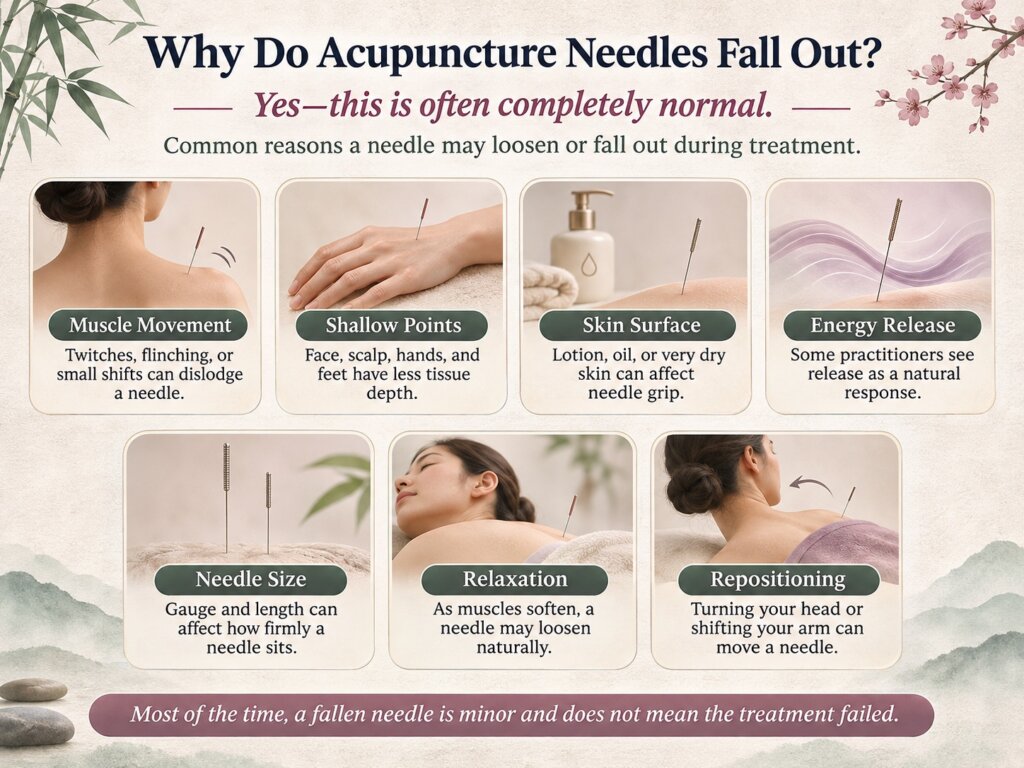
Yes, it can be completely normal. Acupuncture needles are extremely thin—much finer than a standard hypodermic needle—and they sit in soft tissue at varying depths depending on the point being treated. When the surrounding muscle or tissue shifts, even slightly, the needle can lose its position and fall out. This happens more often than most patients realize, and it rarely means the treatment has been compromised.
That said, not every instance is the same. Some cases are purely mechanical, while others carry a bit more clinical meaning depending on where the needle was placed and how the body responded to it.
Here’s a straightforward look at the most common reasons this happens.
1. Muscle Contraction or Involuntary Movement
Your muscles don’t stay completely still during a session. Even when you’re relaxed, subtle shifts in muscle tone can push a needle out. If you flinch, adjust your position, or experience an involuntary twitch—which is actually a normal needle response called a local twitch response—the needle may dislodge.
This is especially common in areas with dense muscle tissue, like the upper back or shoulders, where tension tends to run high.
2. Shallow Needle Insertion
Some acupuncture points are located in areas with very little tissue depth—the tops of the feet, the hands, the face, and certain points along the scalp. In these locations, needles are inserted at a shallow angle, which means they have less surrounding tissue holding them in place. A small movement is enough to release them.
Shallow insertion is intentional and appropriate for those points. It is not a technique error.
3. Skin Moisture or Oily Skin Surface
This one surprises people. If your skin is particularly dry—which is common in Colorado Springs given the high altitude and low humidity—or if you applied lotion before your appointment, the needle guide tube may not grip the skin evenly. The needle can shift before it has a chance to settle into the tissue.
Arriving to your session with clean, product-free skin helps minimize this. It’s a small thing, but it makes a difference.
4. The Body’s Energetic Release
In Traditional Chinese Medicine, there’s a concept worth understanding here. When a needle is inserted into an acupuncture point, the goal is to activate the flow of Qi—the body’s vital energy—along specific meridian pathways. Practitioners sometimes observe that when the body has received what it needs from a particular point, the surrounding tissue relaxes and the needle releases naturally.
This isn’t a universally accepted explanation in Western clinical terms, but it’s a perspective that many licensed practitioners take seriously based on clinical observation. According to the National Center for Complementary and Integrative Health (NCCIH), acupuncture involves stimulating specific points on the body, most often by inserting thin needles through the skin, and research continues to explore the mechanisms behind its effects. You can read more at the NCCIH acupuncture effectiveness and safety page.
5. Needle Gauge and Length
Acupuncture needles come in different gauges and lengths. A finer gauge needle in a low-resistance tissue area may not anchor as firmly as a slightly thicker gauge in a muscular region. Your practitioner selects needle size based on the point location and your individual body composition. If the match isn’t quite right for your tissue on a given day, the needle may not hold as well.
6. Relaxation-Induced Tissue Changes
Here’s something interesting. As your body relaxes during a session—which is the goal—your muscles soften and your fascia (the connective tissue beneath the skin) becomes more pliable. A needle that was held firmly in tense tissue may loosen as that tension releases. In a way, this is a sign the treatment is working.
It’s a bit counterintuitive, but relaxation itself can be the reason a needle shifts.
7. Patient Positioning or Repositioning
If you need to adjust during the session—turning your head, shifting your arm, or changing your breathing pattern—needles in nearby areas can move. Practitioners account for this, and most will check needle placement periodically throughout the session. If a needle falls out, they will simply reinsert it or decide whether that point has been adequately treated.
Now that you understand the main causes, it’s worth looking at how this compares across different body regions and treatment scenarios.
Does Acupuncture Work Even When Needles Fall Out?
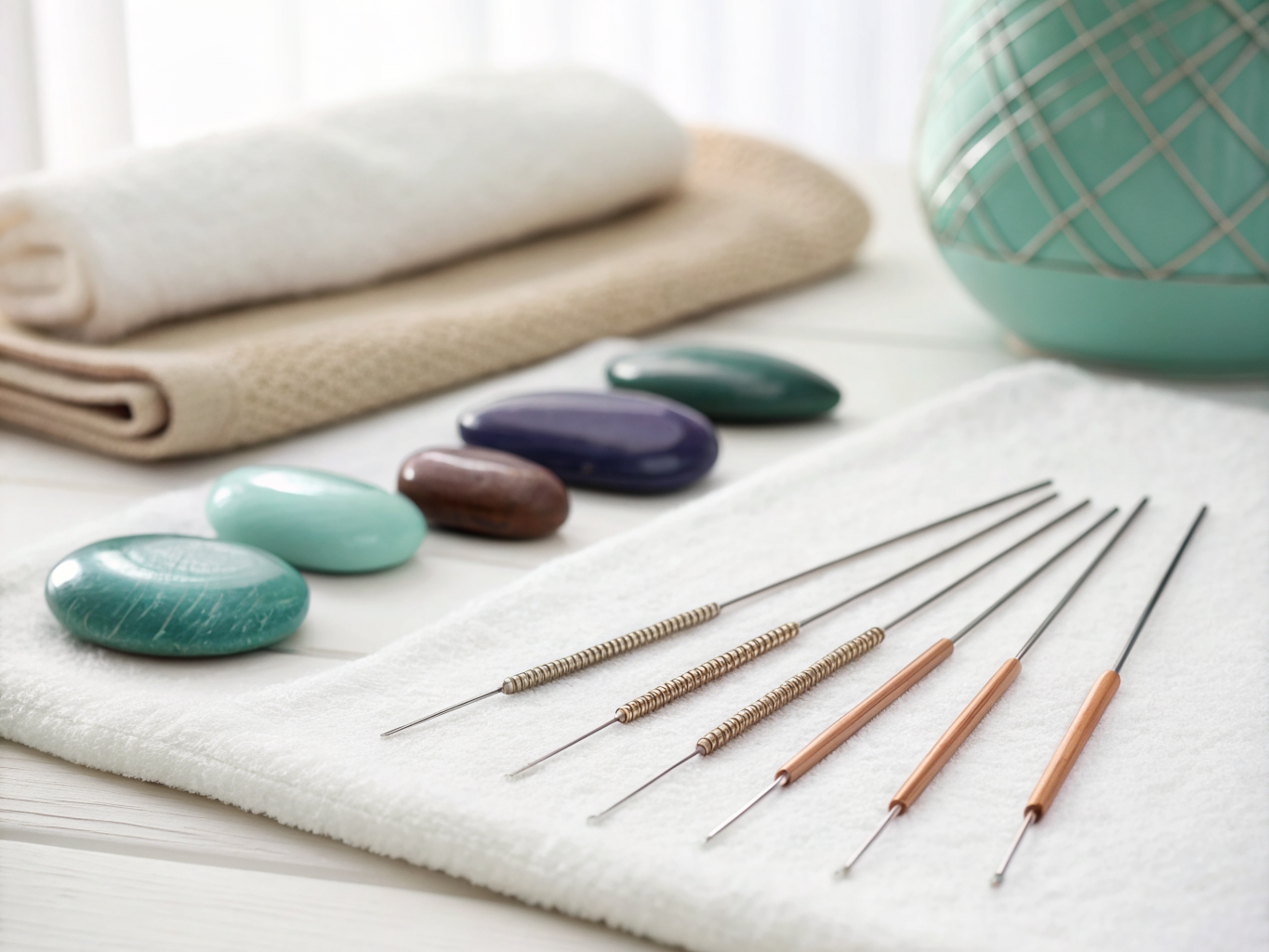
This is the question most patients want answered. If a needle falls out before the session ends, does that mean the point wasn’t treated effectively? In most cases, no—the stimulation has already occurred. The needle activates the point upon insertion and during the initial period it remains in place. Losing it partway through does not erase that activation.
Research reviewed by the NCCIH supports acupuncture’s effectiveness for several chronic pain conditions, including back pain, neck pain, osteoarthritis, and headaches. The NCCIH’s digest on complementary approaches for chronic pain notes that evidence for acupuncture in these areas is among the stronger findings in integrative medicine research. A needle that falls out after initial stimulation is unlikely to significantly change your outcome for that session.
You might be wondering whether this is something that happens more to new patients than experienced ones. The answer is yes, somewhat. First-time patients often have higher baseline muscle tension and may be more reactive to needle sensation, both of which can increase movement and needle displacement. Over time, as your body becomes more familiar with the treatment, sessions tend to go more smoothly.
If you’re exploring acupuncture in Colorado Springs for the first time, our clinic offers personalized initial consultations where David W. Armstrong, L.Ac., evaluates your specific health history, body type, and treatment goals before any needles are placed. This kind of individualized assessment helps minimize surprises during your first few sessions and sets a strong foundation for your care plan.
What Is Acupuncture Good for and How Does Needle Retention Connect to Results?

Understanding what acupuncture targets helps frame why needle retention matters—and when it matters less. Acupuncture is used to support a wide range of conditions, and the treatment approach varies significantly depending on what’s being addressed. The NCCIH notes that Traditional Chinese Medicine encompasses acupuncture, herbal medicine, and other practices, all aimed at restoring the body’s balance. You can explore that context further at the NCCIH’s Traditional Chinese Medicine overview.
At our clinic, we treat conditions ranging from chronic pain and arthritis to anxiety, insomnia, digestive disorders, hormonal imbalance, and respiratory concerns. Each condition calls for a different needle strategy—depth, duration, and point selection all shift based on your diagnosis.
For pain-focused treatments, needle retention time tends to be longer, and practitioners monitor placement more closely. For stress and nervous system regulation, the body often responds quickly, and early needle release may not affect outcomes significantly. The relationship between needle retention and results is not one-size-fits-all. That’s exactly why personalized care matters.
If you’re dealing with chronic pain, burnout, digestive issues, or hormonal shifts—conditions that many Colorado Springs residents manage against the backdrop of a high-altitude, high-stress lifestyle—our services extend well beyond needling alone. We integrate cupping therapy, Gua Sha, Chinese herbal medicine, and craniosacral therapy into treatment plans when appropriate. These modalities work alongside acupuncture to address root causes, not just surface symptoms. Explore our full range of services to find the combination that fits your needs.
What to Do When a Needle Falls Out During Your Session
The most important thing is to stay calm and let your practitioner know. You don’t need to reach for the needle or try to reinsert it yourself. Licensed acupuncturists are trained to handle this without disrupting the flow of your session.
Here’s what typically happens:
- The practitioner is notified or notices on their own. Most practitioners check needle placement periodically throughout the session, so they may catch it before you do.
- The point is reassessed. The practitioner determines whether the point has received adequate stimulation or whether reinsertion is appropriate.
- The needle is reinserted or the session continues. If reinsertion is needed, it’s done quickly and with the same sterile, single-use needle protocol used at the start of the session. At our clinic, we follow Clean Needle Technique (CNT) protocols and use only FDA-approved, single-use sterile needles—no exceptions.
- Your treatment plan is adjusted if needed. If a particular point keeps releasing early across multiple sessions, your practitioner may modify the approach—different needle gauge, adjusted depth, or an alternative nearby point.
There’s no reason to feel embarrassed or concerned if this happens to you. It’s a normal part of the treatment process, and your practitioner has seen it many times before.
When Should You Be Concerned About Needles Falling Out?
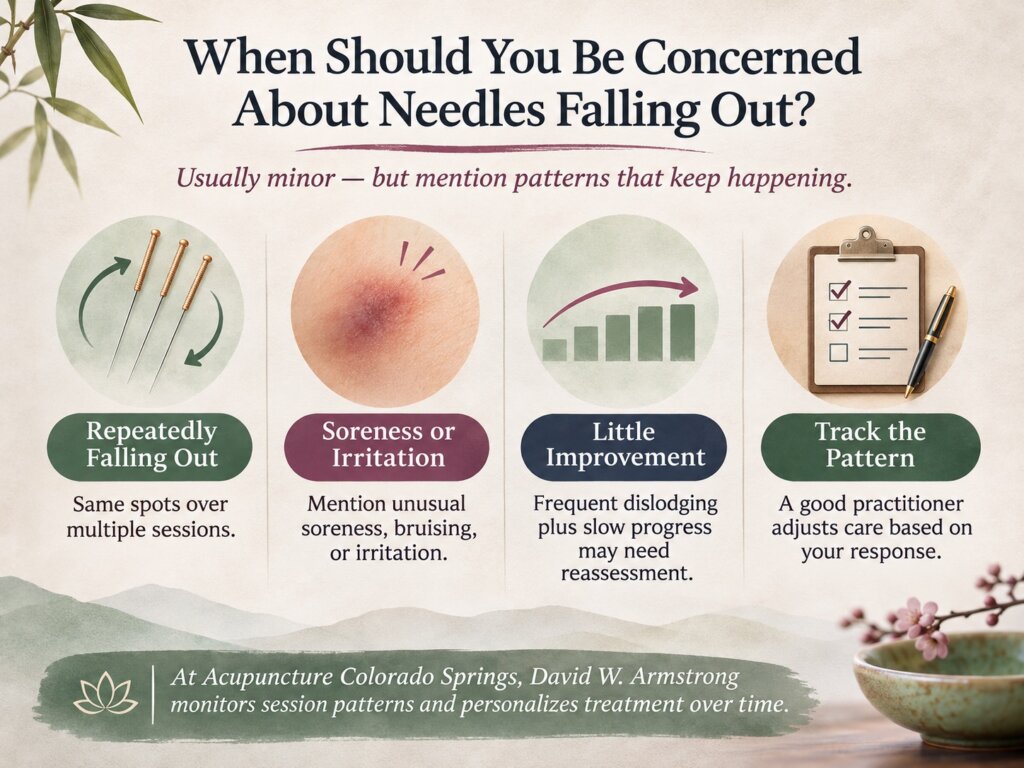
Most of the time, a falling needle is a minor event. But there are a few situations where it’s worth discussing with your practitioner more directly.
- If needles fall out consistently across multiple sessions in the same locations, it may indicate an underlying issue with tissue quality, circulation, or muscle tone that warrants attention.
- If a needle falls out and the area feels unusually sore, bruised, or irritated afterward, mention it at your next visit.
- If you’re not seeing progress after several sessions and needles are frequently dislodging, your treatment plan may need to be reassessed.
A good practitioner tracks these patterns. At Acupuncture Colorado Springs, David W. Armstrong documents session details and adjusts treatment plans based on how your body responds over time. This is what separates personalized care from a generic appointment.
Conclusion
Acupuncture needles fall out for several reasons—muscle movement, tissue relaxation, shallow insertion depth, or even the body’s natural energetic response—and in most cases, it is entirely normal. Your treatment is rarely compromised by a single displaced needle. If you’re ready to experience acupuncture that’s tailored to your body and your specific health goals, we invite you to book a consultation with us at 2525 W Pikes Peak Ave, Suite B, Colorado Springs, CO 80904. Healing works best when it’s built around you.
Acupuncture Colorado Springs offers expert, board-certified acupuncture care tailored to your body’s unique needs. David W. Armstrong ensures every session is safe, precise, and effective. Get started today by booking your personalized consultation.
FAQs
Why Do Acupuncture Needles Fall Out During Treatment?
Needles can occasionally fall out if the point is in a more mobile area, the tissue relaxes during treatment, or there’s minor movement. In our clinic, we use precise point location and safe needling depth to reduce this, but an occasional needle slipping out can still happen.
Is It Normal for Acupuncture Needles to Fall Out?
Yes, it can be normal from time to time—especially on areas like the hands, feet, face, or near joints where the skin and muscles shift more. We monitor needle placement throughout your session and adjust as needed to keep treatment effective and comfortable.
What Causes Acupuncture Needles to Come Loose?
Common causes include changing muscle tone (relaxing or tightening), natural skin movement, sweating or oily skin, and subtle shifts in posture. We account for these factors with careful technique and positioning, and we’ll simply reinsert or move the needle if appropriate.
Do Acupuncture Needles Falling Out Mean They Were Placed Incorrectly?
Not necessarily. A needle can be correctly placed and still loosen if the tissue changes or the area moves. As a board-certified Traditional Chinese Medicine clinic, we focus on accurate point selection, safe insertion, and ongoing assessment during treatment.
Can Movement or Muscle Tension Make Acupuncture Needles Fall Out?
Yes. Turning, stretching, coughing, or tensing a muscle can shift the tissue enough for a needle to loosen—especially in high-motion areas. We’ll guide you on comfortable positioning and relaxation, and we can adjust needle placement to maintain therapeutic effect.