You just finished an acupuncture session and noticed a small spot of blood where a needle was placed. Your first instinct might be to worry. That reaction is completely understandable, but in most cases, bleeding after acupuncture is a minor and expected part of the treatment process. Research published in the Bulletin of the World Health Organization found that slight bleeding or hematoma at needle sites occurs in roughly 2 to 6 percent of acupuncture treatments, typically classified as minor adverse events that resolve on their own.
This article walks you through what normal post-acupuncture bleeding looks like, what causes it, when it may signal something worth addressing, and how working with a qualified practitioner protects you every step of the way. We will also cover related topics like acupuncture blood-letting techniques, lymphatic detox connections, and what to do if you experience more than just a small red mark after your visit.
Key Takeaways
- Minor bleeding after acupuncture is common and usually self-limiting, affecting roughly 2 to 6 percent of treatments.
- Small capillary nicks are the most frequent cause of post-needle bleeding and typically stop within seconds.
- Bruising and small hematomas are normal minor adverse events that often resolve without treatment.
- Acupuncture blood-letting is a specific, intentional technique that differs from incidental needle-site bleeding.
- Certain health conditions and medications can increase your bleeding risk and should be disclosed before treatment.
- Knowing the difference between minor and concerning bleeding helps you respond calmly and appropriately.
- Choosing a licensed, board-certified practitioner significantly reduces your risk of serious adverse events.
What Normal Bleeding After Acupuncture Actually Looks Like
When a fine acupuncture needle passes through the skin, it occasionally nicks a small capillary just beneath the surface. This produces a tiny drop or two of blood at the needle site, which typically stops within seconds once the needle is removed and light pressure is applied. According to a systematic review on acupuncture adverse effects, minor subcutaneous hemorrhage and bruising are among the most common reactions and usually resolve on their own without any medical intervention.
What you might see after a session ranges from a small red dot to a faint bruise that develops over the following day or two. This is not a sign that something went wrong. It is simply your body’s normal response to a thin needle passing through tissue.
A cold compress can help if a bruise feels tender or looks larger than expected. Most minor hematomas, which are small pockets of blood under the skin, fade within a few days to a week.
| Type of Reaction | Appearance | Typical Duration | Action Needed |
|---|---|---|---|
| Pinpoint bleeding | One or two drops at needle site | Stops within seconds | Light pressure only |
| Small bruise | Faint discoloration under skin | 3 to 7 days | Cold compress if tender |
| Minor hematoma | Small raised or firm area | 5 to 10 days | Cold then warm compress |
| Larger hematoma | Noticeable swelling, pain | 1 to 2 weeks | Contact your practitioner |
| Persistent bleeding | Bleeding that does not stop | More than 5 minutes | Seek medical evaluation |
The table above gives you a practical reference point. Most people fall into the first two categories and never need to do anything beyond applying brief pressure after the needle is removed.
Why Bleeding After Acupuncture Happens: The Physiology Behind It
Acupuncture needles are extremely thin, far thinner than a standard hypodermic needle, but the body still has a network of tiny blood vessels running through every layer of tissue. Even with precise needle placement, a small capillary can be grazed during insertion or removal. This is not a practitioner error in most cases. It is simply the nature of working within living tissue.
Factors that influence whether you bleed include the location of the needle, the depth of insertion, and your individual tissue characteristics. Areas with more superficial blood vessels, like the face, scalp, or hands, tend to bleed slightly more often than areas with denser muscle tissue.
Your personal health history also plays a role. If you take blood thinners, aspirin, or certain supplements like fish oil or vitamin E, your blood may not clot as quickly. This does not mean you cannot receive acupuncture. It means your practitioner needs to know about these factors before your session begins.
Acupuncture Blood-Letting: When Bleeding Is Intentional
You might be wondering whether some acupuncture techniques are designed to cause bleeding on purpose. The answer is yes, and this is an important distinction to understand. Acupuncture blood-letting, sometimes called bleeding therapy or pricking therapy in Traditional Chinese Medicine, is a specific clinical technique that intentionally draws a small amount of blood from targeted points on the body.
This approach uses specialized tools like three-edged needles, plum-blossom needles, or wet cupping to release blood from specific acupuncture points. Practitioners who use this method believe it can help move stagnant energy, reduce heat in the body, and support what TCM describes as a blood cleanse, clearing excess or congested circulation in a particular area.
A recent review on bloodletting therapy for knee osteoarthritis described these methods and noted that while some patients report relief, the current evidence base is still developing. The review flagged that high-quality safety data is limited, which is exactly why this technique should only be performed by a licensed, experienced practitioner who follows strict hygiene and risk-reduction protocols.
At Acupuncture Colorado Springs, David W. Armstrong, L.Ac., uses a thorough intake process to assess what is appropriate for your individual case. Our clinic follows clean-needle protocols and Colorado state safety regulations at every visit, so you are never left guessing about what is being done or why.
When Bleeding After Acupuncture Warrants Closer Attention
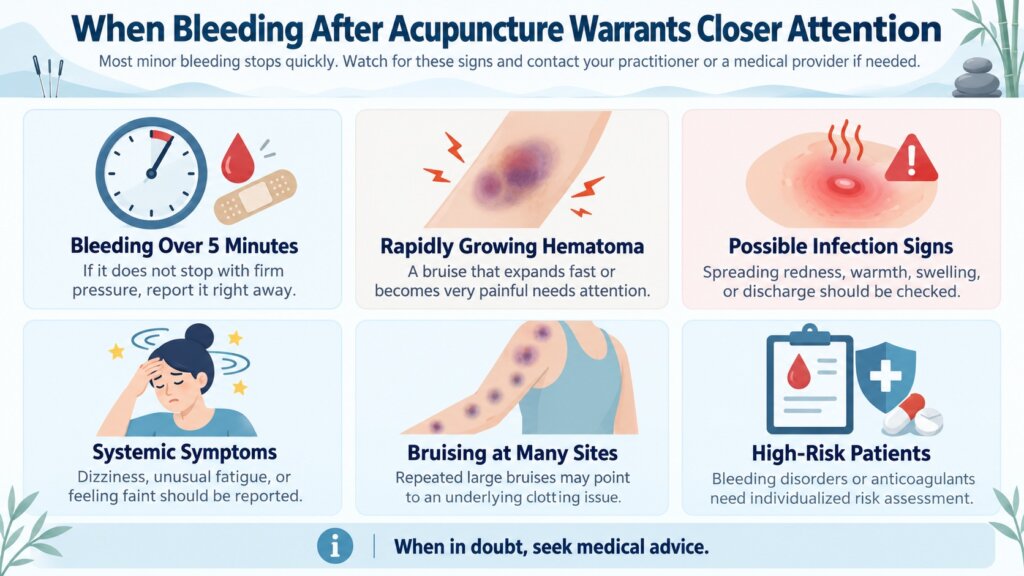
Most post-treatment bleeding is minor and stops quickly. There are situations, though, where you should pay closer attention and reach out to your practitioner or a medical provider.
1. Bleeding That Does Not Stop Within Five Minutes
Normal capillary bleeding stops with brief, firm pressure. If a needle site continues to bleed beyond five minutes despite consistent pressure, this is worth reporting to your practitioner right away.
2. A Hematoma That Grows Rapidly or Becomes Very Painful
A small bruise is expected. A hematoma that expands quickly, feels hot to the touch, or causes significant pain is a different situation. This can indicate a deeper vessel was nicked and may need professional evaluation.
3. Signs of Infection at the Needle Site
Redness that spreads, warmth, swelling, or discharge appearing one to three days after treatment are signs of possible infection. This is rare when sterile single-use needles are used, but it can happen if aftercare guidelines are not followed.
4. Systemic Symptoms Following Treatment
Dizziness, unusual fatigue, or feeling faint after a session that involved more intensive techniques, including any form of acupuncture blood-letting or wet cupping, should be reported. These symptoms are uncommon but worth monitoring.
5. Unusual Bruising Patterns Across Multiple Sites
If you consistently develop large bruises across many needle sites after every session, this may suggest an underlying clotting issue worth discussing with your primary care provider. It does not necessarily mean acupuncture is unsafe for you, but it is useful information for both your acupuncturist and your doctor.
6. Bleeding in High-Risk Patients
Patients with hemophilia, platelet disorders, active anticoagulation therapy, or a history of bleeding disorders need individualized risk assessment before treatment. A responsible practitioner will ask about all of these factors during your intake conversation.
The Connection Between Bleeding, Lymphatic Detox, and Circulation in TCM
Traditional Chinese Medicine views the body’s health through the lens of circulation, not just blood flow, but also the movement of what TCM calls qi and fluids through the body’s channels. When circulation becomes sluggish or blocked, it can manifest as pain, swelling, or what practitioners describe as stagnation.
This is where concepts like lymphatic detox and lymphatic drainage benefits become relevant in a broader discussion of acupuncture. While acupuncture is not the same as manual lymphatic drainage, both approaches share an interest in supporting the body’s natural fluid movement and reducing stagnation. Some practitioners use acupuncture points known to influence fluid metabolism alongside other therapies to support patients dealing with swelling or post-injury edema.
It is worth noting that systematic reviews on manual lymphatic drainage show mixed results. Some studies find modest reductions in limb volume and short-term pain relief when MLD is combined with compression and exercise. Others find little additional benefit over standard care alone. The research suggests that no single technique, whether acupuncture, MLD, or herbal support, works in isolation. A combined, personalized approach tends to produce the most consistent outcomes.
If you are exploring acupuncture for circulation support, lymphatic health, or post-injury recovery, our clinic offers a full assessment to determine which combination of therapies makes the most sense for your situation. David W. Armstrong, L.Ac., integrates acupuncture with cupping therapy when appropriate, creating a layered plan that addresses both surface symptoms and underlying patterns.
How to Reduce Your Risk of Bleeding After Acupuncture
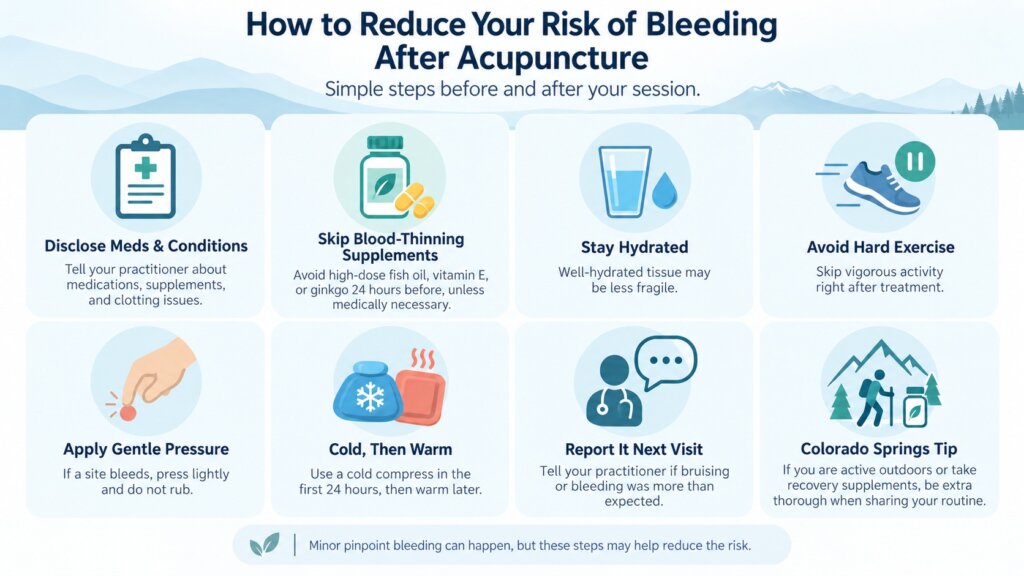
There are practical steps you can take before and after your session to minimize the likelihood of bruising or prolonged bleeding.
- Tell your practitioner about all medications, supplements, and health conditions at intake, especially anything that affects clotting.
- Avoid taking blood-thinning supplements like high-dose fish oil, vitamin E, or ginkgo biloba in the 24 hours before your session unless medically necessary.
- Stay well hydrated before your appointment. Dehydrated tissue can be more fragile and may respond differently to needle insertion.
- Avoid vigorous exercise immediately after treatment, as increased circulation can make minor bruising more pronounced.
- Apply gentle pressure to any needle site that bleeds during or after the session. Do not rub the area.
- Use a cold compress on any tender bruise in the first 24 hours, then switch to a warm compress after that to support reabsorption.
- Let your practitioner know at your next visit if you experienced more bruising or bleeding than expected. This helps them adjust their approach.
Colorado Springs residents who are active outdoors, manage high-altitude physical demands, or take supplements for joint and recovery support should be especially thorough about disclosing their full supplement list. Many common recovery products affect platelet function in ways people do not expect.
Choosing a Safe, Qualified Acupuncture Provider in Colorado Springs
The single most effective way to reduce your risk of adverse events, including unnecessary bleeding, is to work with a licensed, board-certified acupuncturist who follows clean-needle technique and takes a thorough health history before every course of treatment.
At Acupuncture Colorado Springs, every session begins with a detailed conversation about your health history, current medications, lifestyle, and goals. We use sterile, single-use needles at every visit and follow all Colorado state regulations for acupuncture safety and hygiene. David W. Armstrong, L.Ac., has the clinical experience to recognize when a technique needs to be modified based on your individual risk profile.
Whether you are coming in for pain relief, stress support, digestive health, or exploring acupuncture for the first time, our approach is always personalized. We do not apply a generic protocol to every patient. We assess, listen, and design a plan that fits your body and your goals. If you are curious about cupping or herbal guidance as part of a broader care plan, we are happy to walk you through what each option involves and whether it makes sense for you. You can explore our services or book a consultation at our clinic located at 2525 W Pikes Peak Ave, Suite B, Colorado Springs, CO 80904.
Final Thoughts on Bleeding After Acupuncture
Bleeding after acupuncture is, in the vast majority of cases, a minor and temporary reaction that requires nothing more than brief pressure and a little patience. Knowing the difference between normal capillary bleeding and something worth reporting gives you confidence going into and out of every session. Working with a qualified, licensed practitioner, disclosing your full health picture, and following basic aftercare steps will keep your experience safe and effective from the very first visit.
Acupuncture Colorado Springs uses sterile, single-use needles for safe, expert care. David W. Armstrong, L.Ac. ensures every session meets the highest safety standards. Get started today—call us now.
FAQs
Is It Normal to Bleed After Acupuncture?
Yes. A tiny drop or two of blood can happen when a needle is removed, especially in areas with small surface capillaries. In a licensed clinic using sterile, single-use needles, this is usually minor and not dangerous.
How Long Does Bleeding Last After Acupuncture?
Most bleeding stops within a few seconds to a couple of minutes with light pressure. If you notice continued oozing beyond a few minutes, it may be related to thinner blood, certain supplements/medications, or sensitive tissue.
What Should I Do If I Bleed After Acupuncture?
Apply gentle, steady pressure with clean gauze or tissue for 1–3 minutes, then keep the area clean and avoid rubbing. If you’re at our Colorado Springs clinic, we’ll manage it immediately and document it as part of safe, professional care.
When Should I Worry About Bleeding After Acupuncture?
Be concerned if bleeding won’t stop after 10 minutes of firm pressure, is heavy, or you develop significant swelling, worsening pain, dizziness, or signs of infection (increasing redness, warmth, pus, or fever). Seek urgent care for heavy/uncontrolled bleeding, and contact your acupuncturist promptly for guidance.
Can Acupuncture Cause Bruising or Hematoma?
Yes. Mild bruising can occur if a small vessel is nicked, and a hematoma (a raised “lump” of pooled blood) is less common but possible. Most resolve on their own; gentle pressure right after treatment helps prevent bruising, and a cold pack for the first 24 hours can reduce swelling if one develops.