If you have been dealing with chronic pain, muscle stiffness, or slow tissue recovery, you have probably explored more than a few options. Hot needle therapy is one that often comes up in conversations about acupuncture and Traditional Chinese Medicine, yet many people are not entirely sure what it involves. It is different from standard acupuncture, different from dry needling therapy, and it carries its own set of principles rooted in centuries of clinical use.
This article breaks down exactly what hot needle therapy is, how it works on a physiological level, how it compares to related treatments like dry needle therapy and red light therapy panel-based approaches, and what you can expect if you decide to explore it as part of your care plan. We will also cover who tends to benefit most and how this therapy fits into a broader care plan.
Key Takeaways
- Hot needle therapy is a Traditional Chinese Medicine technique that uses heated acupuncture needles to stimulate deep tissue healing.
- It differs from dry needling therapy in both its theoretical foundation and clinical application.
- The therapy works by combining mechanical needle stimulation with targeted thermal energy to improve circulation and reduce stagnation.
- It is commonly used for chronic pain, joint stiffness, cold-type conditions, and slow-healing injuries.
- A personalized assessment from a trained practitioner can help determine whether hot needle therapy fits your specific health pattern.
- Safety depends heavily on practitioner training, sterile technique, and proper patient screening.
What Hot Needle Therapy Is and How It Works for Pain and Healing
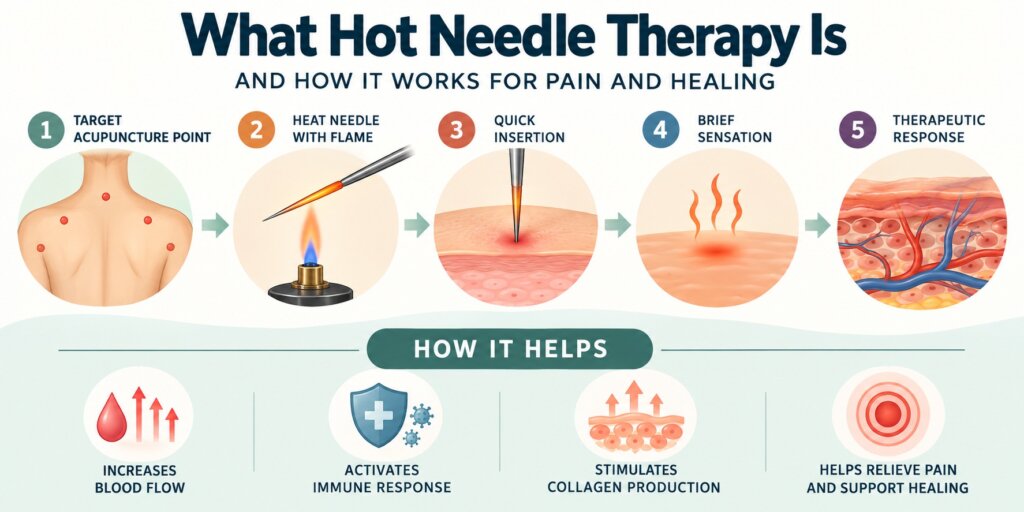
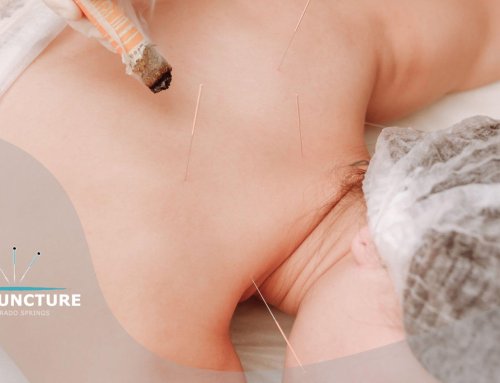
Hot needle therapy, known in Traditional Chinese Medicine as fire needling or fire needle acupuncture, involves briefly heating a specialized needle and then inserting it quickly into specific acupuncture points or areas of tissue dysfunction. The goal is to combine the stimulating effect of needle insertion with the therapeutic effect of heat, creating a response in the tissue that standard acupuncture needles alone do not produce. This approach is considered particularly useful for conditions that TCM classifies as cold, damp, or stagnant in nature.
The needle used in this technique is typically thicker than a standard acupuncture needle and is heated using an open flame until it reaches the appropriate temperature. The insertion is brief, often less than a second, but the effect on the underlying tissue is significant. You might be wondering how such a fast insertion could produce any meaningful result, and the answer lies in how the body responds to thermal micro-trauma.
When the heated needle contacts the tissue, it creates a controlled, localized response that includes increased blood flow, activation of immune cells, and stimulation of collagen production. This is similar in some ways to how a red light therapy panel works by delivering energy into deeper tissue layers to promote cellular repair, though the mechanisms and applications differ considerably. Hot needle therapy is direct, physical, and point-specific, while red light therapy panel treatments are non-invasive and cover broader surface areas.
How Hot Needle Therapy Differs From Dry Needle Therapy and Related Treatments
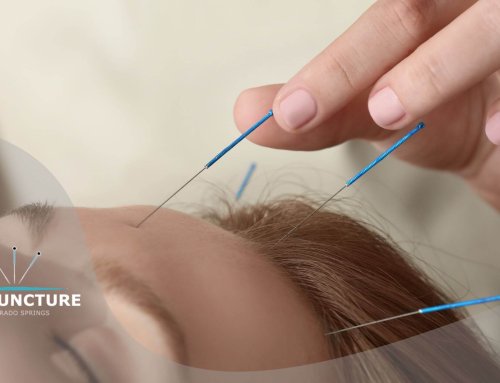
Understanding the differences between these approaches helps you make a more informed decision about what might suit your needs. Dry needling therapy, for instance, uses thin filiform needles inserted into myofascial trigger points without any heat element. It is grounded primarily in Western anatomy and neuromuscular physiology, targeting muscle knots that refer pain to other areas of the body.
Hot needle therapy, by contrast, is rooted in TCM theory and targets both structural and energetic patterns of dysfunction. The heat component is not incidental. It is central to the treatment’s purpose.
| Feature | Hot Needle Therapy | Dry Needle Therapy |
|---|---|---|
| Foundation | Traditional Chinese Medicine | Western neuromuscular anatomy |
| Heat element | Yes, needle is heated before insertion | No heat involved |
| Needle type | Thicker, specialized fire needles | Standard thin filiform needles |
| Target | Acupuncture points, cold or stagnant tissue | Myofascial trigger points |
| Best for | Cold-type pain, joint stiffness, chronic conditions | Acute muscle tension, trigger point pain |
| Session feel | Brief sharp sensation followed by warmth | Muscle twitch, ache, or pressure |
It is also worth distinguishing hot needle therapy from moxibustion, another TCM heat-based treatment. Moxibustion burns dried mugwort near or on acupuncture points to warm the area indirectly. Hot needle therapy delivers heat directly into the tissue, making it more targeted and faster-acting in certain clinical situations. Both are valid tools, but they are not interchangeable.
The Conditions Hot Needle Therapy May Help Address
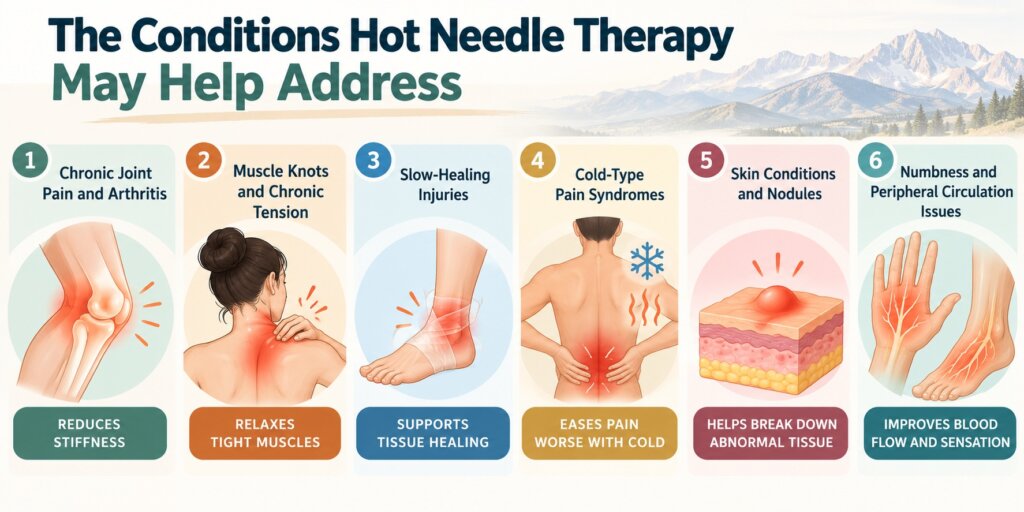
This technique is not a general-purpose treatment. It is most appropriate for specific patterns of dysfunction, particularly those involving cold, dampness, or chronic stagnation according to TCM diagnosis. That said, several conditions commonly respond well to this approach when applied by a trained practitioner.
1. Chronic Joint Pain and Arthritis
Cold and damp weather, which Colorado Springs residents know well during winter months, can worsen joint pain significantly. Hot needle therapy may help by driving warmth into stiff, aching joints and improving local circulation. Patients with osteoarthritis of the knee or hip often report reduced stiffness following a course of treatment.
2. Muscle Knots and Chronic Tension
While dry needle therapy targets trigger points through mechanical disruption, hot needle therapy addresses the same areas with the added benefit of thermal stimulation. This can be particularly useful when muscle tension has been present for months or years and standard massage or stretching has not resolved it.
3. Slow-Healing Injuries
Injuries that are not progressing through normal healing timelines sometimes benefit from the tissue-stimulating effect of fire needling. The controlled thermal response can encourage the body to restart a healing process that has stalled, particularly in tendons and ligaments that have poor baseline blood supply.
4. Cold-Type Pain Syndromes
In TCM, pain that worsens with cold and improves with warmth is classified as a cold-type pattern. This includes certain presentations of lower back pain, neck stiffness, and shoulder pain. Hot needle therapy directly addresses this pattern in a way that standard acupuncture needles or even a red light therapy panel session may not fully reach.
5. Skin Conditions and Nodules
Fire needling has a long history of use for certain skin conditions, including cysts, nodules, and areas of fibrotic tissue. The heat helps break down abnormal tissue accumulations. This application requires careful practitioner assessment and is not appropriate for all skin presentations.
6. Numbness and Peripheral Circulation Issues
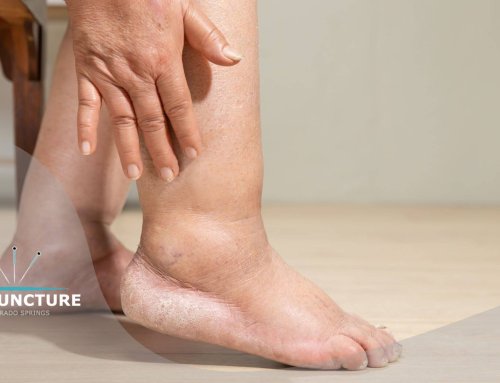
People dealing with numbness, tingling, or poor peripheral circulation in the hands and feet may find that hot needle therapy supports improved blood flow to these areas. It is sometimes used alongside growing therapy approaches that focus on tissue regeneration and nerve repair over a longer treatment timeline.
Safety Considerations and Who Should Avoid Hot Needle Therapy
Hot needle therapy is safe when performed by a licensed, trained practitioner using sterile technique. Practitioners should use single-use, professionally sourced needles for every treatment and comply fully with Colorado state licensing and hygiene regulations. That said, this technique is not appropriate for everyone.
People who should avoid fire needling include those with active infections or open wounds in the treatment area, individuals with bleeding disorders or who are on blood-thinning medications, pregnant women, and people with certain skin conditions that make thermal exposure risky. A thorough intake assessment helps identify any contraindications before treatment begins.
You might be wondering how this compares in terms of risk to something like a red light therapy panel or biosilk silk therapy, both of which are non-invasive. The answer is that hot needle therapy carries a slightly higher level of clinical skill requirement, which is exactly why practitioner selection matters. Working with a board-certified acupuncturist significantly reduces any risk associated with the technique.
How Hot Needle Therapy Fits Into a Broader TCM Care Plan
Hot needle therapy is rarely used in isolation. Where it is used, it is most often integrated into a broader care plan that may include standard acupuncture sessions, Chinese herbal medicine guidance, and cupping therapy. This layered approach addresses both the immediate source of pain or dysfunction and the underlying patterns that allowed it to develop.
Think of it this way. The fire needle session might address a specific area of chronic stagnation in your lower back, while a course of herbal support works on the systemic deficiency contributing to slow tissue repair. Cupping may be added to improve circulation in the surrounding area. Each element has a role, and together they create a more complete response than any single treatment could achieve on its own.
If you are in the Colorado Springs area, including communities like Manitou Springs, Old Colorado City, or Woodland Park, and you are dealing with chronic pain, joint stiffness, or a condition that has not responded well to other approaches, we encourage you to reach out to our clinic and start a conversation. A personalized assessment with David can clarify which approach within our services is the right fit for where you are right now.
Final Thoughts on Hot Needle Therapy
Hot needle therapy is a specific, targeted technique with a long history in Traditional Chinese Medicine and a growing body of clinical interest in modern integrative care. It works by combining needle stimulation with direct thermal energy to address cold-type pain, chronic stagnation, and slow tissue healing. When applied by a trained practitioner within a personalized care plan, it can be a meaningful part of your path toward less pain and better function.
Acupuncture Colorado Springs offers board-certified acupuncture care tailored to your unique healing needs. David W. Armstrong, L.Ac. combines traditional and modern techniques for lasting relief. Book your consultation today—get started on your path to balance.
FAQs
What Is Hot Needle Therapy Used For?
Hot needle therapy is most commonly used to help relieve stubborn pain and stiffness, improve circulation, and support healing in chronic or “cold” conditions—often involving joints, muscles, and tendons. Practitioners may consider it for issues like chronic neck or low back pain, arthritis-type discomfort, or lingering soft-tissue injuries when warmth-based support is appropriate.
Does Hot Needle Therapy Hurt?
Most people describe it as mild and very tolerable. You may feel a brief pinch with insertion and a gentle warmth or dull ache near the area being treated, but it should not feel sharply painful. A trained practitioner should tailor technique and intensity to your comfort and check in during treatment.
Is Hot Needle Therapy the Same as Acupuncture?
It’s a specialized form of acupuncture. Hot needle therapy uses acupuncture needles along with a controlled warming method to enhance the therapeutic effect, especially when warmth and improved local circulation are part of the treatment goal.
What Are the Side Effects of Hot Needle Therapy?
Side effects are usually mild and temporary, such as brief soreness, redness, or slight bruising at the needle site, and occasional fatigue or lightheadedness afterward. When performed by a licensed, board-certified practitioner using sterile, single-use needles and proper technique, the risk of complications is low.
How Many Hot Needle Therapy Sessions Do I Need?
It depends on your condition, how long you’ve had it, and your goals. Some patients notice improvement within 1–3 visits, while more chronic issues often do best with a short series (commonly 6–10 sessions) and periodic reassessment. A practitioner can personalize the plan after reviewing your history and response to the first treatment.