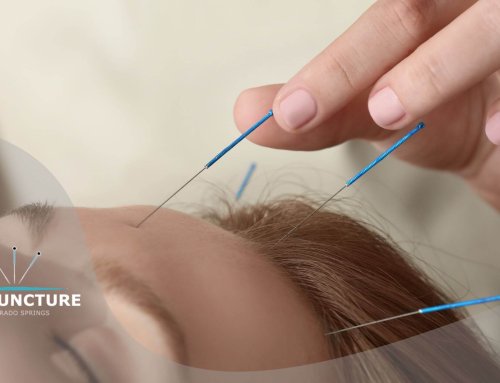
Heat acupuncture refers to approaches that combine acupuncture with a controlled source of warmth. Practitioners may apply heat to promote comfort, ease temporary muscle tension, or support relaxation during treatment. However, the benefits depend on the technique used, and evidence for adding heat to acupuncture remains limited.
This guide explains why practitioners apply warmth during acupuncture, how common heat-based techniques differ, and what patients should know about potential benefits and safety. It also clarifies why not every acupuncture clinic offers these techniques.
Key Takeaways
- Heat acupuncture combines acupuncture with controlled warmth, although the additional benefits of heat are not firmly established.
- In Traditional Chinese Medicine, warming techniques are traditionally associated with cold and dampness patterns.
- Moxibustion uses burning mugwort to generate warmth near acupuncture points, but it is not offered at every acupuncture clinic.
- Research supports acupuncture for certain pain conditions, while evidence for additional benefits from heat remains limited.
- Dry needling and acupuncture may differ in treatment approach, practitioner training, and the use of supplementary techniques.
- Qualified practitioners assess individual health concerns and safety considerations before recommending heat-based procedures.
Before exploring the techniques themselves, it helps to understand the foundational reason warmth is introduced into acupuncture care at all.
What Heat Acupuncture Is and Why Practitioners Use It
Heat acupuncture refers to any acupuncture treatment that intentionally incorporates a thermal element alongside needle insertion. The most well-known form is moxibustion, where a practitioner burns dried mugwort herb—called moxa—near or on specific acupuncture points on the body. The goal is not simply to warm the skin. The heat is meant to penetrate deeply, stimulate Qi (the body’s vital energy), and support the movement of blood and fluids through channels that may be blocked or sluggish.
In TCM, cold and dampness are recognized as pathogenic factors that can invade the body and cause stagnation. When Qi or blood cannot flow freely, pain, fatigue, and dysfunction follow. Heat is used as a direct counterforce to these patterns.
Traditional Chinese Medicine describes warmth in terms of Qi movement and patterns such as cold and dampness. These concepts provide a traditional framework for treatment but are not equivalent to established physiological mechanisms. From a biomedical perspective, external warmth may temporarily affect superficial circulation and muscle comfort, while acupuncture itself may influence nervous-system pathways involved in pain processing. However, current research does not establish that combining heat with acupuncture consistently produces stronger therapeutic effects than acupuncture alone.
The Main Heat Acupuncture Techniques Practitioners Apply
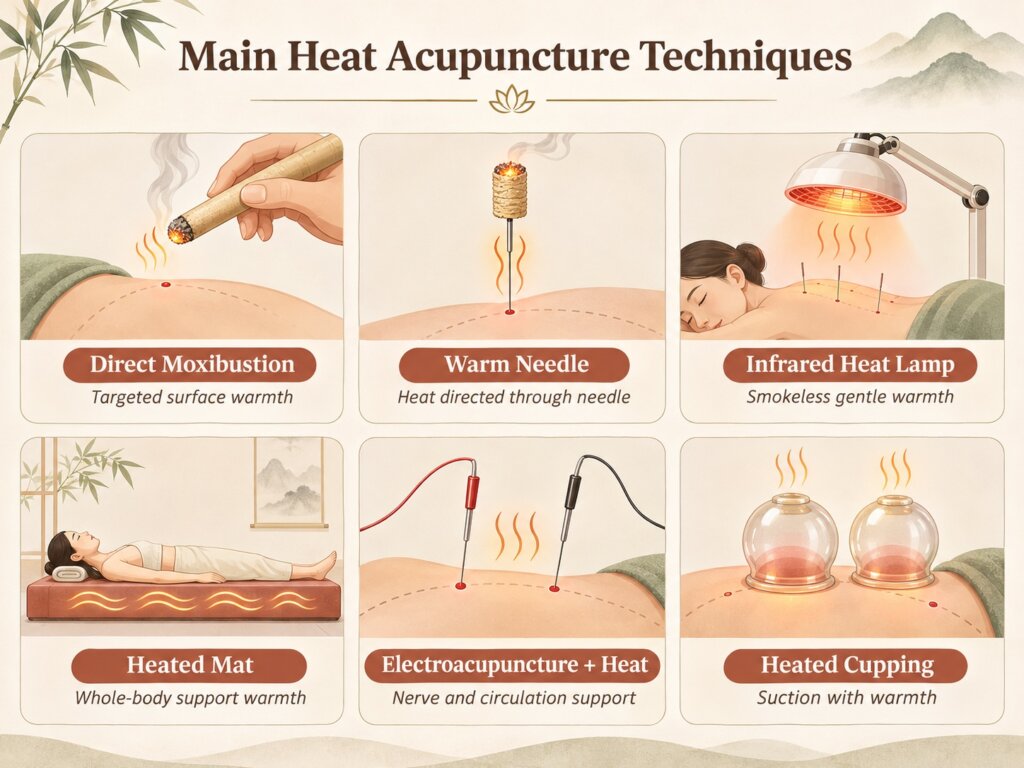
Not all heat acupuncture looks the same. Practitioners choose different methods depending on the patient’s condition, constitution, and treatment goals. Each technique has its own application style and therapeutic focus.
1. Direct Moxibustion Near Acupuncture Points
A small cone or stick of dried mugwort is burned close to—but not touching—the skin near an acupuncture point. The practitioner controls distance to manage intensity. This is the most traditional form of heat application in TCM and is commonly used for cold-type pain patterns, particularly in the lower back and joints.
2. Warm Needle Acupuncture (Zhen Jiu)
In this technique, moxa is attached directly to the handle of an inserted acupuncture needle and then lit. The heat travels down the needle shaft and into the acupuncture point itself. Practitioners use this method when they want to direct warmth precisely into a specific tissue layer, making it useful for deep joint pain and chronic musculoskeletal conditions.
3. Infrared Heat Lamp Therapy
Some modern clinics use infrared heat lamps positioned over acupuncture points during needle retention. This approach is cleaner and more controlled than moxa burning and is often preferred for patients sensitive to smoke. The infrared wavelengths penetrate tissue in a way that is similar to traditional moxibustion, supporting circulation and relaxation without the use of an open flame.
4. Heated Acupuncture Mat or Surface Therapy
An acupuncture mat with embedded heating elements may be used beneath the patient during treatment to provide general warmth to the back, spine, and surrounding tissues. While an acupuncture mat alone is not a substitute for clinical needle therapy, it can serve as a supportive tool that relaxes the body before or during a session. Practitioners may combine this with needle insertion for patients dealing with tension or cold-related stiffness.
5. Electrical Stimulation With Thermal Enhancement
Electroacupuncture uses a mild electrical current passed between pairs of acupuncture needles. Some practitioners combine this with gentle heat application to the surrounding area, particularly for nerve pain or post-injury recovery. The combination targets both the neuromuscular response and the circulatory benefit of warmth simultaneously.
6. Cupping With Heat Application
Traditional fire cupping uses a flame to create suction inside a glass cup before placing it on the skin. Although this process involves heat, the primary treatment effect comes from suction rather than sustained warming. Cupping is sometimes used for musculoskeletal discomfort, but scientific evidence for its effectiveness remains limited. Acupuncture Colorado Springs offers cupping therapy as an available service, with treatment recommendations based on individual needs and practitioner assessment.
Each of these techniques reflects a deliberate clinical decision—not a random addition to the session. The choice depends on what the patient needs and what the practitioner observes during assessment.
How Heat Acupuncture Supports Acupuncture and Pain Management
Pain is one of the most common reasons people seek acupuncture care, and heat acupuncture plays a specific role in how practitioners address certain pain patterns. Not all pain responds the same way to needle therapy alone. Cold-type pain—the kind that worsens in winter, feels better with warmth, and tends to be deep and aching—often responds more effectively when heat is part of the treatment.
Research published in the American Family Physician journal supports acupuncture for chronic pain conditions including low back pain, neck pain, and osteoarthritis. The evidence suggests that acupuncture may produce meaningful improvements in pain and function compared to no treatment or sham procedures.
Applying controlled warmth alongside acupuncture may improve comfort and relaxation for some individuals experiencing muscle stiffness or persistent discomfort. Local heat can produce temporary physiological responses, but these effects should not be interpreted as proof of faster healing or superior pain relief. Research supports acupuncture for certain chronic pain conditions, including some cases of back pain and knee osteoarthritis, although evidence specifically comparing heat-assisted acupuncture with standard acupuncture remains limited.
You might be wondering whether this approach is appropriate for all types of pain. It is not. Heat is generally contraindicated for acute inflammation, fresh injuries with swelling, or conditions where increased circulation could worsen symptoms. This is precisely why individualized assessment matters before any heat technique is applied.
Dry Needling vs Acupuncture: How Heat Fits Into the Comparison
The conversation around dry needling vs acupuncture comes up often, and it is worth addressing here because it directly relates to how heat is—or is not—used in each approach. Dry needling is a technique primarily used by physical therapists and some other allied health practitioners. It involves inserting thin needles into myofascial trigger points to release muscle tension.
| Feature | Heat Acupuncture (TCM) | Dry Needling |
|---|---|---|
| Theoretical Framework | Traditional Chinese Medicine, Qi, meridian theory | Western anatomy, trigger point theory |
| Heat Application | Yes—moxibustion, infrared, warm needle | Rarely, not a standard component |
| Needle Placement | Acupuncture points along meridians | Trigger points in muscle tissue |
| Scope of Treatment | Whole-body systemic balance | Primarily musculoskeletal, localized |
| Practitioner Training | Licensed acupuncturist (L.Ac.), NCCAOM-certified | Physical therapist or MD with additional training |
| Herbal Integration | Yes—Chinese herbal medicine available | No |
Dry needling does not incorporate heat therapy as a standard element. It focuses on mechanical release of muscle tissue rather than the energetic and circulatory goals that heat acupuncture addresses. Both approaches use thin needles, but the intent, training, and scope are meaningfully different. A licensed acupuncturist trained in TCM brings a broader diagnostic lens to the treatment room—one that considers the whole person, not just the site of pain.
At Acupuncture Colorado Springs, David W. Armstrong, L.Ac., emphasizes individualized assessments that consider each patient’s symptoms, medical history, and treatment goals. The clinic provides acupuncture care and cupping therapy while helping patients understand available approaches and their limitations. Although heat-based acupuncture techniques are discussed in this article, patients should not assume that moxibustion or other specialized warming procedures are offered at the clinic.
Who May Benefit From Heat Acupuncture Treatment
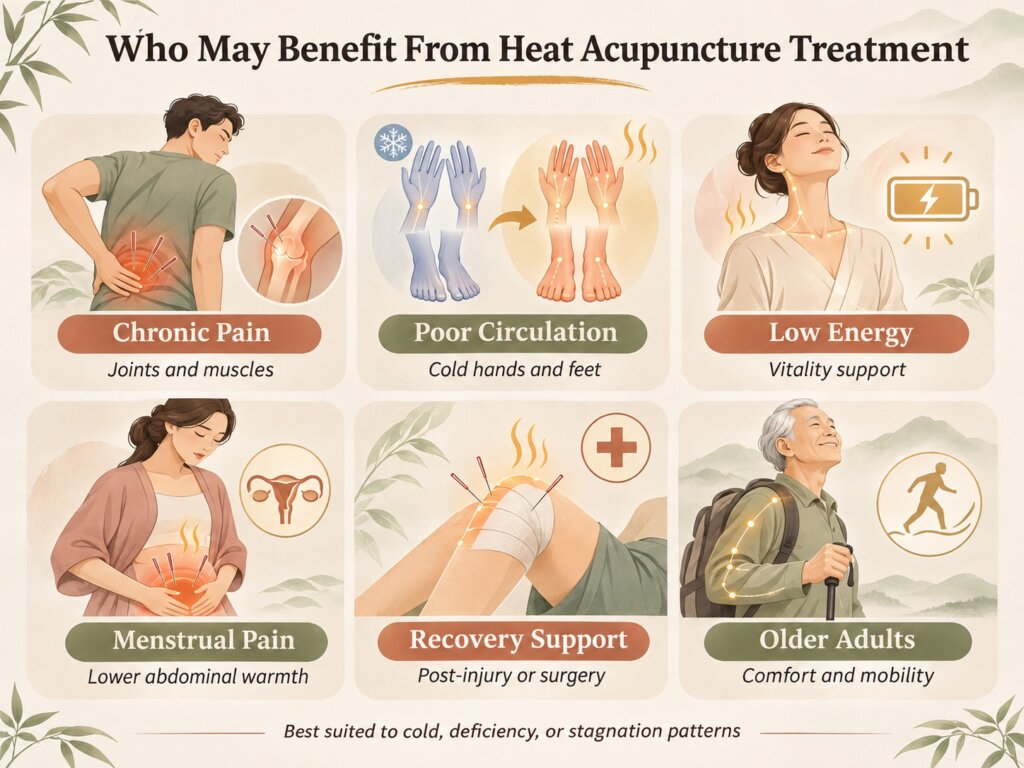
Heat acupuncture is not universally applied to every patient. It is most commonly recommended for individuals whose symptoms align with cold, deficiency, or stagnation patterns in TCM. That said, the range of people who fall into these categories is broader than you might expect.
1. People With Chronic Joint or Muscle Pain
Patients dealing with arthritis, lower back pain, or persistent muscle tension often present with cold-type patterns. Warmth helps penetrate deeply into affected joints and surrounding tissue, supporting both comfort and mobility over time.
2. Individuals With Poor Circulation or Cold Extremities
People who experience cold hands, cold feet, or discomfort that worsens in colder weather may find external warmth temporarily comforting. However, persistent cold extremities can have several underlying causes, including circulatory or neurological conditions. Heat-based acupuncture should not be presented as a proven treatment for poor circulation, and unexplained symptoms deserve appropriate medical evaluation.
3. Patients Managing Fatigue or Low Energy
Traditional Chinese Medicine associates certain patterns of fatigue with Yang deficiency and describes warming techniques, including moxibustion, as ways to address these patterns. These traditional explanations do not establish that heat acupuncture restores energy or treats the underlying medical causes of fatigue. Persistent or unexplained fatigue should be assessed by a qualified healthcare professional.
4. Women With Menstrual Pain or Hormonal Imbalance
Some traditional approaches use warmth to address menstrual discomfort, particularly when symptoms are described as worsening with cold. While external heat may offer temporary comfort for menstrual cramps, evidence is insufficient to conclude that heat-assisted acupuncture reliably corrects hormonal imbalances. Persistent, severe, or unusual menstrual symptoms should be discussed with a healthcare professional.
5. Those Recovering From Injury or Surgery
Warmth may help some individuals manage muscle stiffness during later stages of recovery, but its suitability depends on the injury, treatment stage, and medical history. Heat should not automatically be applied to fresh injuries, significant swelling, areas with reduced sensation, or healing surgical wounds. Patients recovering from surgery should seek guidance from their treating healthcare professional before considering additional heat-based techniques.
6. Older Adults Managing Age-Related Decline
Older adults experiencing joint stiffness or persistent muscle discomfort may appreciate the relaxing sensation of controlled warmth. However, age-related changes in skin sensitivity, circulation, and underlying health conditions can increase the importance of careful temperature monitoring. Heat-based treatments should be individualized, with appropriate precautions and realistic expectations about potential benefits.
If you are unsure whether heat acupuncture fits your situation, a consultation with a licensed practitioner is the most direct way to find out. Our clinic offers personalized evaluations where David Armstrong reviews your full health history before recommending any specific technique.
What to Expect During a Heat Acupuncture Session
A session that combines acupuncture with external warmth generally begins with a discussion of symptoms, medical history, and treatment goals. Depending on the practitioner’s training and available services, a qualified provider may evaluate whether a warming technique is appropriate. Not every acupuncture clinic offers heat-based procedures, and treatment methods vary between practices.
In clinics that provide moxibustion, patients may experience warmth near the treatment area and notice an herbal scent from burning mugwort. Other practices may use controlled external heating devices, depending on their equipment and protocols. Patients should be informed about the technique, possible discomfort, and safety precautions before treatment begins.
Needle retention typically lasts 20 to 40 minutes. During this time, the heat continues to work alongside the needles. Many patients report feeling a spreading warmth, a release of tension, or a sense of heaviness that signals deep relaxation. After the session, it is common to feel calm, slightly tired, and noticeably more comfortable in the treated area.
We use only FDA-approved, single-use sterile acupuncture needles and follow Clean Needle Technique (CNT) protocols in every session. Safety and hygiene are never compromised, regardless of which techniques are incorporated into your care plan.
Conclusion
Heat acupuncture combines traditional acupuncture approaches with controlled warmth, although research has not established that adding heat consistently improves clinical outcomes. Understanding the differences between these techniques, their potential benefits, and their safety considerations helps patients make informed treatment decisions.
Acupuncture Colorado Springs provides individualized acupuncture care and cupping therapy under the guidance of David W. Armstrong, L.Ac. Contact the clinic to discuss your concerns, learn about available services, and schedule an appointment.
FAQs
What Is Heat Acupuncture?
Heat acupuncture is an informal term describing approaches that combine acupuncture with a source of controlled warmth. These may include traditional methods such as moxibustion or other external heating techniques. Although warmth may improve comfort for some patients, evidence for additional therapeutic benefits remains limited.
Does Heat Acupuncture Work?
Research suggests acupuncture can help with certain pain conditions, including chronic back pain and knee osteoarthritis. However, evidence that adding heat consistently improves outcomes remains limited. Results depend on the technique, individual health conditions, and treatment goals.
What Is the Difference Between Heat Acupuncture and Moxibustion?
Heat acupuncture is a broad description of acupuncture performed with additional warmth, while moxibustion specifically involves burning mugwort near acupuncture points. Moxibustion is one traditional warming technique, but it is not currently offered at Acupuncture Colorado Springs.
Is Heat Acupuncture Safe?
Safety depends on the heating method, practitioner training, and individual health considerations. Possible risks include burns, skin irritation, and discomfort from excessive heat. People with reduced skin sensation, circulation problems, or other medical concerns should consult a qualified healthcare professional before undergoing heat-based treatment.
How Much Does Heat Acupuncture Cost?
The cost of heat-assisted acupuncture varies by provider, location, and treatment method. Some practices include warming techniques within standard acupuncture visits, while others charge separately. Acupuncture Colorado Springs does not currently offer moxibustion, so contact the clinic directly for pricing on its available acupuncture and cupping services.