You just finished an acupuncture session feeling relaxed, and then a headache starts creeping in. That is frustrating, especially if you came in hoping for pain relief. A migraine after acupuncture is more common than most people realize, and it does not automatically mean something went wrong.
This article explains why post-acupuncture headaches happen, how to tell the difference between a migraine vs headache, what migraine headache causes are at play, and what you can do about it. You will also learn when to be concerned and how personalized acupuncture care can actually support migraine management over time.
Key Takeaways
- A migraine after acupuncture is a recognized, usually temporary side effect that often resolves on its own within hours.
- Understanding migraine headache causes helps explain why some people are more sensitive to post-treatment responses.
- The difference between migraine vs headache matters when deciding how to respond to your symptoms.
- Natural remedies for headaches like hydration, rest, and cold compresses can ease discomfort after a session.
- Working with a licensed acupuncturist allows for adjustments that reduce the chance of post-treatment headaches.
- Acupuncture may support long-term migraine management when used as part of a personalized care plan.
Why You Might Get a Migraine After Acupuncture
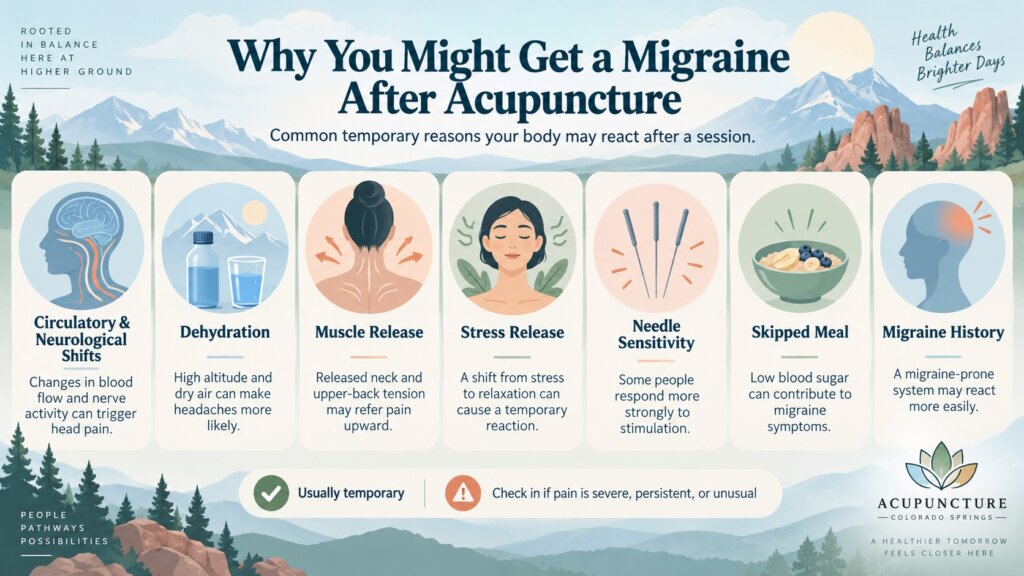
When people ask why they have a migraine after acupuncture, the answer usually comes down to how the body responds to treatment-related stimulation. Acupuncture works by influencing the nervous system, circulation, and the flow of what Traditional Chinese Medicine calls qi, or vital energy, through pathways in the body. That kind of systemic shift can temporarily provoke a headache in people who are already sensitive or who came in with underlying tension.
This reaction is sometimes called a healing response or treatment reaction. It does not mean acupuncture made things worse. It often means your body is adjusting.
According to published research, reported adverse effects from acupuncture are generally mild to moderate and can include local pain, dizziness, nausea, and headache. Serious complications are rare when treatment is performed by a licensed practitioner using sterile, single-use needles.
Here are the most common reasons a headache or migraine develops after an acupuncture session:
1. Circulatory and Neurological Shifts
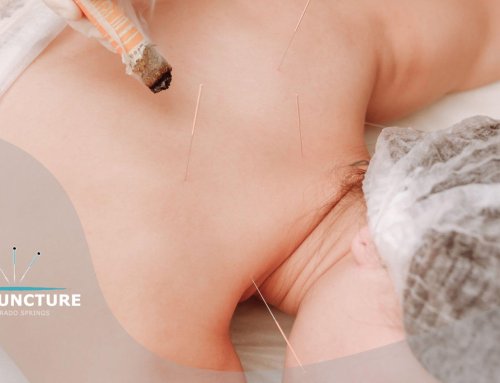
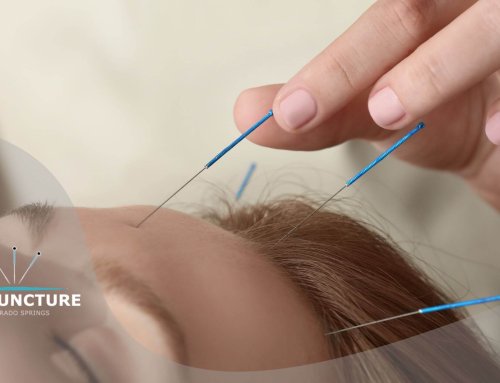
Acupuncture stimulates specific points along the body that influence blood flow and nerve activity. In people prone to migraines, those circulatory changes can temporarily trigger head pain, especially if the points used were near the head, neck, or shoulders.
2. Dehydration Going Into the Session
Colorado Springs sits at high altitude, and the dry climate here accelerates fluid loss faster than most people expect. If you arrived at your appointment already slightly dehydrated, the session may have amplified that, and dehydration is one of the well-documented migraine headache causes.
3. Muscle Release and Tension Redistribution
When tight muscles in the neck or upper back release during treatment, the surrounding tissues can respond with temporary discomfort. That tension redistribution sometimes presents as a headache that radiates from the base of the skull, which people often describe as a headache back of head sensation.
4. Stress Release and the Nervous System
Many patients carry significant stress into a session. As the nervous system shifts from a high-alert state into a more relaxed one, the body can respond in unexpected ways, including a temporary headache. This is particularly common in first-time patients or those dealing with chronic stress and burnout.
5. Sensitivity to Needle Stimulation
Some individuals are simply more sensitive to needle stimulation than others. If the acupuncturist used a stronger technique or targeted points that have a strong systemic effect, the body may respond more noticeably, especially in the first few sessions.
6. Skipping a Meal Before Treatment
Coming to an acupuncture session on an empty stomach is a common mistake. Low blood sugar is a well-known trigger for migraines, and the treatment itself can intensify that effect by shifting energy distribution throughout the body.
7. Underlying Migraine Sensitivity
If you already have a history of migraines, your nervous system may be more reactive to any kind of stimulation, including acupuncture. The treatment did not cause your migraine pattern. It may have temporarily activated a sensitivity that was already there.
Understanding which of these factors applies to you is exactly the kind of root-cause thinking that guides care at Acupuncture Colorado Springs. David W. Armstrong, L.Ac., takes time at every visit to review what happened after your last session so the treatment plan can be refined. If post-treatment headaches are a pattern for you, that information shapes how your next session is approached.
Dizziness After Acupuncture: Why It Happens and How to Reduce It
Dizziness after acupuncture is often tied to the deep relaxation response the treatment triggers. Your nervous system shifts, blood pressure can dip slightly, and if you stand up too fast or skipped lunch beforehand, lightheadedness follows. A light meal or snack about an hour before your appointment gives your body stable blood sugar to work with. After treatment, take a moment before sitting up, and another before standing.
These reactions are typically mild and short-lived. A national survey referenced by acupuncture clinicians found that 89.3% of 9,408 patients experienced no side effects at all, which puts the risk in perspective.
Migraine vs Headache: Knowing What You Are Actually Experiencing After Acupuncture
Not every post-acupuncture headache is a migraine, and the distinction matters because the two respond differently to natural remedies for headaches and self-care. A migraine typically involves moderate to severe throbbing pain, often on one side of the head, and comes with nausea, light sensitivity, or sound sensitivity. A tension-type headache more often feels like pressure or tightness, sometimes described as a band around the head, and is linked to muscle tension, fatigue, or stress.
After acupuncture, most people report a dull, pressure-based headache rather than a full migraine episode. That said, people with a migraine history may experience a true migraine if the session triggered an existing sensitivity.
| Feature | Migraine | Tension Headache |
|---|---|---|
| Pain quality | Throbbing, pulsating | Pressure, tightness |
| Intensity | Moderate to severe | Mild to moderate |
| Location | Often one side | Both sides, headache back of head common |
| Associated symptoms | Nausea, light or sound sensitivity | Muscle tension, fatigue |
| Duration | 4 to 72 hours untreated | 30 minutes to several hours |
| Common triggers | Hormones, stress, dehydration, sensory stimuli | Stress, posture, fatigue |
If your post-acupuncture head pain is severe, comes on suddenly, or is accompanied by neurological symptoms like vision changes or weakness, seek medical attention. That kind of presentation goes beyond a typical treatment reaction.
Natural Remedies for Headaches After an Acupuncture Session
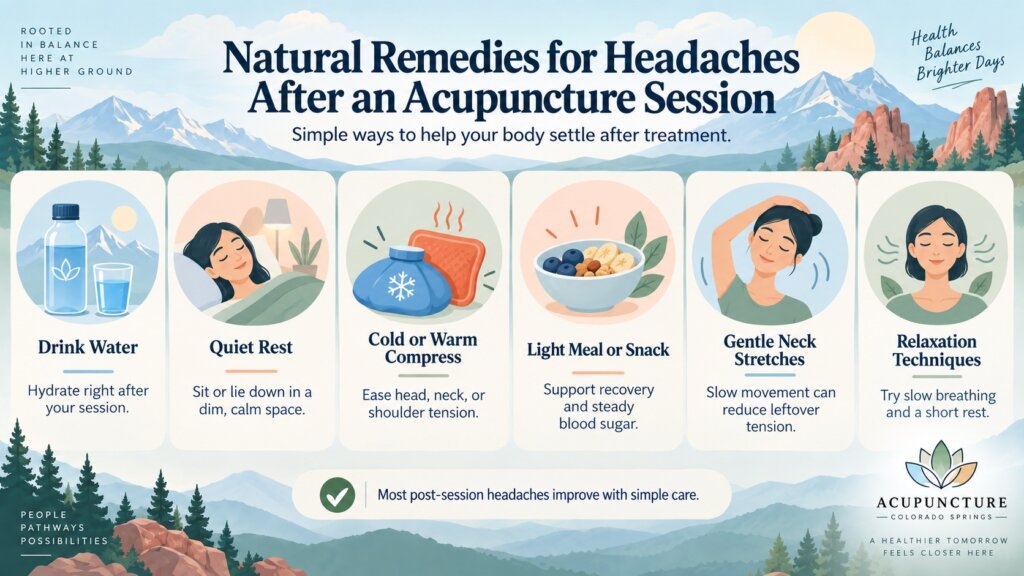
The good news is that most post-acupuncture headaches respond well to simple, non-drug measures. These natural remedies for headaches are practical, easy to apply, and can help your body settle after treatment. You might be wondering whether you need medication to get through it. In most cases, you do not.
Try these approaches first:
- Drink water immediately after your session. Hydration is one of the most effective and underused tools for managing post-treatment headaches, especially at Colorado Springs altitude.
- Rest in a quiet, dim room. Reducing sensory input gives your nervous system time to stabilize after the stimulation of acupuncture.
- Apply a cold or warm compress. A cold pack at the base of the skull or a warm compress on the shoulders can ease tension that contributes to headache back of head discomfort.
- Eat a light meal or snack. Stabilizing blood sugar after a session supports your body’s recovery, especially if you arrived fasted.
- Try gentle neck stretches. Slow, careful neck movement can help release residual tension in the muscles that connect to the head.
- Use relaxation techniques. Slow breathing or a short rest period after your session gives your body space to integrate the treatment.
These measures are not complicated, but they work. At our clinic, we often walk patients through post-session care before they leave so they know exactly what to do if a headache develops.
How Acupuncture Can Actually Support Migraine Headache Causes Over Time

Here is where the conversation shifts. A single post-treatment headache is not the full picture of what acupuncture can do for migraine sufferers. A 2025 systematic review and meta-analysis found that while acupuncture did not significantly outperform standard medical care for reducing migraine days or pain intensity, it did reduce analgesic use and improve quality of life. The authors support it as an adjunctive option, meaning it works well alongside other care strategies.
That is a meaningful finding. Reducing reliance on pain medication while improving daily function is a real outcome for many migraine patients.
Migraine headache causes are complex. Genetic factors, neurological sensitivity, hormonal shifts, sleep disruption, and stress all play a role. Acupuncture does not address all of those equally, but it has been shown to support nervous system regulation, reduce stress response, and improve sleep quality, which are all relevant to migraine frequency and severity.
At Acupuncture Colorado Springs, we look at the full picture. David W. Armstrong, L.Ac., assesses not just your headache symptoms but the patterns underneath them, including stress load, sleep quality, digestion, and hormonal factors. For patients dealing with recurring migraines, our personalized acupuncture sessions are designed to address those root patterns rather than just the pain in the moment. We also offer complementary support through cupping therapy, which can help reduce the chronic muscle tension that often contributes to both tension headaches and migraine triggers. If you are ready to explore a more integrated approach to managing your migraines, we invite you to schedule a consultation with us at 2525 W Pikes Peak Ave, Suite B, Colorado Springs, CO 80904.
What to Tell Your Acupuncturist If You Get a Migraine After Acupuncture
Communication between sessions is one of the most important parts of acupuncture care, and it is something many patients overlook. If you experienced a migraine after acupuncture, your practitioner needs to know. That feedback directly shapes how your next session is structured.
Here is what to share:
- When the headache started relative to your session
- Where the pain was located, including whether it felt like a headache back of head, one-sided, or diffuse
- How long it lasted and how intense it was
- Whether you were dehydrated, hungry, or under unusual stress that day
- Whether you have a history of migraines or recurring headaches
A skilled acupuncturist uses this information to adjust needle placement, technique strength, and point selection. In some cases, fewer needles or a gentler approach in the first few sessions is the right call for sensitive patients. The goal is always to support your body without overwhelming it.
This is exactly the kind of individualized attention that defines care at our practice. We do not follow a generic protocol. Every session begins with a conversation about how you have been feeling since your last visit, and that includes any headaches or unexpected reactions.
When to Seek Medical Attention for a Headache After Acupuncture
Most post-acupuncture headaches are benign and short-lived. But there are situations where a headache after any treatment, including acupuncture, warrants a medical evaluation. You should contact a healthcare provider if your headache is sudden and severe, described as the worst headache of your life, or accompanied by vision changes, numbness, confusion, or weakness. These symptoms are not typical treatment reactions and need prompt attention.
A persistent headache that lasts more than 24 hours after a session, or one that is significantly more intense than your usual pattern, is also worth discussing with both your acupuncturist and your primary care provider. Acupuncture care works best as part of a broader health picture, and we always encourage our patients to maintain open communication with their medical team.
While rare, serious post-acupuncture headaches have been documented. A case report published in a peer-reviewed journal described a postdural puncture headache following acupuncture for lower back pain, where a needle accidentally punctured the dura, the protective membrane surrounding the spinal cord. A warning sign is a positional headache, one that worsens when sitting or standing and improves when lying flat. Seek evaluation from a medical professional right away if you notice that pattern.
Final Thoughts on Managing a Migraine After Acupuncture
A migraine after acupuncture is usually a temporary response, not a reason to stop treatment. With the right preparation, clear communication, and a practitioner who tailors care to your specific pattern, post-session headaches often become less frequent over time. If migraines are a recurring challenge for you, acupuncture may support your overall management plan in meaningful ways, especially when combined with lifestyle adjustments and other holistic therapies. Reach out to Acupuncture Colorado Springs to talk through your experience and explore a care approach built around your needs, not a one-size-fits-all protocol.
Acupuncture Colorado Springs offers board-certified migraine relief care tailored to your needs. David W. Armstrong, L.Ac. addresses root causes, not just symptoms. Get started today—call us!
FAQs
Is It Normal to Get a Migraine After Acupuncture?
It can happen, though it’s not the most common response. Some people experience a temporary headache or migraine-like flare due to nervous system shifts, dehydration, low blood sugar, stress release, or sensitivity to certain points. A qualified, board-certified acupuncturist can adjust point selection and treatment intensity to reduce the chance of recurrence.
Why Do I Feel Worse After Acupuncture Treatment?
A short-term increase in symptoms can occur as your body recalibrates—similar to post-workout soreness. In Traditional Chinese Medicine, this may reflect movement of stagnant patterns or a strong regulatory response in the nervous system. Symptoms should be mild and brief; if they’re intense or lasting, your practitioner should modify your plan.
Can Acupuncture Trigger a Migraine or Headache?
Yes, in some cases acupuncture can temporarily trigger a headache, especially if you’re prone to migraines, overtired, dehydrated, anxious, or treating neck/shoulder tension or sinus issues. This is usually related to how your body responds, not harm from the needles, and it can often be prevented with more tailored point selection and pacing.
How Long Can a Headache Last After Acupuncture?
Most post-treatment headaches resolve within a few hours to 24 hours. If a headache lasts longer than 24–48 hours, is severe, or is different from your usual pattern, contact your practitioner for guidance and consider medical evaluation if needed.
What Should I Do If I Get a Migraine After Acupuncture?
Hydrate, eat a balanced snack or meal, rest, and avoid strenuous activity for the day. Use your usual migraine plan (as directed by your medical provider). Let your acupuncturist know promptly—an experienced clinician can adjust your treatment approach, including point selection, technique, and timing, to better support your system next session.