Acupuncture has helped millions of people manage pain, reduce stress, and support whole-body health. But like any medical treatment, it is not right for everyone in every situation. Knowing the acupuncture contraindications before your first session is one of the most practical things you can do for your safety.
This article breaks down who should avoid acupuncture, who needs special precautions, and what makes a session safe when performed by a licensed practitioner. You will also learn how our clinic approaches these situations so you can make an informed decision about your care.
Key Takeaways
- Acupuncture contraindications range from absolute restrictions to situations that simply require extra caution.
- Pregnancy, bleeding disorders, and pacemakers are among the most commonly cited contraindications for acupuncture.
- Acupuncture and pain management can still be possible for many high-risk patients when the practitioner adjusts technique and needle placement.
- Acupuncture needles must be single-use, sterile, and FDA-approved to minimize infection risk.
- A licensed acupuncturist will always review your full health history before beginning any treatment.
- Working class acupuncture and general wellness treatments may look different depending on your individual health profile.
What Are the Acupuncture Contraindications You Need to Know?
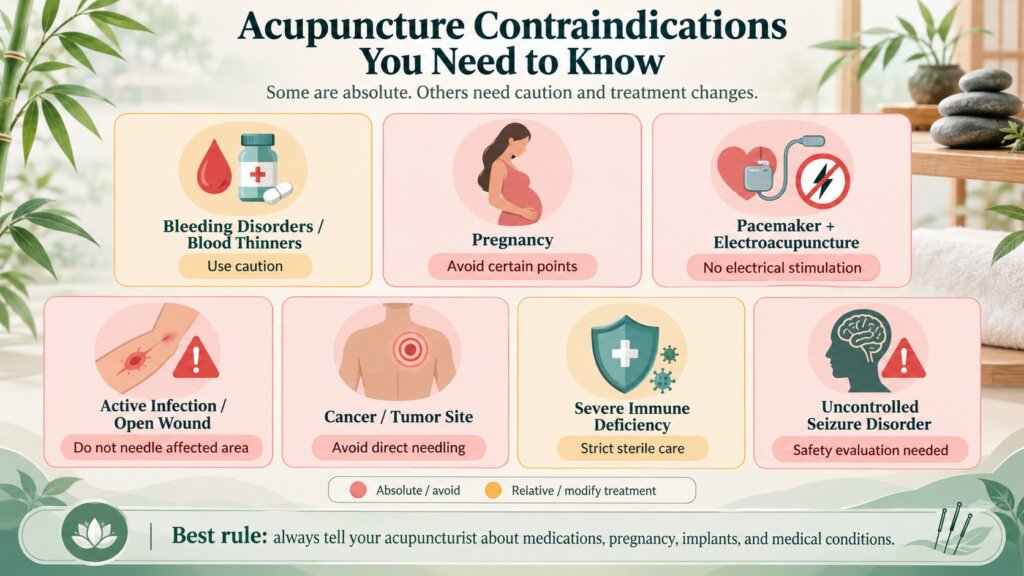
Acupuncture contraindications fall into two broad categories: absolute contraindications, where treatment should not happen at all, and relative contraindications, where treatment may proceed with modifications. Understanding the difference matters, especially if you are managing a chronic condition or taking medications that affect your blood or immune system. Not every restriction is a hard stop.
The World Health Organization and the National Center for Complementary and Integrative Health both recognize that acupuncture is generally safe when performed by a qualified practitioner using sterile needles. The risks increase significantly when those conditions are not met.
Below is a clear breakdown of the main contraindications practitioners evaluate before beginning any acupuncture session.
1. Bleeding Disorders and Blood Thinners
If you have a condition like hemophilia or are taking anticoagulant medications such as warfarin, acupuncture needles can create a risk of excessive bleeding or bruising. This does not automatically disqualify you from treatment, but it does require your practitioner to use fewer needles, avoid certain points, and apply extra care during and after needle insertion. Always disclose any blood-thinning medication during your intake consultation.
2. Pregnancy
Pregnancy is one of the most discussed acupuncture contraindications. Certain acupuncture points are known to stimulate uterine contractions and are specifically avoided during pregnancy, particularly in the first trimester. WHO guidelines recommend particular caution here, and experienced practitioners are trained to work around these points safely. Acupuncture can actually support pregnancy-related symptoms like nausea and lower back pain when performed by someone with the right training.
3. Pacemakers and Electrical Stimulation
Some acupuncture treatments use electroacupuncture, which sends a mild electrical current through the needles. If you have a pacemaker or any implanted electrical device, this form of treatment is contraindicated because it can interfere with the device’s function. Standard needle acupuncture without electrical stimulation is generally still an option in these cases, depending on your cardiologist’s guidance.
4. Active Infections or Open Wounds
Inserting acupuncture needles into or near an area with an active infection, open wound, or skin lesion is contraindicated. Doing so could introduce bacteria deeper into the tissue or spread infection to surrounding areas. Your practitioner will visually assess your skin before treatment and will avoid any compromised areas entirely.
5. Cancer and Tumor Sites
Needling directly over a tumor or known cancer site is contraindicated. Some research suggests that stimulating blood flow to a tumor site may be harmful, and most trained practitioners will avoid those areas as a precaution. Acupuncture for cancer-related symptoms like fatigue, nausea from chemotherapy, or pain is still widely used, with careful point selection away from affected tissue.
6. Severe Immune Deficiency
Patients with severely compromised immune systems, such as those undergoing chemotherapy or living with advanced HIV, face a higher risk of infection from any skin-penetrating procedure. This is a relative contraindication, meaning treatment may still be appropriate with strict sterile protocols in place. The use of single-use, sterile acupuncture needles is non-negotiable in these cases.
7. Uncontrolled Seizure Disorders
If a patient has a seizure disorder that is not well-managed, the physical movement during a seizure could cause injury from needles that are still in place. This is a safety concern rather than a physiological one, and it requires careful evaluation on a case-by-case basis. A practitioner may choose to use fewer needles, shorter session times, or a supervised setting to reduce risk.
Now that you have a clear picture of the main contraindications, it helps to look at how these restrictions compare in terms of severity and what they mean for your treatment options.
Acupuncture Benefits and Why Safety Screening Still Matters
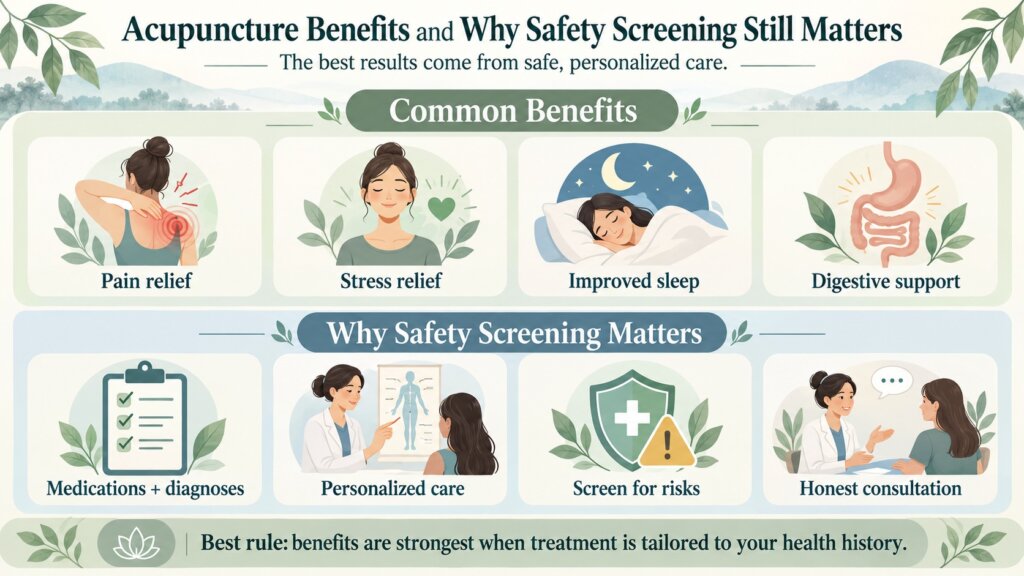
The acupuncture benefits that draw people to treatment, including pain relief, stress reduction, improved sleep, and digestive support, are well-documented in clinical literature. A Cochrane review on acupuncture for chronic low back pain found meaningful improvements in pain and function compared to no treatment or sham acupuncture. These benefits are real, and they are accessible to most people, even those with some of the contraindications listed above.
The key is that acupuncture benefits are best realized when the treatment plan is built around your specific health history. A generic approach does not account for the nuances that make one person’s session different from another’s.
At Acupuncture Colorado Springs, David W. Armstrong, L.Ac., conducts a thorough intake evaluation before any treatment begins. This includes a review of your medications, current diagnoses, surgical history, and any conditions that might affect how your body responds to needling. We do not skip this step, and we do not rush it.
If you are curious about whether acupuncture and pain management could work for your situation, even with a health condition that gives you pause, we encourage you to reach out to our clinic for a consultation. We will give you an honest answer based on your actual health picture, not a generalized response.
How Acupuncture Needles and Technique Reduce Risk
One of the most common concerns people raise is whether acupuncture needles themselves are safe. This is a fair question, and the answer depends almost entirely on the practitioner’s training and the clinic’s hygiene standards. NCCIH notes that serious adverse events, including infections and punctured organs, are rare but do occur when treatment is performed improperly or with non-sterile equipment.
At our clinic, we follow Clean Needle Technique (CNT) protocols and use only FDA-approved, single-use, disposable acupuncture needles. These needles are never reused. They are sterile out of the packaging and discarded in a sharps container immediately after each session.
Beyond the needles themselves, technique matters. A well-trained acupuncturist knows how deep to insert needles at each anatomical location, which areas to avoid entirely, and how to respond if a patient shows signs of discomfort or an adverse reaction. Depth, angle, and point selection are all part of the clinical decision-making that separates a safe session from a risky one.
You might be wondering whether working class acupuncture, meaning community-style or lower-cost group sessions, carries different risks. In those settings, the same contraindication screening and sterile protocols should apply. The format of the session does not change the safety requirements.
Special Populations and Acupuncture Contraindications
Some groups require more careful evaluation before beginning acupuncture treatment. This does not mean they cannot benefit. It means the approach needs to be thoughtful and individualized.
Elderly patients often have thinner skin, reduced circulation, and may be on multiple medications. These factors influence needle depth, session length, and the number of points used in a single visit. Children can receive acupuncture, but the technique is modified significantly, with shorter needle retention times and lighter stimulation.
Patients with metal allergies should inform their practitioner, as most acupuncture needles are made from stainless steel. Alternatives exist, but they need to be requested. Patients with a history of fainting or needle phobia should also disclose this upfront so the practitioner can take steps to prevent a vasovagal response during treatment.
Our practice serves a wide range of patients across Colorado Springs, from younger adults managing stress and hormonal imbalance to older residents dealing with arthritis and circulatory concerns. Each of these groups has different risk profiles, and we account for all of them. If you are exploring acupuncture for chronic pain management or any other condition, our full list of services covers the range of treatments we offer, including cupping therapy, Chinese herbal medicine, and craniosacral therapy, all of which are also subject to their own safety screenings.
When to Postpone Rather Than Cancel Acupuncture
Not every contraindication means you can never receive acupuncture. Some situations call for postponing treatment until conditions change. For example, if you are in the middle of an acute illness with fever, it is generally better to wait until you recover before scheduling a session. Needling during active illness can sometimes intensify symptoms or place additional stress on an already taxed system.
Similarly, if you have recently had surgery, your practitioner will likely recommend waiting until the surgical site has healed before working in that region. Treatment can often continue on unaffected areas of the body in the meantime.
Emotional state also plays a role. Patients who are extremely fatigued, hungry, or emotionally distressed may be more prone to lightheadedness during a session. Practitioners are trained to recognize these signs and may choose to shorten a session or delay it to another day.
The Colorado Springs altitude and dry climate are worth mentioning here too. Patients who are newly arrived to the area or dealing with altitude-related fatigue may need a gentler initial session while their body adjusts. We factor in these local environmental realities when building your treatment plan.
Conclusion
Acupuncture contraindications are specific, manageable, and best evaluated by a licensed practitioner who knows your full health history. Most people can receive acupuncture safely with the right modifications in place. If you are ready to find out whether acupuncture is right for you, book a consultation with Acupuncture Colorado Springs at 2525 W Pikes Peak Ave, Suite B, Colorado Springs, CO 80904, and let us build a care plan that fits your actual needs.
Acupuncture Colorado Springs ensures your safety through board-certified, personalized acupuncture care. David W. Armstrong carefully screens every patient for contraindications. Get started today by calling our Colorado Springs clinic.
FAQs
What Are the Contraindications for Acupuncture?
Acupuncture is generally safe when performed by a licensed practitioner using sterile, single-use needles, but it may be contraindicated or require modification in cases such as uncontrolled bleeding disorders, active skin infections at the needle site, severe needle phobia or fainting risk, certain high-risk pregnancies (for specific points), and in patients who cannot safely remain still or follow aftercare instructions. A thorough intake helps determine what’s appropriate.
Who Should Not Get Acupuncture?
People who should avoid acupuncture or need medical clearance first include those with severe or uncontrolled bleeding disorders, those on high-dose anticoagulants without provider guidance, individuals with active infection or open wounds where needles would be placed, and anyone experiencing a medical emergency (e.g., chest pain, stroke symptoms). Most others can receive acupuncture with proper screening and point selection.
When Should Acupuncture Be Avoided?
Acupuncture should be avoided during acute medical emergencies, when you have a fever with severe systemic illness until evaluated, over areas of active infection or inflamed skin, and if you are overly intoxicated or unable to consent. It may also be postponed or adjusted if you’re extremely fatigued, fasting, or prone to fainting—your practitioner can modify the treatment plan for safety.
What Conditions Make Acupuncture Unsafe?
Acupuncture can be unsafe without appropriate precautions in patients with significant bleeding risk, severe immune compromise (depending on situation), uncontrolled seizure disorders, or certain pregnancy-related risk factors (for specific points/techniques). It can also be unsafe if performed by unlicensed providers or with non-sterile needles—licensed clinics follow strict hygiene and safety standards.
What Are the Risks and Side Effects of Acupuncture?
Common side effects are mild and temporary, such as slight soreness, bruising, minor bleeding, lightheadedness, or short-term fatigue/relaxation. Serious complications are rare when treatment is performed by a trained, licensed acupuncturist using sterile, single-use needles and appropriate technique; your practitioner should review your health history to minimize risk.