You just booked your first acupuncture session—or maybe you’ve had a few already—and a practical question comes up: can you drive after acupuncture? It sounds simple, but the answer depends on how your body responds to treatment. Some people walk out feeling sharp and grounded. Others feel deeply relaxed, a little floaty, or even mildly drowsy. Neither reaction is wrong. They both reflect how acupuncture interacts with your nervous system.
This article covers what you can realistically expect after an acupuncture session, which acupuncture side effects might affect your ability to drive safely, and how to plan your appointment so you’re not caught off guard. We’ll also look at what acupuncture does in the body, who tends to feel more affected post-treatment, and when it’s smarter to arrange a ride home.
Key Takeaways
- Most people can drive after acupuncture, but some experience drowsiness or light-headedness that may make driving unsafe.
- Acupuncture activates the parasympathetic nervous system, which can produce a deeply relaxed or sedative-like state.
- First-time patients and those receiving intensive treatment are more likely to feel post-session fatigue.
- Acupuncture side effects are generally mild and temporary, including dizziness, emotional release, or mild soreness.
- Planning ahead—eating beforehand, hydrating, and scheduling buffer time—reduces the risk of feeling unwell after treatment.
- Consulting your practitioner before your session helps you understand what to expect based on your specific treatment plan.
Now that you have the short version, let’s go deeper into each of these points so you can make an informed decision before your next appointment.
Can You Drive After Acupuncture? The Direct Answer
The short answer is: it depends. Most patients drive themselves home without any issue. But a meaningful portion—especially those new to acupuncture or receiving more intensive treatments—report feeling too relaxed, foggy, or light-headed to feel confident behind the wheel. This isn’t a reason to avoid acupuncture. It’s just something worth planning for.
What acupuncture does is stimulate specific points on the body to regulate the flow of energy, or Qi, through pathways called meridians. From a biomedical perspective, this process triggers the release of endorphins, activates the parasympathetic nervous system, and reduces cortisol levels. That combination can feel wonderful—but it can also leave you in a state that resembles the feeling right before sleep.
Think of it this way: if a massage left you too relaxed to drive, acupuncture can do the same thing, sometimes more so. The depth of relaxation varies by person, by session type, and by how much stress or tension your body was holding before treatment.
What Does Acupuncture Do to Your Body During and After a Session?
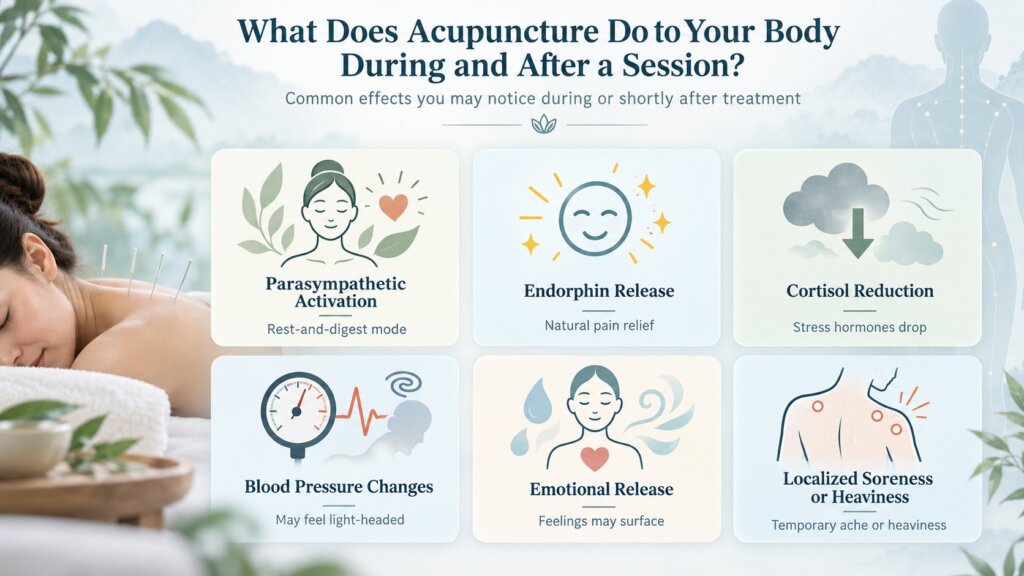
Understanding what acupuncture does helps explain why post-session driving is even a question worth asking. Acupuncture is not just a passive experience where needles sit in your skin. It actively changes your body’s internal state in ways that can linger for an hour or more after the session ends.
Here is what typically happens during and after treatment:
1. Parasympathetic Activation
Acupuncture shifts your body from a stress-dominant state into rest-and-digest mode. This is the parasympathetic nervous system at work—the same system responsible for slowing your heart rate, lowering blood pressure, and promoting deep relaxation. For many patients, this feels like the best nap they never took.
2. Endorphin Release
The body releases natural pain-relieving chemicals during acupuncture. These endorphins can create a mild euphoric or sedated feeling, similar to what some people experience after vigorous exercise. It’s pleasant, but it can dull reaction time temporarily.
3. Cortisol Reduction
Stress hormones drop during and after a session. While this is one of the primary goals of acupuncture for anxiety and stress relief, the sudden reduction in cortisol can leave some patients feeling unusually calm—or even emotionally tender.
4. Blood Pressure Changes
Some patients experience a temporary drop in blood pressure after acupuncture. This can cause dizziness or light-headedness, particularly if you stand up too quickly after lying on the treatment table.
5. Emotional Release
Acupuncture often moves more than just physical tension. Some patients cry, feel unexpected emotions, or experience a mental clarity that feels almost disorienting at first. This is a normal part of the healing response, but it can affect your mental focus for a short time.
6. Localized Soreness or Heaviness
You might notice a dull ache or heaviness near the needle sites. This sensation—called De Qi in Traditional Chinese Medicine—is considered a sign that the treatment is working. It usually fades within an hour but can feel distracting while driving.
Common Acupuncture Side Effects That Could Affect Driving
Acupuncture side effects are generally mild and short-lived, but they are real. Knowing what to watch for helps you assess your own state before getting behind the wheel. You might be wondering which side effects are most likely to affect driving safety specifically.
| Side Effect | How Common | Impact on Driving | Typical Duration |
|---|---|---|---|
| Drowsiness or fatigue | Very common | Moderate to high | 30 minutes to 2 hours |
| Light-headedness or dizziness | Occasional | High | 15 to 45 minutes |
| Emotional sensitivity | Occasional | Low to moderate | Varies |
| Mild soreness near needle sites | Common | Low | 1 to 24 hours |
| Deep mental calm or fogginess | Common | Moderate | 30 minutes to 1 hour |
| Minor bruising or skin sensitivity | Rare | None | 1 to 3 days |
Drowsiness and dizziness are the two side effects most relevant to driving safety. If you feel either of these after your session, wait until they pass before getting on the road. There is no shame in sitting in the waiting area for an extra 20 minutes. Your safety—and everyone else’s—matters more than a tight schedule.
Who Is More Likely to Feel the Effects After Acupuncture?
Not everyone leaves an acupuncture session feeling drowsy. Some patients feel energized, clear-headed, and ready to go. Others feel like they need a quiet room and a blanket. The difference often comes down to a few key factors.
You are more likely to feel strong post-session effects if you are a first-time patient, if your body was carrying significant stress or tension before the appointment, or if your treatment involved a larger number of needles or deeper stimulation. Patients receiving acupuncture for chronic pain, anxiety, or insomnia often report more pronounced relaxation responses because those conditions involve heightened nervous system activity that acupuncture works to calm.
People who skipped a meal before their session also tend to feel more light-headed afterward. Blood sugar plays a role in how well your body handles the treatment. Eating a light meal one to two hours before your appointment is one of the simplest ways to stabilize your experience.
At Acupuncture Colorado Springs, David W. Armstrong, L.Ac., takes time before each session to understand where you are physically and energetically. This allows him to calibrate your treatment so the response is therapeutic rather than overwhelming—especially for patients new to acupuncture or managing complex conditions.
How Does Acupuncture Work for Specific Conditions That May Intensify the Response?
How does acupuncture work differently depending on what condition is being treated? The answer matters for driving, because some treatment goals produce stronger relaxation responses than others.
If you are receiving acupuncture for anxiety or stress relief, your session is specifically designed to calm your nervous system. That means the post-session drowsiness is not a side effect—it is the intended result. The same applies to treatments for insomnia. If your practitioner is working to help you sleep better, your body may respond to the session as though it is time to rest.
Pain management treatments, such as those for chronic back pain or arthritis, may produce a different response. Some patients feel relief and lightness. Others feel a temporary increase in soreness as the body begins its healing process. Either way, it is worth checking in with yourself before driving.
Our clinic offers a full range of treatments across pain management, stress and sleep support, digestive health, women’s hormonal balance, and more. If you are unsure how a specific treatment might affect you, ask David during your intake evaluation. That conversation is part of the personalized care we provide—not an afterthought.
Practical Tips: How to Plan Around Your Acupuncture Appointment
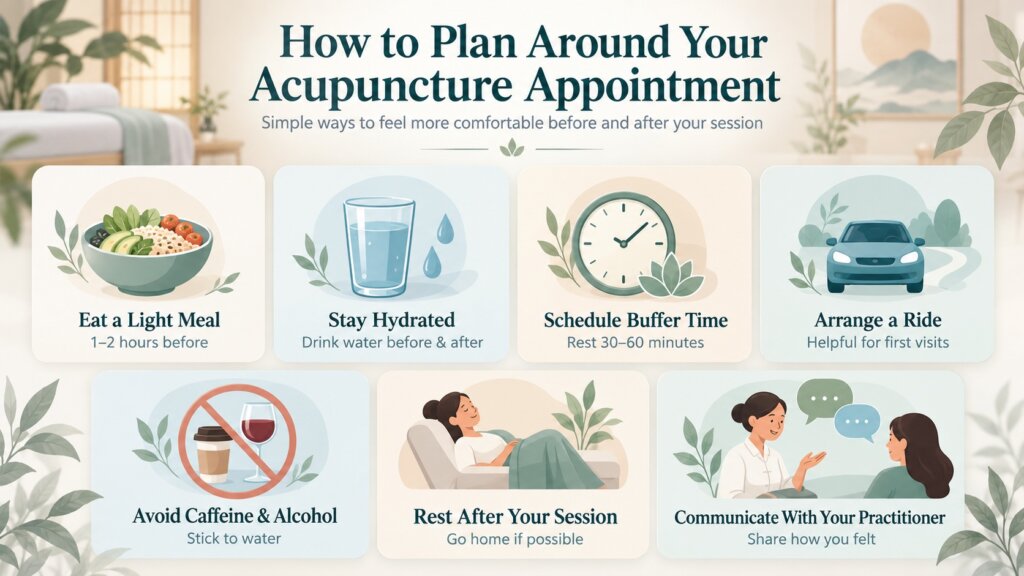
Planning ahead makes a real difference in how you feel after your session. These steps are straightforward and worth building into your routine, especially for the first few appointments.
1. Eat a Light Meal Beforehand
Have something to eat one to two hours before your session. A light meal—not too heavy, not too rushed—helps stabilize your blood sugar and reduces the chance of feeling faint or dizzy after treatment.
2. Stay Hydrated
Drink water before and after your appointment. Colorado Springs sits at a higher altitude, and the dry climate here means dehydration can sneak up on you. Hydration supports your body’s ability to process the treatment and recover quickly.
3. Schedule Buffer Time
Avoid booking your acupuncture session right before a demanding task or a long drive. Give yourself at least 30 to 60 minutes after the session to rest, hydrate, and check in with how you feel before getting on the road.
4. Arrange a Ride for Your First Few Sessions
If you are new to acupuncture, consider having someone drive you to and from your first appointment. Once you know how your body responds, you can decide whether driving yourself is comfortable going forward.
5. Avoid Caffeine and Alcohol Before Treatment
Both substances interfere with how your body responds to acupuncture. Caffeine can blunt the relaxation response. Alcohol can amplify dizziness or light-headedness after the session. Stick to water in the hours leading up to your appointment.
6. Rest After Your Session If Possible
If your schedule allows, go home and rest after treatment rather than heading straight back to work or running errands. Your body does a lot of internal work after acupuncture, and giving it space to process that work often leads to better outcomes.
7. Communicate With Your Practitioner
Tell your acupuncturist how you felt after previous sessions. If you felt unusually drowsy or dizzy, that feedback helps them adjust your treatment plan. Good communication is central to the personalized care model we follow at our clinic.
Does Acupuncture Hurt, and Does Pain Affect How You Feel Afterward?
Does acupuncture hurt? This is one of the most common questions new patients ask, and it connects to the driving question in a subtle way. If you are bracing for pain during a session, your nervous system stays in a heightened state throughout. That tension can affect how you feel when you leave.
The needles used in acupuncture are extremely thin—far thinner than the needles used for injections or blood draws. Most patients feel a brief sensation when the needle is inserted, often described as a slight pressure, tingling, or warmth. Some points feel more sensitive than others. But sharp, prolonged pain is not a normal part of acupuncture when performed correctly.
At Acupuncture Colorado Springs, we use only FDA-approved, single-use sterile needles and follow Clean Needle Technique protocols throughout every session. Patient comfort and safety are not optional—they are built into how we practice. When patients feel safe and at ease during treatment, the post-session response tends to be smoother and more balanced.
If needle sensitivity is a concern for you, mention it before your session begins. David can adjust needle depth, placement, and stimulation to match your comfort level without compromising the effectiveness of your treatment.
When Should You Definitely Not Drive After Acupuncture?
There are situations where driving after acupuncture is clearly not a good idea. If you experience any of the following after your session, wait until the symptoms fully resolve before getting behind the wheel.
- You feel dizzy or unsteady when standing up from the treatment table.
- Your vision feels blurry or you have difficulty focusing.
- You feel a strong wave of drowsiness that you cannot shake.
- You feel emotionally overwhelmed or tearful in a way that affects your concentration.
- You feel physically weak or shaky, particularly in your legs.
These responses are not dangerous in themselves—they are signs that your body is responding deeply to treatment. But they are not compatible with safe driving. Sit quietly, drink some water, and let the sensations pass. Our team is always willing to let you rest in the clinic for as long as you need before heading out.
Wrapping Up What You Need to Know About Driving After Acupuncture
Most people can drive after acupuncture without any issue, but it is always worth checking in with yourself before assuming you are fine to go. Your body’s response to treatment is individual, and the first few sessions are the most unpredictable. Plan ahead, eat before your appointment, hydrate well, and give yourself a few minutes after the session to assess how you feel. If you are curious about starting acupuncture in Colorado Springs or want to understand what a session might look like for your specific needs, reach out to us at Acupuncture Colorado Springs—located at 2525 W Pikes Peak Ave, Suite B, Colorado Springs, CO 80904. David W. Armstrong, L.Ac., is here to guide you through every step of your care with honesty, precision, and genuine attention to your well-being.
Acupuncture Colorado Springs offers expert, personalized acupuncture care designed to leave you balanced, not drowsy. David W. Armstrong, L.Ac. tailors every session to your needs. Get started today by booking your first appointment.
FAQs
Can You Drive After Acupuncture Treatment?
Most people can drive after acupuncture, but if you feel lightheaded, very relaxed, or “spaced out,” wait until you feel fully steady. At Acupuncture Colorado Springs, we tailor treatments and can advise you based on how you respond that day.
How Long Should You Wait to Drive After Acupuncture?
If you feel normal, you can usually drive right away. If you feel tired or dizzy, sit and hydrate for 10–20 minutes (or longer if needed) before driving.
Is It Safe to Drive Home After Acupuncture?
For most patients, yes. Safety depends on how you feel after your session—if you’re unsteady, drowsy, or dizzy, it’s safer to wait, have someone drive, or use a rideshare.
Why Do You Feel Dizzy or Tired After Acupuncture?
This can happen from deep relaxation, a shift in circulation, low blood sugar, dehydration, or sensitivity to treatment—especially if you came in stressed, exhausted, or hadn’t eaten. We monitor your response and adjust your care to keep sessions comfortable and safe.
What Should You Avoid Doing After Acupuncture?
Avoid strenuous workouts, alcohol, and heavy meals for the rest of the day if you feel fatigued. It’s best to hydrate, eat something light if needed, and give your body time to integrate the treatment—especially after stronger techniques like cupping or Gua Sha.