Acupuncture has been practiced for thousands of years, and for good reason. Research from the National Center for Complementary and Integrative Health (NCCIH) confirms that when performed by a trained, licensed practitioner, acupuncture is generally safe with few serious side effects. Most people finish a session feeling relaxed, lighter, and more at ease than when they walked in.
But what happens when things don’t go as expected? Can acupuncture go wrong? This article walks you through the rare but real complications associated with acupuncture, what causes them, who is most at risk, and—most importantly—how to protect yourself by choosing qualified care. You’ll also learn how we approach patient safety at every step of treatment.
Key Takeaways
- Acupuncture is considered safe when performed by a licensed, board-certified practitioner using sterile, single-use needles.
- Serious complications are rare but can occur when care is provided by untrained or unlicensed individuals.
- Minor side effects like bruising, soreness, or lightheadedness are more common and typically resolve quickly.
- Certain medical conditions and medications may increase the risk of adverse reactions to acupuncture.
- Choosing a qualified provider who follows Clean Needle Technique (CNT) protocols significantly reduces your risk.
- Personalized treatment planning—not a one-size-fits-all approach—is key to both safety and effectiveness.
Can Acupuncture Go Wrong? What the Research Actually Says
This is probably the first question anyone asks before booking a session. The short answer is yes—acupuncture can go wrong, but serious complications are rare and most often linked to poor practice rather than the therapy itself. According to the NCCIH, the overall risk of serious adverse events from acupuncture is very low when care is delivered by a trained professional. That distinction matters more than most people realize.
A large body of research, including systematic reviews and clinical data, consistently shows that acupuncture carries a favorable safety profile compared to many conventional pain management options. The complications that do occur tend to fall into two categories: minor and expected, or rare and serious. Understanding both helps you make an informed decision.
What does acupuncture do, exactly? In Traditional Chinese Medicine, it stimulates specific points along the body’s meridian pathways to restore the flow of Qi—your body’s vital energy. From a biomedical perspective, needle insertion activates the nervous system, influences pain-signaling pathways, and may trigger the release of endorphins and anti-inflammatory compounds. Neither mechanism is inherently dangerous. The risk enters when the technique, environment, or practitioner credentials fall short.
Common Minor Side Effects: What Does Acupuncture Do to Your Body Short-Term?
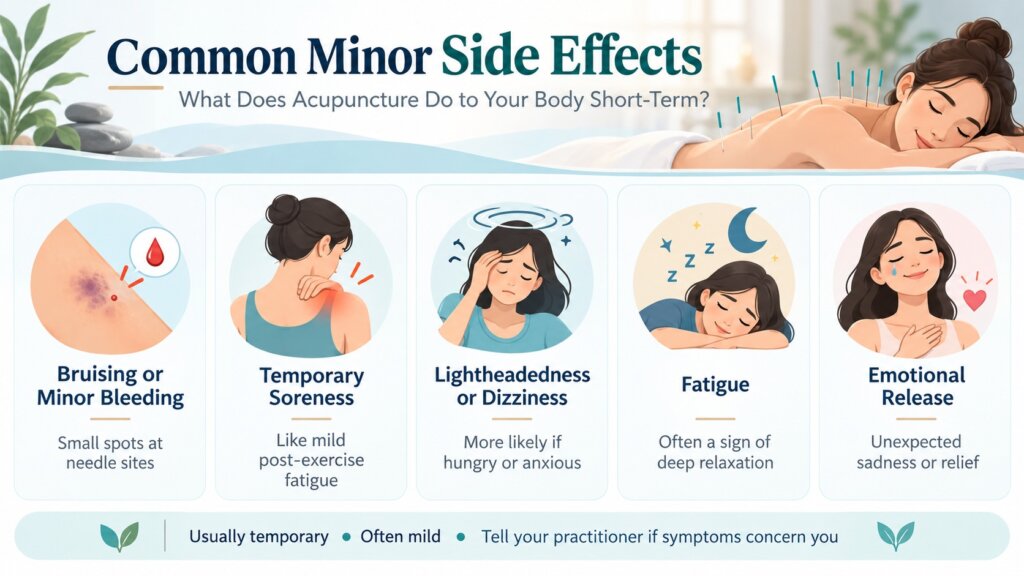
Before exploring serious complications, it helps to normalize the minor reactions that many patients experience. These are not signs that something went wrong—they are often part of the body’s natural response to treatment. Knowing what to expect reduces unnecessary worry and helps you communicate clearly with your practitioner.
You might be wondering whether acupuncture hurts. Most people describe the sensation as a mild ache, tingling, or pressure at the needle site—not sharp pain. Does acupuncture hurt? Rarely in a significant way, and any discomfort usually fades within seconds.
Common minor side effects include:
- Bruising or minor bleeding at needle insertion points, especially in people who bruise easily
- Temporary soreness in the treated area, similar to post-exercise muscle fatigue
- Lightheadedness or dizziness, particularly if you arrive hungry or anxious
- Fatigue after a session, which often reflects the body entering a deeper state of rest
- Emotional release, including unexpected feelings of sadness or relief, linked to nervous system shifts
These reactions are temporary and generally resolve within 24 to 48 hours. At our clinic, we always review your health history before a session to anticipate and minimize even these mild responses.
Rare but Serious Complications: When Can Acupuncture Go Wrong and How Does Acupuncture Work Against You?
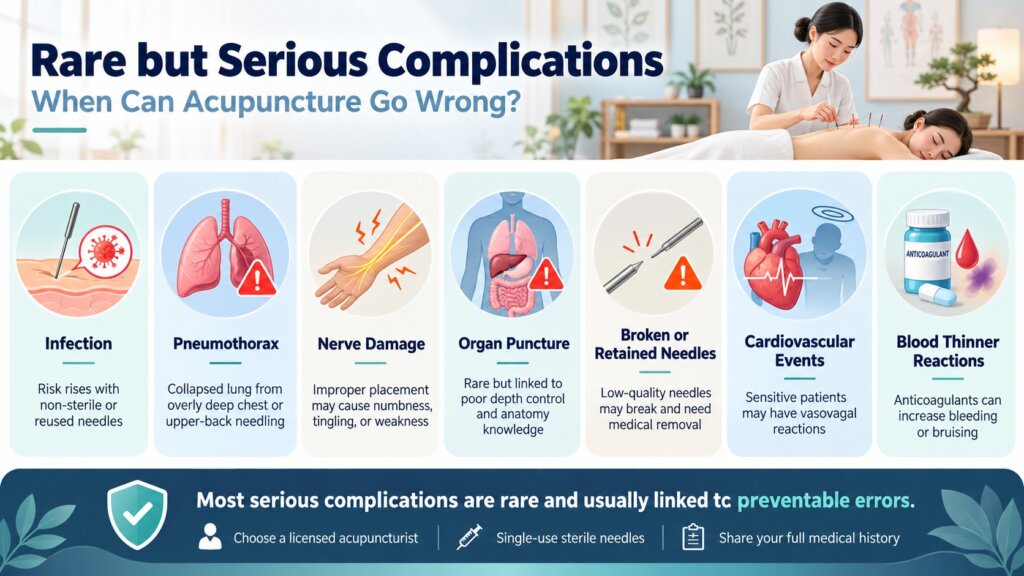
Now for the part most people are genuinely concerned about. Serious complications from acupuncture are uncommon, but they are not impossible—and they deserve honest discussion. The NCCIH and multiple clinical reviews identify a handful of adverse events that have been documented in the medical literature, almost always tied to inadequate training, non-sterile equipment, or inappropriate patient selection.
Here is what the evidence shows about the most serious risks:
1. Infection at the Needle Site
When non-sterile or reused needles are used, bacteria can be introduced beneath the skin. This can lead to localized infections or, in extreme cases, systemic infection. This risk is effectively eliminated when practitioners use FDA-approved, single-use, sterile needles—which is standard practice at any reputable clinic.
2. Pneumothorax (Collapsed Lung)
This is one of the most cited serious complications in acupuncture literature. It occurs when a needle is inserted too deeply in the chest or upper back area, puncturing the lung. It is extremely rare and almost exclusively associated with improperly trained practitioners who lack anatomical knowledge.
3. Nerve Damage
Incorrect needle placement near a nerve can cause temporary or, in rare cases, lasting nerve irritation. Symptoms may include numbness, tingling, or weakness in the affected area. A licensed acupuncturist with proper anatomical training knows how to avoid nerve pathways during treatment.
4. Organ Puncture
Similar to pneumothorax, organ puncture is linked to improper needle depth and poor anatomical knowledge. The kidneys, spinal cord, and heart have all been documented in case reports, though these cases are exceptionally rare and largely preventable with proper training.
5. Broken or Retained Needles
Low-quality needles can occasionally break during insertion or removal. A retained needle fragment may require medical intervention to remove. This risk is minimized by using high-quality, single-use needles and following proper technique throughout the session.
6. Cardiovascular Events in High-Risk Patients
Some research suggests that acupuncture near certain acupressure points, particularly those near the chest or neck, may trigger vasovagal responses in sensitive individuals. These episodes—characterized by a sudden drop in heart rate and blood pressure—are usually brief but can be alarming without proper clinical oversight.
7. Adverse Reactions in Patients on Blood Thinners
People taking anticoagulant medications face a higher risk of prolonged bleeding or bruising at needle sites. This doesn’t mean acupuncture is off-limits—it means your practitioner needs to know your full medication list before treatment begins.
The pattern here is clear. Most serious complications are not random. They follow a trail of preventable errors: inadequate training, reused equipment, poor patient screening, or improper technique. That is exactly why provider credentials matter so much.
Who Is Most at Risk? Understanding How Acupuncture Is for What Patients Safely
Not everyone carries the same level of risk going into an acupuncture session. Certain medical conditions and lifestyle factors can change how the body responds to needling. A responsible practitioner will always screen for these before proceeding with treatment.
Groups that may require modified treatment or extra precautions include:
- People with bleeding disorders or who take blood-thinning medications
- Pregnant women, particularly in the first trimester and around specific acupressure points for migraine or labor induction that may stimulate uterine contractions
- Individuals with pacemakers, when electrical stimulation (electroacupuncture) is being considered
- Patients with active skin infections, open wounds, or compromised immune systems
- Those with severe anxiety or needle phobia, who may be more prone to vasovagal responses
Acupuncture is for what conditions? A wide range—from chronic pain and migraines to insomnia, digestive issues, and hormonal imbalance. But the question of whether it is appropriate for you specifically depends on a full clinical picture, not a general checklist. That’s why we conduct a thorough intake evaluation before every new patient’s first session.
At Acupuncture Colorado Springs, David W. Armstrong, L.Ac., reviews each patient’s health history, current medications, and treatment goals before recommending a care plan. This is not a formality—it is a clinical necessity that directly shapes how safe and effective your sessions will be.
How Does Acupuncture Work Safely? The Role of Licensing and Clean Needle Technique
The single most effective way to reduce acupuncture risk is to choose a licensed, board-certified practitioner. This is not just a recommendation—it is the difference between a therapeutic experience and a preventable medical complication. In Colorado, licensed acupuncturists must meet rigorous educational and examination standards, including training in Clean Needle Technique (CNT), anatomy, and point location.
CNT protocols require the use of FDA-approved, single-use, sterile needles for every patient and every session—no exceptions. These needles are disposed of immediately after use, eliminating any risk of cross-contamination. This is the baseline standard at our clinic, and it is non-negotiable.
We are NCCAOM-certified in both acupuncture and Chinese herbal medicine, fully licensed under Colorado state law, and committed to ongoing education in both traditional and evidence-based approaches. If you are considering acupuncture in Colorado Springs, Manitou Springs, or the surrounding El Paso County area, we encourage you to verify your provider’s credentials before your first appointment. A quick check of their licensing status, training background, and clinic hygiene practices can tell you a great deal about what to expect.
Beyond credentials, the setting matters too. Our clinic at 2525 W Pikes Peak Ave, Suite B, Colorado Springs, CO 80904, is designed for focused, one-on-one care. Every session is private. Every treatment plan is built around your specific diagnosis, not a general protocol. If you are dealing with chronic lower back pain, digestive imbalance, or stress-related fatigue from the demands of life at altitude here in Colorado Springs, your care should reflect that—not a template pulled from a general intake form.
What to Do If You Experience an Unexpected Reaction
Even in the best clinical environments, unexpected reactions can happen. Knowing how to respond—and when to seek additional care—is part of being an informed patient. Most post-treatment reactions are mild and resolve on their own, but some warrant follow-up.
Here is what to do if something feels off after a session:
- Contact your acupuncturist first. Describe what you are experiencing in detail. They can help you determine whether what you are feeling is a normal response or something that needs further evaluation.
- Monitor the needle site. Minor bruising or tenderness is expected. Signs of infection—redness that spreads, warmth, swelling, or discharge—should be evaluated by a medical professional promptly.
- Seek emergency care for severe symptoms. Chest pain, difficulty breathing, or sudden neurological changes after a session require immediate medical attention. These are not typical post-acupuncture responses.
- Document your experience. Write down what you felt, when it started, and how long it lasted. This information is useful for both your acupuncturist and any other healthcare provider you consult.
- Report concerns to your state licensing board. If you believe a complication resulted from negligence or improper technique, you have the right to file a complaint with the Colorado Department of Regulatory Agencies (DORA).
We always make time for follow-up questions between sessions. Patient communication is not a secondary concern for us—it is part of the care itself. If something feels unusual after a treatment at our clinic, you can reach us directly and we will respond.
Can Acupuncture Go Wrong With Herbal Medicine? A Note on Integrative Safety
Acupuncture is often one part of a broader Traditional Chinese Medicine approach. Many patients also use Chinese herbal medicine alongside their acupuncture sessions—and this combination can be highly effective for conditions ranging from hormonal imbalance to digestive disorders. But it also introduces another layer of safety considerations worth understanding.
Herbal formulas can interact with pharmaceutical medications. Some herbs have blood-thinning properties, others may affect how the liver metabolizes certain drugs, and a few are contraindicated during pregnancy. This is not a reason to avoid herbal medicine—it is a reason to use it under qualified guidance.
Our herbal medicine recommendations at Acupuncture Colorado Springs are always customized based on your full health picture, including any medications you take. David W. Armstrong, L.Ac., holds NCCAOM certification in Chinese herbal medicine, which means herbal prescriptions here are not guesswork—they are grounded in both classical texts and modern pharmacological awareness. If you are curious about whether herbal support might complement your acupuncture care, we are happy to walk you through the options during a consultation.
Final Thoughts on Acupuncture Safety and Informed Care
Can acupuncture go wrong? Yes—but serious complications are rare, largely preventable, and almost always tied to inadequate training or improper technique rather than the therapy itself. Choosing a licensed, board-certified practitioner who uses sterile equipment and takes a thorough patient history is the most reliable way to protect yourself. Your safety is not a side note in good acupuncture care—it is the foundation of it. If you are ready to explore what personalized, evidence-informed acupuncture can do for your health in Colorado Springs, we invite you to book a consultation with us and take that first step toward care that is both safe and deeply effective.
At Acupuncture Colorado Springs, your safety is our priority under board-certified licensed acupuncture care. David W. Armstrong minimizes risk through sterile technique and personalized treatment. Contact us today to get started.
FAQs
What Are the Risks or Side Effects of Acupuncture?
Most side effects are mild and temporary, such as slight soreness, small bruising, light bleeding, fatigue, or feeling relaxed afterward. Rare but serious complications (like infection or organ injury) are uncommon when treatment is performed by a properly trained, licensed provider using single-use, sterile needles and appropriate technique—standards we follow at Acupuncture Colorado Springs.
Can Acupuncture Cause Nerve Damage or Paralysis?
Permanent nerve damage or paralysis from acupuncture is extremely rare. When it happens, it is usually linked to improper needle placement or unsafe technique. A board-certified, licensed acupuncturist uses correct anatomical knowledge, depth control, and safety protocols to minimize risk.
What Happens If Acupuncture Is Done Incorrectly?
If performed incorrectly, acupuncture can cause unnecessary pain, bruising, prolonged soreness, worsening of symptoms, fainting, or—very rarely—serious injury or infection. Choosing a licensed professional who follows strict hygiene and evidence-informed safety practices greatly reduces these risks.
How Do You Know If An Acupuncturist Hit A Nerve?
You may feel a brief “zing,” electric sensation, sharp shooting pain, or numbness/tingling that travels along a limb. A skilled practitioner will adjust or remove the needle immediately if this occurs. Ongoing numbness, weakness, or severe pain after treatment is not typical and should be evaluated promptly.
Can Acupuncture Make Symptoms Worse Before They Get Better?
Sometimes symptoms can briefly flare or shift for 24–48 hours as your body responds to treatment, especially with chronic conditions. This should be mild and short-lived. If symptoms significantly worsen, persist, or feel concerning, contact your acupuncturist so the treatment plan can be adjusted safely.