You have probably heard at least one strong opinion about acupuncture. Either someone swears it changed their life, or someone insists it is nothing more than an expensive placebo. The truth sits somewhere in the middle, and it is worth understanding before you make a decision about your care. At Acupuncture Colorado Springs, we believe you deserve honest, clear information, not a sales pitch dressed up as health advice.
This article walks through the most common myths and misunderstandings about acupuncture, what the research actually says, and where this practice genuinely may help. We will cover acupuncture and pain management, the science behind acupuncture points, what acupuncture needles actually do, and how to set realistic expectations before your first visit.
Key Takeaways
- Acupuncture has real but modest evidence for certain types of pain relief, particularly osteoarthritis, headaches, and postoperative discomfort.
- The traditional concept of qi flowing through meridians has no confirmed anatomical basis, but that does not mean the treatment has no value.
- Sham acupuncture studies suggest that context, touch, and therapeutic attention play a significant role in reported outcomes.
- Acupuncture needles are FDA-regulated medical devices and are relatively safe when used by a licensed, trained practitioner.
- Acupuncture is not a universal cure, but it may support symptom relief and complement conventional care for select conditions.
- Personalized, root-cause-focused care from a board-certified practitioner matters more than any single technique.
Let us start with the question most people quietly wonder about but rarely ask directly.
Acupuncture Debunked: What the Research Actually Says About Acupuncture Benefits

The word “debunked” gets thrown around a lot when people talk about acupuncture, and it is worth being precise about what that actually means. Debunking a claim does not always mean the practice has zero value. It means some of the explanations or promises attached to it do not hold up under scrutiny.
Here is what the evidence shows, without exaggeration in either direction.
1. Acupuncture and Pain Management: Modest but Real Benefits
Scientific reviews consistently find that acupuncture for pain management shows modest short-term benefits for conditions like osteoarthritis, tension headaches, and postoperative pain when compared to no treatment at all. The effect is real enough that major health organizations, including the National Center for Complementary and Integrative Health, acknowledge it as a potentially useful option for certain pain syndromes. That said, the benefit tends to be moderate, not dramatic, and it is most supported for specific conditions rather than pain in general.
2. Sham Acupuncture and the Placebo Question
One of the more complicated findings in acupuncture research involves sham acupuncture, where needles are placed at non-traditional points or retractable needles that do not actually penetrate the skin are used. Studies frequently show that real acupuncture and sham acupuncture produce similar outcomes. This suggests that the therapeutic context, the focused attention, the calm environment, and the physical touch of a caring practitioner, may account for a meaningful portion of the benefit. It does not mean the treatment does nothing. It means the explanation for why it works may be more nuanced than traditional theory suggests.
3. The Science Behind Acupuncture Points and Meridians
Traditional Chinese Medicine describes acupuncture points as specific locations along energy channels called meridians, through which a life force called qi flows. Multiple studies have attempted to identify consistent anatomical, cellular, or chemical differences between these points and surrounding tissue, and they have largely come up empty. There is no confirmed structural basis for meridians as they are classically described. This is a real limitation in the traditional explanatory model, and any honest practitioner should acknowledge it rather than dismiss the question.
4. What Acupuncture Needles Actually Do in the Body
Even without a confirmed meridian system, acupuncture needles do interact with the body in measurable ways. Needle insertion can trigger local tissue responses, influence the nervous system, and affect pain signaling pathways. Some researchers point to the release of endorphins and changes in central nervous system activity as possible mechanisms. The biology is not fully mapped, but the idea that needles do absolutely nothing physiologically is also not supported by the evidence.
5. Conditions Where Acupuncture May Help
Evidence summaries from mainstream and government sources, including the NCCIH, suggest that acupuncture may help with the following conditions:
- Chronic low back pain
- Neck pain and tension headaches
- Knee pain related to osteoarthritis
- Chemotherapy-related nausea
- Postoperative pain management
- Certain types of insomnia and stress-related symptoms
The evidence is weaker or inconsistent for many other claimed uses. Acupuncture is not reliably shown to treat underlying disease processes, and promoting it as a near-universal remedy is not supported by high-quality clinical data.
6. Safety: What You Should Know About Acupuncture Needles
Acupuncture needles are FDA-regulated medical devices, and when used by a trained, licensed practitioner, the treatment is considered relatively safe. Documented risks include minor bleeding, bruising, and soreness. More serious adverse events, such as infections or, in rare cases involving improper needle placement, injury to internal structures, have been reported but are uncommon in regulated clinical settings. The risk-benefit picture is generally favorable for appropriate candidates under proper care.
At our clinic, we use sterile, single-use needles for every session and follow all Colorado state safety and hygiene regulations. David W. Armstrong, L.Ac., is board-certified and brings years of clinical experience to every treatment plan. If you are curious about what a session actually involves, our What Is Acupuncture page walks through the process in plain language.
Now that we have covered the research, it helps to look at the specific myths that circulate most often.
Acupuncture Debunked: Common Myths That Mislead Patients About Acupuncture
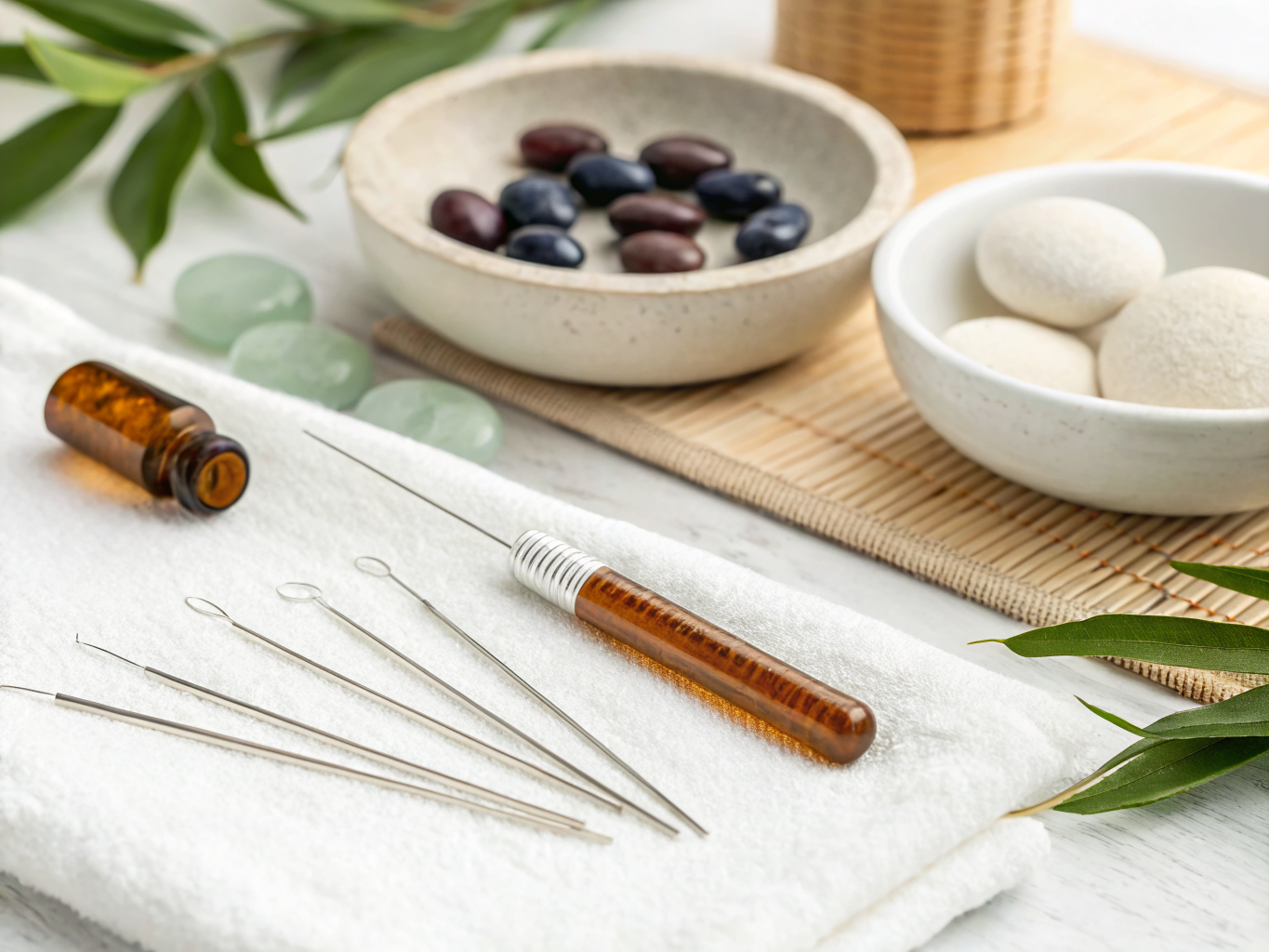
Misinformation about acupuncture travels in two directions. Some people dismiss it entirely based on oversimplified skepticism. Others overestimate what it can do based on inflated claims. Both positions can lead to poor decisions about care.
Here are the myths worth addressing directly.
Myth 1: Acupuncture Is Purely a Placebo With No Real Effect
This is the most common dismissal, and it is not entirely accurate. While placebo and context effects do appear to play a role in acupuncture outcomes, the treatment also produces measurable physiological responses. Calling it purely a placebo oversimplifies a complex picture and ignores the documented benefits for specific pain conditions.
Myth 2: Acupuncture Can Treat Any Condition
Some practitioners and wellness marketers promote acupuncture as a solution for nearly every health problem. The evidence does not support this. The research base is strongest for certain pain syndromes and nausea. For many other conditions, the evidence is weak, inconsistent, or simply absent. A trustworthy practitioner will tell you clearly when acupuncture is a reasonable option and when it is not.
Myth 3: Acupuncture Points Are Precisely Mapped Energy Channels
The classical description of acupuncture points as locations on energy meridians has not been confirmed by anatomy or physiology research. Studies have not found consistent structural differences between traditional acupuncture points and nearby non-points. This does not mean needle placement is random or irrelevant, but it does mean the traditional explanatory framework needs to be understood as a historical model, not a confirmed biological map.
Myth 4: More Sessions Always Mean Better Results
Acupuncture is not a treatment where more automatically equals better. Some conditions respond in a handful of sessions. Others require a longer course of care. A qualified practitioner should reassess your progress regularly and adjust the plan based on how you are actually responding, not push you into an indefinite treatment schedule without clear goals.
Myth 5: Acupuncture Replaces Conventional Medical Care
Acupuncture works best as a complement to, not a replacement for, conventional medical care. If you have a condition that requires diagnosis, medication, or medical monitoring, acupuncture does not substitute for that. What it may do is support symptom management, reduce reliance on some medications for pain, and improve quality of life alongside other treatments.
You might be wondering how to find a practitioner who will give you straight answers rather than oversell the treatment. That is exactly the kind of care we aim to provide.
At Acupuncture Colorado Springs, every new patient begins with a thorough intake conversation. David W. Armstrong, L.Ac., takes time to understand your health history, current symptoms, and personal goals before recommending any treatment. There are no generic protocols here. If acupuncture is a good fit for your situation, we will explain why. If it is not, we will tell you that too. You can schedule a consultation to start that conversation without pressure.
Acupuncture Debunked: Setting Realistic Expectations for Acupuncture and Pain Management
One of the most practical things you can do before starting acupuncture is calibrate your expectations based on what the evidence actually supports. Realistic expectations lead to better decisions, better communication with your practitioner, and a clearer sense of whether the treatment is working for you.
Here is a straightforward comparison of what acupuncture is and is not well-supported for.
| Condition or Claim | Evidence Level | Notes |
|---|---|---|
| Chronic low back pain | Moderate to strong | One of the best-supported uses; often recommended alongside other care |
| Tension headaches and migraines | Moderate | May reduce frequency; evidence is reasonably consistent |
| Osteoarthritis knee pain | Moderate | Short-term benefit shown; long-term data more limited |
| Chemotherapy-related nausea | Moderate | Recognized by several oncology guidelines as a supportive option |
| Insomnia and stress | Emerging or mixed | Some positive findings; more research needed |
| Fertility and reproductive health | Weak to mixed | Frequently claimed; evidence is limited and inconsistent |
| Treating underlying disease | Not supported | Acupuncture does not reliably alter disease progression |
| Universal wellness or prevention | Not established | Broad claims are not supported by high-quality clinical data |
This kind of honest framing is what separates a credible clinic from one that will tell you whatever it takes to get you through the door.
Living in Colorado Springs adds its own layer of context. The high altitude, dry air, and active outdoor lifestyle here create specific physical demands. Seasonal changes hit harder at elevation. Work stress in this growing city is real. Many of our patients come in managing chronic pain from physical jobs, burnout from demanding careers, or the cumulative wear of staying active in a demanding climate. Acupuncture may not fix all of that, but for the right person with the right condition, it can be a meaningful part of a broader care plan.
Our services include not just acupuncture but also Chinese herbal medicine guidance and cupping therapy. These approaches can work together to support pain relief, stress reduction, and overall balance. David designs each plan around your specific pattern of symptoms, not a one-size-fits-all protocol. If you are managing chronic pain or stress-related symptoms and want to explore what a personalized approach might look like, we are located at 2525 W Pikes Peak Ave, Suite B, Colorado Springs, CO 80904, and we serve patients throughout El Paso County, including Manitou Springs, Old Colorado City, and Woodland Park.
What Honest Acupuncture Care Looks Like in Practice
Knowing what acupuncture can and cannot do is only part of the picture. The quality of care you receive matters just as much as the treatment itself. A skilled, licensed practitioner will assess you as an individual, explain the reasoning behind each recommendation, and track your progress over time.
Here is what you should expect from a reputable acupuncture clinic:
- A thorough intake that goes beyond your chief complaint
- Clear explanation of what the treatment involves and why it is being recommended for your situation
- Honest conversation about realistic outcomes and timelines
- Sterile, single-use needles and adherence to safety standards
- Regular reassessment of your progress and willingness to adjust the plan
- No pressure to commit to long treatment packages before you have seen how you respond
These are not extras. They are the baseline of responsible care.
Final Thoughts on Acupuncture Debunked and What Comes Next
Acupuncture is neither the miracle cure some claim nor the complete fraud others insist it is. The research supports modest, real benefits for specific conditions, particularly certain pain syndromes, while also revealing that much of its traditional theoretical framework lacks scientific confirmation. At Acupuncture Colorado Springs, we hold both of those truths at the same time, because honest care requires it. If you are ready to explore what acupuncture may realistically offer for your pain, stress, or overall wellness, we invite you to book an appointment with David W. Armstrong, L.Ac., and start with a conversation grounded in clarity, not hype.
Acupuncture Colorado Springs offers board-certified, evidence-informed acupuncture care that separates fact from fiction. David W. Armstrong, L.Ac., builds personalized treatment plans rooted in Traditional Chinese Medicine. Get started today and experience real, individualized healing.
FAQs
Does Acupuncture Actually Work or Is It Placebo?
Acupuncture has effects beyond placebo for many conditions, especially pain-related concerns, with outcomes influenced by the condition being treated, the skill of the practitioner, and a consistent treatment plan. Many patients experience measurable improvements in pain, function, sleep, and stress—often best when care is personalized and root-cause-focused, as we do at Acupuncture Colorado Springs.
What Does Science Say About Acupuncture?
Research supports acupuncture for several types of pain (such as low back pain, neck pain, headaches, and osteoarthritis) and shows it can influence the nervous system, inflammation, and blood flow. While not every study is uniform, major clinical guidelines and systematic reviews recognize acupuncture as a reasonable, evidence-informed option—especially when delivered with proper assessment and technique.
Is Acupuncture Pseudoscience?
Acupuncture is a regulated healthcare profession in Colorado and is widely used in integrative medicine settings. Traditional Chinese Medicine uses its own diagnostic framework, and modern research also describes physiological mechanisms (like neuromodulation and endorphin release) that help explain clinical results, even if all aspects are still being studied.
Why Do Some Doctors Say Acupuncture Doesn’t Work?
Skepticism often comes from mixed study results, differences in research methods, or experiences with non-individualized “one-size-fits-all” protocols that don’t reflect real-world practice. Outcomes tend to be better when treatment is tailored to the person’s pattern, history, and goals—an approach our board-certified clinic emphasizes from the first visit.
What Are the Risks or Side Effects of Acupuncture?
When performed by a licensed professional using sterile, single-use needles, acupuncture is generally very safe. Common side effects are mild and temporary, such as brief soreness, small bruising, lightheadedness, or fatigue; serious complications are rare. We follow strict hygiene and safety standards and review your health history to minimize risk.