When most people search for an acupuncture image, they want more than a pretty photo. They want to understand what they are actually looking at. Where are the needles placed? Why those specific spots? What does each location mean for pain, stress, or healing? These are fair questions, and they deserve a clear, grounded answer.
This guide walks you through the most common acupuncture needle placement areas using a visual and educational approach. You will learn how acupuncture points are organized along the body, what each major zone targets, and how a licensed practitioner decides where to place needles during a session. Whether you are preparing for your first visit or simply curious about how it all works, this is your starting point.
Key Takeaways
- Acupuncture needles are hair-thin, sterile, and single-use, placed at specific points along energy pathways called meridians.
- Common needle placement areas include the back, hands, feet, legs, face, and scalp, each tied to different health functions.
- Acupuncture point selection is not random, it is based on your symptoms, health history, and Traditional Chinese Medicine (TCM) diagnosis.
- Acupuncture and pain management are closely linked, with back, shoulder, and knee points among the most frequently used.
- A qualified practitioner like David W. Armstrong, L.Ac. at Acupuncture Colorado Springs tailors every treatment plan to the individual.
- Sterile technique and licensed oversight are non-negotiable standards for safe, effective acupuncture care.
What an Acupuncture Image Actually Shows You About Needle Placement
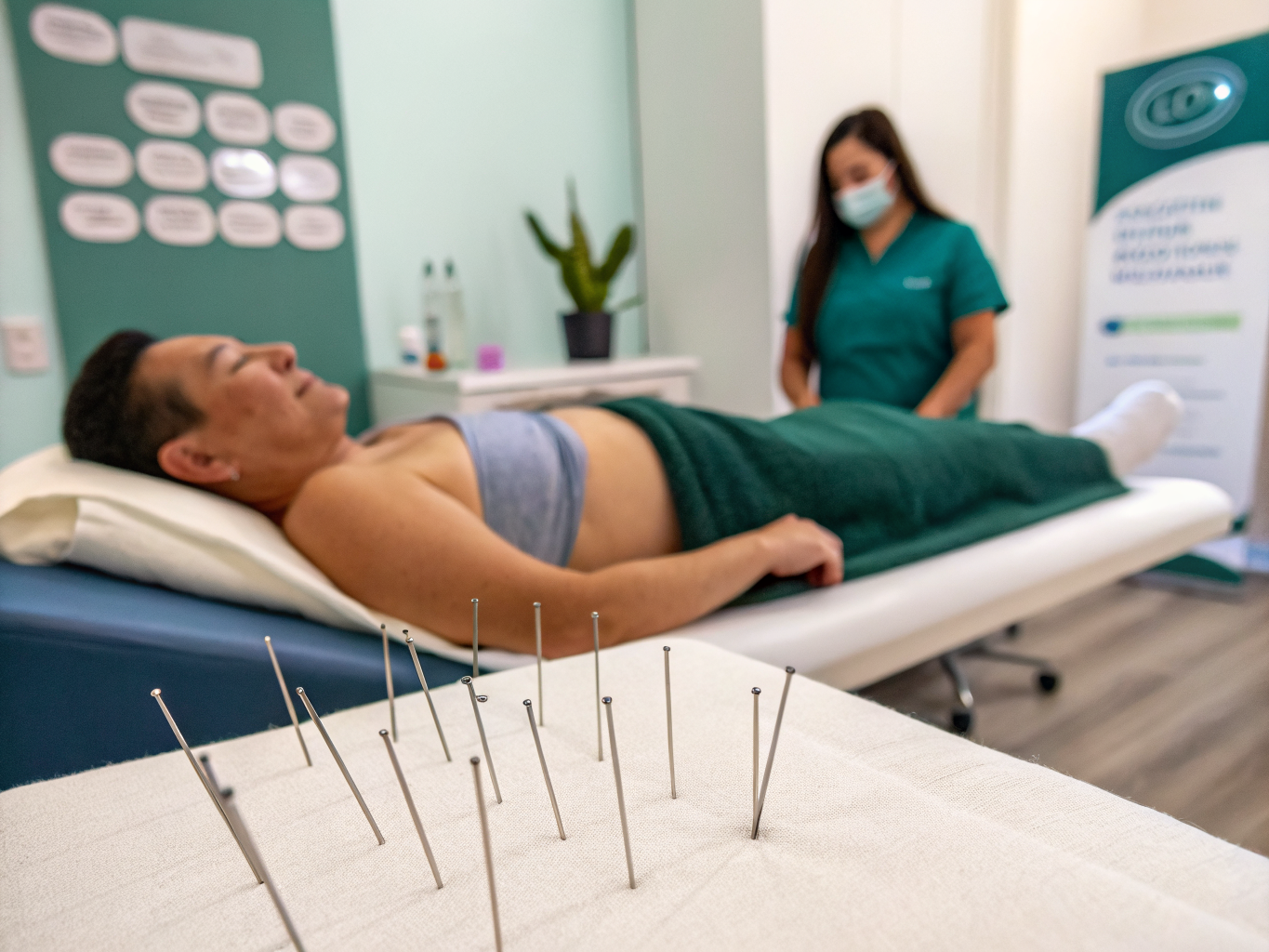
If you have seen an acupuncture image online, you have likely noticed needles placed along the back, in the hands, or near the ankles. These are not random. Each needle sits at a precise acupuncture point, a location on the body where the nervous system, connective tissue, and energy pathways converge in ways that influence function and healing. Traditional Chinese Medicine maps these points along fourteen primary meridians, each connected to an organ system or physiological process.
What the image does not always show is the reasoning behind the placement. A point on the outer ankle, for example, is not just for foot pain. It may be used to support kidney function, ease lower back tension, or calm the nervous system depending on your diagnosis. That is what makes acupuncture more layered than it first appears.
Understanding the visual map of needle placement helps you feel more prepared and less uncertain before your first session.
Acupuncture Image Breakdown: The 7 Most Common Needle Placement Zones
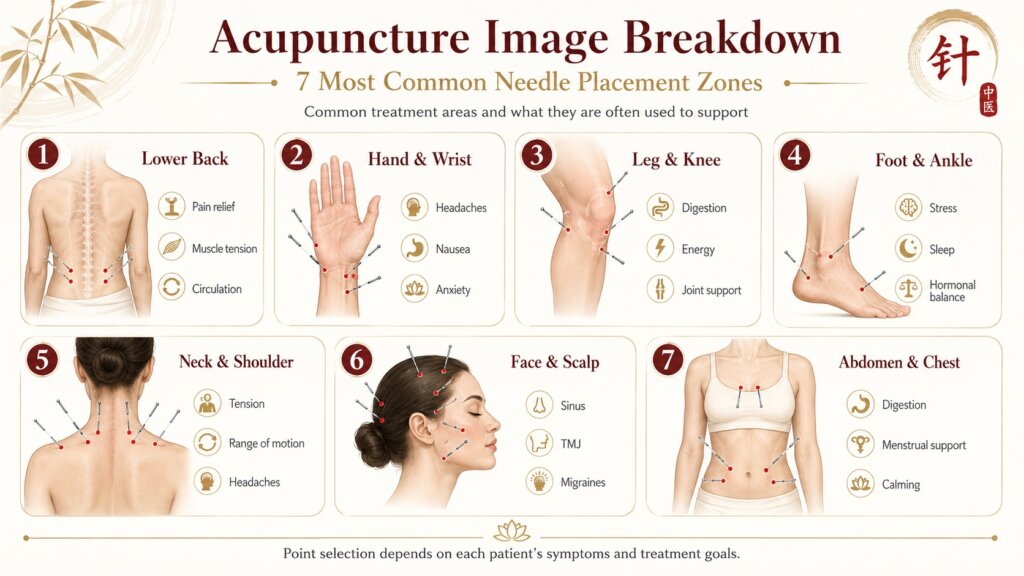
Practitioners select acupuncture points based on your specific pattern of symptoms, not a one-size-fits-all chart. That said, certain areas appear in clinical images and treatment plans far more often than others. Here is a zone-by-zone breakdown of where needles are commonly placed and what each area is used to address.
1. Lower Back Acupuncture Points and Pain Management
The lumbar region is one of the most frequently treated areas in acupuncture and pain management. Points along the Bladder meridian, which runs parallel to the spine, are used to relieve muscle tension, reduce inflammation, and support circulation in the lower back. For patients dealing with chronic lumbar pain, these points are often the foundation of a treatment plan.
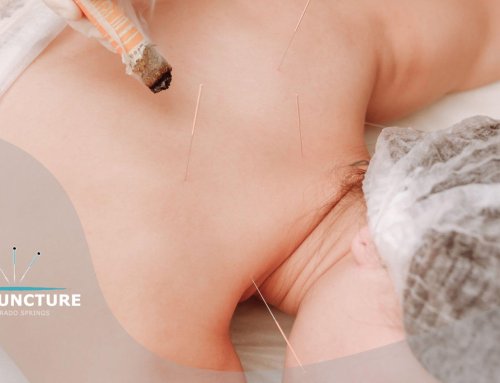
In any clinical acupuncture image showing back treatment, you will typically see two rows of needles running vertically on either side of the spine. This is a classic Bladder meridian pattern.
2. Hand and Wrist Acupuncture Points
The hands hold some of the most powerful acupuncture points in the body. Large Intestine 4, located in the webbing between the thumb and index finger, is one of the most commonly used points for headache relief, facial tension, and general pain reduction. Pericardium 6, on the inner wrist, is widely used for nausea, anxiety, and heart palpitations.
Images of hand acupuncture often show single needles placed with precision in small, fleshy areas. The sensation is typically a mild pressure or dull ache, not sharp pain.
3. Leg and Knee Acupuncture Points
The legs contain several high-priority acupuncture points used in nearly every treatment style. Stomach 36, located just below the kneecap on the outer shin, is one of the most researched points in TCM. It is associated with digestive support, immune function, fatigue, and overall vitality. Spleen 6, located above the inner ankle, is used for hormonal balance, sleep, and digestive concerns.
Knee-specific points are also used directly for joint pain, stiffness, and post-injury recovery, making leg placement one of the most versatile zones in acupuncture practice.
4. Foot and Ankle Acupuncture Points
The feet are rich with acupuncture points that connect to the liver, kidney, and stomach meridians. Liver 3, found between the first and second toes, is a go-to point for stress, irritability, menstrual irregularity, and headaches. Kidney 1, on the sole of the foot, is one of the few points used to ground the nervous system during states of extreme anxiety or insomnia.
Foot placement images often look more intense than they feel. The sole of the foot is sensitive, but needles placed there by a skilled practitioner are generally well-tolerated.
5. Neck and Shoulder Acupuncture Points
Neck and shoulder tension is one of the most common complaints we hear at our clinic, especially from patients in desk-based or physically demanding jobs. Gallbladder 21, at the top of the shoulder, and several local points along the neck are used to release muscle tightness, improve range of motion, and reduce referred headache pain. These points appear in almost every acupuncture image showing upper body treatment.
For patients managing chronic tension headaches or cervical stiffness, shoulder and neck point combinations often produce noticeable relief within the first few sessions.
6. Face and Scalp Acupuncture Points
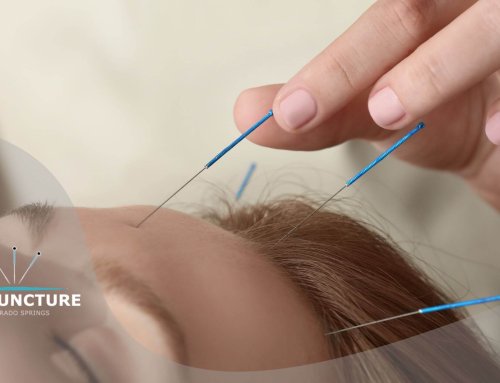
Facial acupuncture is used for more than cosmetic purposes, though it does support skin tone and circulation. Points around the jaw, temples, and forehead are used to address sinus congestion, TMJ dysfunction, trigeminal nerve pain, and stress-related tension. Scalp acupuncture, a more specialized technique, targets neurological function and is sometimes used for stroke recovery or chronic migraines.
Images of facial acupuncture can look striking, but the needles used are extremely fine and placed with care. Most patients find facial treatment deeply relaxing.
7. Abdomen and Chest Acupuncture Points
Abdominal points are central to digestive health, reproductive function, and emotional regulation in TCM. Conception Vessel points running along the midline of the abdomen are used for bloating, menstrual pain, and stress-related gut symptoms. Chest points near the sternum may be used for heart palpitations, grief, or anxiety when appropriate.
You might be wondering whether abdominal needling feels uncomfortable. For most patients, it is one of the more relaxing parts of the session, as these points tend to produce a deep, settling response in the nervous system. Now that you understand the major placement zones, it helps to see how these areas compare in terms of function and frequency of use.
How Acupuncture Needle Placement Connects to Your Specific Symptoms
Looking at an acupuncture image gives you a visual reference, but the real work happens in the intake conversation before any needles are placed. At Acupuncture Colorado Springs, every session begins with a thorough assessment of your health history, current symptoms, sleep patterns, digestion, stress levels, and lifestyle. David W. Armstrong, L.Ac. uses this information to identify the underlying pattern driving your symptoms, not just the surface complaint.
For example, two patients with lower back pain may receive entirely different needle combinations. One may have a kidney deficiency pattern, while the other has a stagnation pattern from prolonged sitting. The acupuncture points selected will reflect that difference.
This is why a generic point chart or stock acupuncture image only tells part of the story. Placement is always personalized.
If you are dealing with chronic pain, stress, digestive issues, or hormonal imbalance in the Colorado Springs area, we invite you to schedule a consultation with our clinic. We will help you understand exactly which acupuncture points may be relevant to your situation and what a realistic treatment plan looks like for your goals.
Acupuncture Image Safety: What Sterile Needle Standards Look Like in Practice
One thing that every professional acupuncture image should communicate is cleanliness and safety. Regulations require that acupuncturists use a new set of disposable needles from a sealed package for each treatment session. This eliminates any risk of cross-contamination and is a non-negotiable standard at every licensed clinic.
At our practice, we follow all Colorado state safety and hygiene regulations. Every needle used is sterile, single-use, and disposed of immediately after your session. The needles themselves are hair-thin, far narrower than a standard injection needle, which is why insertion typically causes little to no discomfort.
When you look at a clinical acupuncture image, you will notice that practitioners wear gloves, work in clean environments, and handle needles with precision. That is not just for the photo. It reflects the standard of care that patients should expect at every visit.
What Acupuncture Benefits Are Linked to These Placement Areas
Understanding acupuncture benefits by zone helps you connect the visual map to real outcomes. Here is a summary of what the research and clinical experience support for each major placement area.
- Back and spine points may help reduce chronic lower back pain, improve mobility, and decrease reliance on pain medication over time.
- Hand and wrist points are often used to support headache reduction, carpal tunnel symptoms, and stress-related tension.
- Leg and knee points like Stomach 36 have been studied for their role in immune support, digestive regulation, and fatigue recovery.
- Foot and ankle points are frequently used in stress and insomnia protocols, with Liver 3 appearing in many anxiety-focused treatment plans.
- Neck and shoulder points can support relief from tension headaches, cervicogenic pain, and restricted movement in the upper body.
- Abdominal points are central to women’s health treatments, including PMS, menstrual irregularity, and hormone-related digestive symptoms.
These acupuncture benefits are not promises. They reflect patterns observed in clinical practice and supported by a growing body of research. Results vary based on the individual, the condition, and the consistency of care.
If you are curious about how these placement areas might apply to your own health concerns, our team at Acupuncture Colorado Springs is here to help. We serve patients across Colorado Springs, Manitou Springs, Old Colorado City, and Woodland Park, offering personalized treatment plans that go beyond surface-level symptom relief. Explore our full range of services, including acupuncture, cupping therapy, Chinese herbal medicine guidance, and therapeutic massage.
Conclusion
Every acupuncture image tells a story about the body’s internal map and how skilled needle placement can influence healing. The zones covered here, from the lower back to the feet, each serve a distinct purpose within a personalized treatment plan. If you are ready to move from curiosity to care, Acupuncture Colorado Springs is here to guide you through every step of the process.
Acupuncture Colorado Springs offers board-certified acupuncture care tailored to your unique needs. David W. Armstrong, L.Ac. precisely targets needle placement for lasting pain relief and balance. Get started today by booking your personalized consultation.
FAQs
What Is Acupuncture and How Does It Work?
Acupuncture is a Traditional Chinese Medicine therapy that uses very thin, sterile needles placed at specific points to support the body’s natural healing response. In modern terms, it can help regulate the nervous system, improve circulation, reduce inflammation, and ease pain and stress. At Acupuncture Colorado Springs, we tailor point selection to your symptoms, health history, and root patterns—not a one-size-fits-all protocol.
What Does Acupuncture Look Like?
Acupuncture typically involves you resting comfortably while hair-thin needles are gently placed in targeted areas such as the arms, legs, hands, feet, back, abdomen, or ears—depending on your needs. Needles usually sit for 20–40 minutes while you relax, and many people feel calm, heavy, or pleasantly “reset” during treatment.
Are Acupuncture Needles Painful?
Most people find acupuncture far more comfortable than expected. You may feel a brief pinch on insertion or a mild sensation like warmth, tingling, heaviness, or dull pressure, which is often a normal therapeutic response. Our board-certified approach emphasizes gentle technique and clear communication to keep treatment comfortable.
What Are the Benefits of Acupuncture?
Acupuncture is commonly used to help relieve pain, reduce stress and anxiety, improve sleep, support headaches and migraines, address digestive issues, and promote overall balance and energy. Many patients notice both immediate symptom relief and longer-term improvements when care is personalized and consistent.
Is Acupuncture Safe and What Are the Side Effects?
When performed by a licensed professional using sterile, single-use needles, acupuncture is considered very safe. Side effects are usually mild and short-lived, such as slight soreness, minor bruising, temporary fatigue, or lightheadedness. We follow Colorado safety and hygiene standards and review your health history to ensure treatment is appropriate for you.