Recovering from back surgery can feel like a long road. Pain, stiffness, and limited movement often linger even after the incision heals. Many people search for safe, natural ways to support their recovery without relying solely on medications. Acupuncture has emerged as a promising option for post-surgical back pain, but one of the most common questions patients ask is: how many sessions of acupuncture for back pain after surgery will I actually need?
This article walks you through the factors that influence treatment frequency, how acupuncture sessions are typically structured during recovery, and why personalized planning matters more than generic timelines. You will also learn how to work safely with your surgical team and what to expect during your first few visits to an acupuncture clinic.
Key Takeaways
- The number of acupuncture sessions for post-surgical back pain varies based on the type of surgery, pain severity, and individual healing patterns.
- Most patients begin with one to two sessions per week for the first few weeks, then taper to maintenance visits as symptoms improve.
- Coordination with your surgeon or physical therapist is essential to ensure acupuncture complements your overall recovery plan.
- Research shows acupuncture may support pain relief and functional improvement in chronic low back pain, though post-surgical studies are still emerging.
- Personalized care plans at Acupuncture Colorado Springs focus on root causes rather than one-size-fits-all protocols.
Understanding How Many Sessions of acupuncture for back pain After Surgery You Might Need
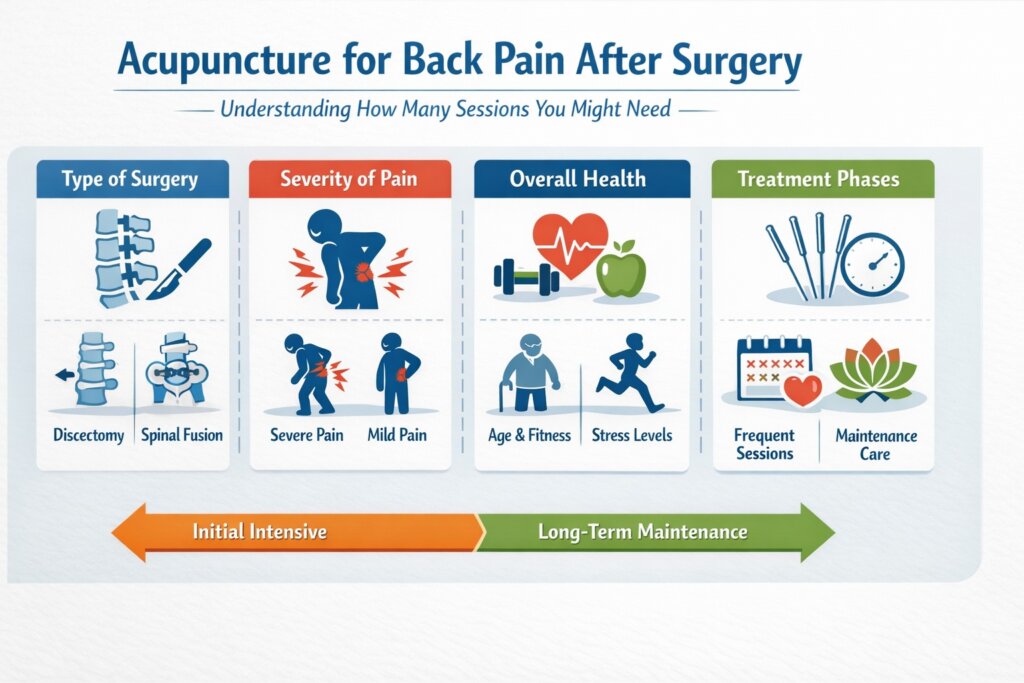
There is no universal answer to how many acupuncture sessions you will need after back surgery. Your treatment plan depends on several factors unique to your situation. The type of surgery you had plays a big role. A minimally invasive discectomy typically involves a shorter recovery window than a spinal fusion or laminectomy. The complexity of the procedure, the extent of tissue damage, and your body’s natural healing speed all shape how many sessions you might benefit from.
Pain intensity and functional limitations also matter. If you are experiencing sharp, constant pain that limits your ability to walk, sit, or sleep, you may need more frequent visits initially. On the other hand, if your pain is mild and intermittent, a less intensive schedule might be appropriate. Your overall health, age, activity level, and stress load can influence how quickly your body responds to acupuncture.
Most acupuncture treatment plans for post-surgical back pain begin with an initial phase of more frequent sessions. This helps build momentum and address acute symptoms. As pain decreases and function improves, session frequency typically tapers. Some patients move to maintenance visits to prevent flare-ups and support long-term wellness. This phased approach mirrors the structure seen in research on chronic low back pain, where studies have used 15 sessions over three months, sometimes followed by six additional maintenance treatments.
Factors That Influence How Many Acupuncture Sessions You Will Need
Recovering from back surgery is not a one-size-fits-all process, and acupuncture plans should be tailored to your specific situation. The number of sessions you’ll need depends on what your body is healing from, how your symptoms present, and how consistently you follow your recovery plan. These factors help your acupuncturist set a realistic starting plan and then refine it as your body responds.
1. Type and Complexity of Your Back Surgery
Minimally invasive procedures often involve less tissue disruption and shorter recovery times. More extensive surgeries, such as multi-level fusions or decompression procedures, may require a longer course of acupuncture to address deeper layers of pain and stiffness.
2. Severity and Duration of Your Pain
Acute post-surgical pain that is sharp and localized may respond more quickly than chronic, diffuse discomfort that has persisted for weeks or months. If your pain has been ongoing since before surgery, you may need a longer treatment plan to address both new and old patterns.
3. Your Overall Health and Healing Capacity
Factors like age, nutrition, sleep quality, stress levels, and pre-existing conditions such as diabetes or autoimmune disorders can all affect how fast you heal. Living at high altitude in Colorado Springs adds another layer, as dry air and lower oxygen levels can sometimes slow tissue repair.
4. Adherence to Post-Surgical Guidelines
Following your surgeon’s instructions for rest, activity modification, and physical therapy supports your acupuncture outcomes. If you push too hard too soon, you may experience setbacks that require more frequent acupuncture sessions to manage.
5. Your Response to Initial Treatments
Some people feel noticeable relief after just a few sessions, while others need more time. Your acupuncturist will monitor your progress and adjust the treatment plan accordingly. This is why personalized care, not a rigid protocol, is so important.
6. Coordination With Your Surgical and Physical Therapy Teams
Acupuncture works best when it is part of a coordinated care plan. Open communication with your surgeon and physical therapist ensures that acupuncture supports, rather than interferes with, your recovery milestones.
Overall, the goal is to identify the minimum effective plan that keeps you progressing without overloading your system. Early sessions help establish symptom control and improved function, then frequency can often taper as stability improves. A personalized plan—based on your surgery, symptoms, health status, and response—is the safest way to ensure acupuncture truly supports your recovery.
Typical Acupuncture Treatment Timelines for Post-Surgical Back Pain
While every patient is different, many acupuncture treatment plans for post-surgical back pain follow a phased approach. Understanding these phases can help you set realistic expectations and plan your schedule. Keep in mind that these are general guidelines, not strict rules. Your acupuncturist will tailor the plan to your specific needs.
Initial Phase: Weeks 1 to 4 After Clearance
Most surgeons recommend waiting until your incision is fully healed before starting acupuncture, usually around four to six weeks post-surgery. Once you have clearance, the initial phase typically involves one to two sessions per week. The goal during this phase is to reduce acute pain, ease muscle tension, and support early mobility. You may also notice improvements in sleep quality and stress levels, which can indirectly support healing.
Transition Phase: Weeks 5 to 12
As pain decreases and function improves, session frequency often drops to once per week or once every two weeks. This phase focuses on consolidating gains, preventing flare-ups, and addressing any lingering stiffness or discomfort. Your acupuncturist may also incorporate complementary therapies, such as cupping or gentle bodywork, to support deeper tissue release.
Maintenance Phase: Beyond 12 Weeks
Some patients continue with maintenance sessions once or twice per month to support long-term wellness and prevent pain from returning. This is especially common if you have a history of chronic back pain or if your job or lifestyle involves physical demands. Maintenance care is not about dependency. It is about proactive support for your body’s balance and resilience.
Coordinating Acupuncture With Your Surgical Team and Physical Therapy
Safety and collaboration are non-negotiable in post-surgical care. Before starting acupuncture, get clearance from your surgeon. Most surgeons are open to complementary therapies once the incision has healed and there are no signs of infection or complications. Bring a copy of your surgical notes or discharge instructions to your first acupuncture appointment. This helps your acupuncturist understand what was done during surgery and what precautions to take.
If you are also doing physical therapy, let both your physical therapist and acupuncturist know. They can work together to support your recovery without overwhelming your body. For example, you might schedule acupuncture on days when you are not doing intense physical therapy exercises, or use it to help manage soreness after therapy sessions.
At Acupuncture Colorado Springs, we believe in collaborative care. We are happy to communicate with your other providers to ensure your treatment plan is safe, coordinated, and effective. Our clinic follows all Colorado state regulations for hygiene and safety, including the use of sterile, single-use needles and thorough health history assessments before treatment begins.
What to Expect During Your First Acupuncture Session After Surgery
Your first visit will begin with a detailed conversation about your health history, the surgery you had, your current symptoms, and your recovery goals. Your acupuncturist will ask about your pain levels, sleep, energy, stress, and any other symptoms you are experiencing. This is not just small talk. It helps build a complete picture of your health so your treatment plan can be tailored to your unique needs.
Next, your acupuncturist will examine your posture, range of motion, and any areas of tenderness or tension. They may also look at your tongue and feel your pulse, which are traditional diagnostic tools in Chinese Medicine. These assessments help identify underlying patterns that may be contributing to your pain, such as poor circulation, inflammation, or nerve sensitivity.
During treatment, you will lie comfortably on a padded table while the acupuncturist inserts a small number of needles, usually between 5 and 15. The needles are left in place for 20 to 30 minutes while you rest. Many patients find this time deeply relaxing, and some even fall asleep. After the needles are removed, your acupuncturist may offer additional therapies such as cupping, gentle massage, or heat therapy to enhance the treatment’s effects.
You might feel immediate relief, or you might notice changes over the next day or two. Everyone responds differently. Your acupuncturist will check in with you at each visit to track your progress and adjust the plan as needed.
Practical Tips for Getting the Most Out of Your Acupuncture Sessions
Acupuncture can be a strong support during post-surgical recovery, but your results improve when your sessions fit into a smart healing routine. The goal is to help your body recover steadily without triggering flare-ups or setbacks. These practical habits make each visit more effective and help your progress feel more predictable over time.
- Follow your surgeon’s post-op instructions: Rest as directed, avoid heavy lifting, and keep all follow-up appointments so your recovery stays on track.
- Stay hydrated (especially in Colorado Springs): Dry, high-altitude air can dehydrate you quickly and make pain and stiffness feel worse—drink water before and after sessions.
- Communicate clearly with your acupuncturist: Share changes in pain, new symptoms, medication updates, and what feels better or worse after treatment.
- Be patient with the process: Post-surgical healing takes time, and consistent improvement often occurs gradually rather than all at once.
- Support treatment with gentle self-care: Light stretching (if approved), deep breathing, and solid sleep habits can reinforce what you’re doing in the clinic.
When you pair acupuncture with good recovery habits, you usually get more value from each session and fewer “two steps forward, one step back” moments. Keep the focus on steady progress, not instant perfection. Over time, this approach helps your care plan become more efficient as your body stabilizes and strength returns.
How Acupuncture Colorado Springs Supports Your Post-Surgical Recovery

At Acupuncture Colorado Springs, we provide personalized, root-cause-focused care that blends Traditional Chinese Medicine with modern, evidence-informed techniques. Led by David W. Armstrong, L.Ac., a board-certified acupuncturist with decades of clinical experience, we help patients in Colorado Springs and surrounding communities, including Manitou Springs, Old Colorado City, and Woodland Park, find relief from pain, stress, and imbalance.
Our approach to post-surgical back pain is grounded in safety, collaboration, and individualized planning. We take the time to understand your surgical history, your current symptoms, and your recovery goals. We coordinate with your surgical and physical therapy teams to ensure acupuncture complements your overall care plan. And we adjust your treatment schedule based on your progress, not a rigid protocol.
Our clinic is located at 2525 W Pikes Peak Ave, Suite B, Colorado Springs, CO 80904. We operate under Colorado state law and follow all safety, hygiene, and licensing regulations, including the use of sterile, single-use needles and professionally sourced herbal products. Our calm, welcoming environment is designed to help you relax, reset, and reconnect with your body’s natural ability to heal.
Conclusion
The number of acupuncture sessions you need after back surgery depends on your unique situation, not a one-size-fits-all formula. Personalized planning, coordination with your surgical team, and patience are key to a successful recovery. Acupuncture Colorado Springs is here to support you every step of the way with safe, evidence-informed, and compassionate care. Schedule a post-surgery acupuncture evaluation today to get an individualized plan tailored to your back pain and recovery goals.
Acupuncture Colorado Springs offers personalized, root-cause-focused acupuncture care to support recovery from post-surgical back pain. Led by board-certified practitioner David W. Armstrong, L.Ac., we create custom treatment plans. Get started today.
FAQs
How Many Acupuncture Sessions Are Needed for Lower Back Pain?
Many people start noticing meaningful change within 6–10 sessions, though mild or recent pain may improve sooner and chronic or post-surgical patterns often need 10–20 sessions. At Acupuncture Colorado Springs, we tailor the plan to your surgery history, healing stage, and goals to support both relief and recovery.
How Often Should You Get acupuncture for back pain?
A common schedule is 1–2 visits per week at the beginning, then tapering to every 1–3 weeks as symptoms stabilize. For post-surgical back pain, frequency depends on inflammation, mobility limitations, and your surgeon’s timeline; we coordinate care decisions to support safe, steady progress.
How Long Does It Take for Acupuncture to Work for Back Pain?
Some patients feel relief after the first 1–3 sessions, while others—especially with chronic or post-surgical back pain—may need 4–8 sessions to see consistent improvement. We track changes from visit to visit and adjust treatment to address root causes such as muscle guarding, stress, and restricted movement.
How Long Do Acupuncture Results Last for Back Pain?
Relief may last a few days at first, then typically lasts longer as treatments build, and the underlying pattern improves—often weeks or more with a supportive plan. Maintenance visits (such as monthly or seasonally) can help prevent flare-ups, especially after surgery or recurrent strain.
Is Acupuncture Effective for Chronic Back Pain?
Yes—acupuncture is widely used for chronic back pain, and many people experience reduced pain, better function, and improved sleep and stress levels. Our board-certified Traditional Chinese Medicine care in Colorado Springs combines acupuncture with evidence-informed techniques and optional supportive therapies (like cupping) to improve outcomes over time.