
Headaches and neck tension disrupt daily life in ways that go beyond simple discomfort. They affect your ability to work, sleep, exercise, and enjoy time with family. Many people in Colorado Springs face these issues regularly, often triggered by stress, poor posture, altitude changes, or physical strain from active lifestyles. When you’re searching for relief, two options frequently come up: acupuncture and chiropractic care.
Both approaches offer drug-free pain management, but they work in fundamentally different ways. Understanding these differences helps you make an informed choice about which path might serve your specific needs, health goals, and lifestyle. This article compares acupuncture and chiropractic care for addressing headaches and neck tension, outlines what you can expect from each, and explains how to decide which approach aligns with your wellness priorities.
Key Takeaways
- Chiropractic care focuses on spinal alignment and structural adjustments to relieve headaches and neck pain caused by misalignment.
- Acupuncture addresses energy flow and systemic imbalances using thin needles at specific points to reduce pain, tension, and inflammation.
- Both approaches are safe when performed by licensed professionals and can complement each other for comprehensive care.
- Acupuncture may offer broader benefits for stress, sleep, and chronic conditions beyond musculoskeletal pain.
- Choosing between the two depends on your pain patterns, underlying causes, and personal preferences for treatment style.
Understanding How Acupuncture and Chiropractic Care Address Pain Differently
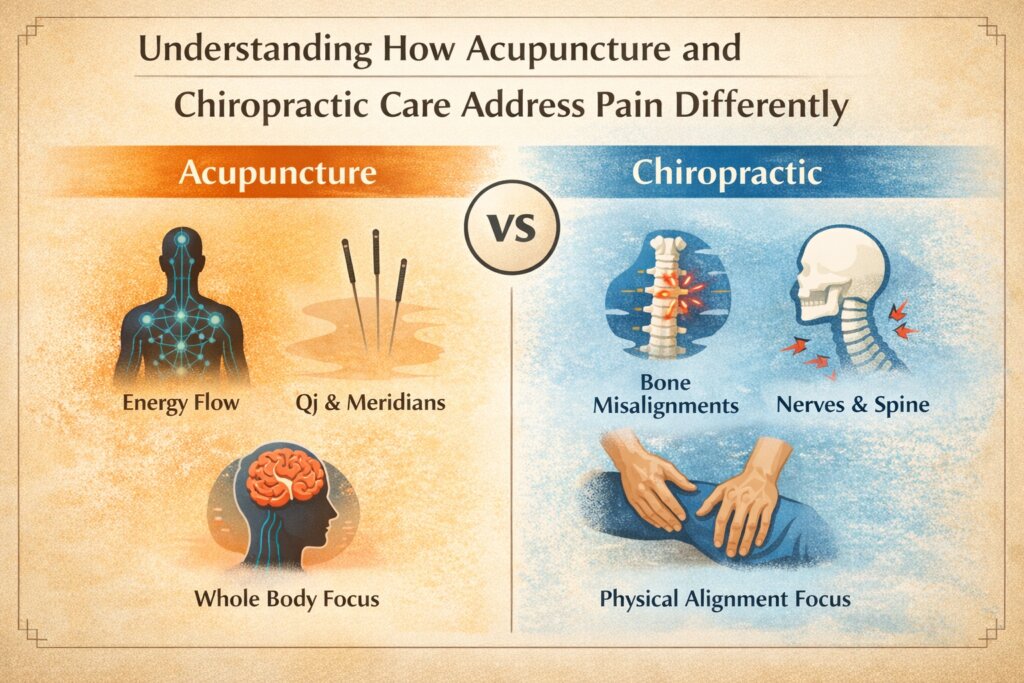
Chiropractic care centers on the relationship between your spine and nervous system. Chiropractors use manual adjustments to correct misalignments in the vertebrae, which they believe can interfere with nerve function and cause pain, including headaches and neck tension. The treatment is hands-on and often provides immediate relief for acute issues stemming from structural problems.
| Aspect | Chiropractic Care | Acupuncture |
|---|---|---|
| Primary Focus | Spinal alignment and joint mobility | Energy flow and systemic balance |
| Treatment Method | Manual adjustments and manipulations | Insertion of thin needles at specific points |
| Best For | Acute pain from misalignment, joint issues | Chronic pain, stress-related tension, inflammation |
| Session Feel | Physical pressure, cracking sounds | Minimal sensation, deep relaxation |
| Typical Frequency | Multiple visits per week initially | Weekly or biweekly sessions |
Acupuncture takes a different route. Rooted in Traditional Chinese Medicine, it views pain and illness as disruptions in the body’s energy flow, known as Qi. Practitioners insert sterile, single-use acupuncture needles at specific points along meridians to restore balance, reduce inflammation, and stimulate the body’s natural pain-relieving mechanisms. This approach looks beyond the immediate symptom to address underlying patterns that contribute to chronic or recurring pain.
The philosophical difference matters when you’re choosing care. Chiropractic emphasizes physical form and alignment. Acupuncture emphasizes energy balance and whole-body function.
What Causes Headaches and Neck Tension in Colorado Springs

Living at a high altitude brings unique challenges. Dry air, low oxygen levels, and intense sun exposure can cause dehydration and muscle tension. Add in long hours at a desk, repetitive physical labor, or the stress of juggling work and family, and you have a perfect recipe for chronic headaches and neck pain.
Tension headaches often stem from tight muscles in the neck, shoulders, and scalp. Poor posture while working on a computer or looking down at your phone strains these muscles over time. Stress amplifies the problem by causing you to clench your jaw or hunch your shoulders without realizing it.
Cervicogenic headaches originate from neck issues, such as joint dysfunction or nerve irritation. These often respond well to treatments that directly address the cervical spine. Migraines, on the other hand, involve complex neurological and vascular changes that may benefit from approaches targeting inflammation, stress, and nervous system regulation.
How Chiropractic Care Works for Headaches and Neck Pain

Chiropractors assess your spine and posture to identify areas of misalignment or restricted movement. They use their hands or specialized tools to apply controlled force to joints, aiming to restore proper alignment and improve nerve function. For neck tension and headaches, adjustments typically focus on the cervical spine and upper back.
Many patients report immediate relief after an adjustment, especially if their pain stems from a recent injury or sudden misalignment. The physical manipulation can reduce muscle tension, improve range of motion, and decrease nerve irritation. Studies show that about 81% of chiropractic patients report satisfaction with their care for spinal and joint issues.
Chiropractic care works best when your headaches or neck pain are linked to structural problems. If you’ve been in a car accident, lifted something heavy incorrectly, or developed pain after sleeping in an awkward position, chiropractic adjustments may provide quick relief. The approach is direct and mechanical, targeting the physical source of discomfort.
How Acupuncture Supports Relief from Headaches and Neck Tension
Acupuncture needles are hair-thin and inserted just beneath the skin at carefully chosen points. These points correspond to areas where stimulation can influence pain pathways, reduce inflammation, and promote relaxation. For headaches and neck tension, acupuncture often targets points on the head, neck, shoulders, hands, and feet.
Research shows that acupuncture can improve mood in nearly 80% of patients and mobility in over 90%. It works by triggering the release of endorphins and other natural painkillers, calming the nervous system, and improving blood flow to tense or inflamed areas. The effect is cumulative, meaning relief often builds over several sessions as your body’s systems recalibrate.
Acupuncture shines when dealing with chronic or recurring headaches, especially those tied to stress, hormonal changes, or systemic imbalances. If your neck tension comes with anxiety, poor sleep, or digestive issues, acupuncture’s holistic approach can address multiple concerns at once. The treatment environment is calm and restorative, giving your nervous system a chance to reset.
When to Choose Chiropractic Care for Your Headaches and Neck Tension
Chiropractic care is a strong choice if your pain is recent, linked to a specific injury, or clearly related to spinal misalignment. You might benefit from chiropractic adjustments if you have limited neck mobility, pain that worsens with certain movements, or a history of back and neck issues that respond well to manual therapy.
If you prefer a hands-on, mechanical approach and want to address structural problems directly, chiropractic care aligns with that preference. It’s also useful if you’re dealing with joint stiffness or muscle tension caused by poor posture or repetitive strain.
Keep in mind that chiropractic care focuses primarily on the musculoskeletal system. If your headaches involve multiple factors like stress, hormonal fluctuations, or digestive issues, you may need to combine chiropractic care with other therapies for comprehensive relief.
When Acupuncture May Be a Better Fit for Chronic Headaches and Neck Pain
Acupuncture is especially effective for chronic or recurring pain that doesn’t have a clear structural cause. If you’ve tried other treatments without lasting success, or if your headaches come with additional symptoms like anxiety, insomnia, or digestive upset, acupuncture’s whole-body approach can help.
Tension headaches driven by stress and muscle tightness respond well to acupuncture because the treatment calms the nervous system and releases tight muscles from the inside out. Migraines and hormone-related headaches may also improve as acupuncture helps regulate inflammation and hormonal balance.
At acupuncture Colorado Springs, we design treatment plans that fit your life and goals. We don’t use generic protocols. Instead, we assess your unique patterns and adjust your care as you progress. Our clinic serves Colorado Springs, Manitou Springs, Old Colorado City, Woodland Park, and surrounding communities in El Paso County, offering personalized support for pain, stress, and long-term wellness.
Combining Acupuncture and Chiropractic Care for Comprehensive Relief
You don’t have to choose one or the other. Many patients find that combining acupuncture and chiropractic care offers more complete relief than either approach alone. Chiropractic adjustments can restore alignment and improve joint function, while acupuncture reduces inflammation, relaxes muscles, and addresses systemic imbalances.
For example, if you have chronic low back pain that contributes to neck tension and headaches, chiropractic care can align your spine, and acupuncture can reduce the inflammation and muscle guarding that keep the problem recurring. Studies suggest that this integrative approach works well for sports injuries, stress-related pain, and chronic musculoskeletal conditions.
If you’re considering both, communicate openly with your providers. A coordinated care plan ensures that treatments complement rather than conflict with each other.
Making the Right Choice for Your Health and Lifestyle
Your decision should reflect your pain patterns, health history, and personal preferences. Ask yourself: Is my pain recent or chronic? Does it stem from a clear injury or structural issue, or does it come with other symptoms like stress or poor sleep? Do I prefer a hands-on adjustment or a gentler, needle-based approach?
Consider your lifestyle, too. If you have a physically demanding job or active hobbies, chiropractic care might help you stay mobile and prevent injuries. If you’re managing stress, burnout, or complex health issues alongside your headaches and neck tension, acupuncture’s holistic focus may offer more comprehensive support.
You might also think about what feels right for your body. Some people love the immediate release of a chiropractic adjustment. Others prefer the calm, restorative experience of an acupuncture session. Both are valid and can provide meaningful relief when matched to your needs.
Conclusion
Chiropractic care and acupuncture both offer safe, effective ways to relieve headaches and neck tension, each with distinct philosophies and methods. Your best choice depends on the root cause of your pain, your health goals, and your personal comfort. At acupuncture Colorado Springs, we’re here to support your journey toward less pain and greater balance with personalized, root-cause-focused care that honors your unique needs.
acupuncture Colorado Springs offers personalized, root-cause acupuncture care to relieve headaches and neck tension naturally. Our board-certified practitioner creates custom treatment plans for lasting relief. Get started today.
FAQs
Is Acupuncture Better Than a Chiropractor?
It depends on the cause of your symptoms and what your body responds to best. Acupuncture is often a great fit when headaches, neck tension, or pain are tied to stress, muscle guarding, inflammation, or nervous system overactivation, and it can support whole-body balance at the same time. Chiropractic care is often best when symptoms are strongly linked to joint restriction or spinal alignment issues. If you’re unsure, a root-cause-focused evaluation can help determine the most effective path.
Should I See an Acupuncturist or a Chiropractor for Back Pain?
For back pain driven by muscle tightness, stress, overuse, or chronic inflammation, acupuncture (often combined with cupping or therapeutic massage) can reduce pain and improve mobility. If your back pain feels mechanical—worse with certain movements and linked to joint stiffness—chiropractic may help. Many people do best with a personalized plan that addresses both muscle and joint contributors.
What Is the Difference Between Acupuncture and Chiropractic Care?
Acupuncture uses very fine, sterile needles to influence the nervous system, circulation, and muscle tone, with the goal of reducing pain and restoring balance; it may also include guidance on Chinese herbal medicine, cupping, and manual therapies. Chiropractic care focuses primarily on the musculoskeletal system—especially the spine—using adjustments and related techniques to improve joint motion and alignment. Both aim to improve function, but they use different methods and clinical frameworks.
Can Acupuncture and Chiropractic Be Used Together?
Yes—many patients combine them safely and effectively. Chiropractic can address joint mechanics, while acupuncture can calm the nervous system, reduce muscle tension, and support recovery between adjustments. The key is coordinating timing and goals so your care is complementary rather than duplicative.
Which Is Better for Sciatica: Acupuncture or Chiropractic?
Sciatica can come from nerve irritation, muscle compression, disc issues, or joint dysfunction, so the “best” option depends on the driver. Acupuncture is often helpful for reducing nerve pain, inflammation, and muscle spasm, while chiropractic may help when joint restriction or spinal mechanics are a primary factor. If symptoms include numbness, weakness, or worsening pain, it’s important to get evaluated promptly to choose the safest, most effective approach.