
Struggling to fall asleep or waking up at 3 a.m. with your mind racing can feel exhausting and isolating. You may have tried melatonin, sleep apps, or cutting caffeine, yet restful sleep still feels out of reach. Acupuncture offers a natural, root-focused approach to insomnia that addresses the underlying imbalances disrupting your sleep cycle rather than masking symptoms with quick fixes.
This article explains how long acupuncture typically takes to work for insomnia, what factors influence your timeline, and what you can expect during treatment. You will also learn how personalized care at our Colorado Springs clinic supports lasting improvements in sleep quality and overall well-being.
Key Takeaways
- Most people begin noticing sleep improvements within three to five acupuncture sessions, though deeper, lasting results often require eight to twelve weeks of consistent treatment.
- Factors like how long insomnia has lasted, stress levels, lifestyle habits, and treatment frequency all influence how quickly acupuncture works for sleep issues.
- Acupuncture supports sleep by calming the nervous system, balancing hormones, and addressing root causes like anxiety, pain, or digestive upset that keep you awake.
- A typical treatment plan starts with one to two sessions per week during the initial phase, then transitions to maintenance visits as sleep stabilizes.
- Combining acupuncture with herbal support, stress management, and healthy sleep habits can enhance results and help maintain progress over time.
How Long Does Acupuncture Take to Work for Insomnia?

The timeline for acupuncture to improve insomnia varies from person to person, but most patients begin experiencing noticeable changes within three to five sessions. Some people feel calmer and sleep more soundly after their first or second visit, while others need several weeks of consistent treatment before sleep patterns shift. Research suggests that it may take up to ten weeks or more before you experience significant, lasting results from regular acupuncture treatments.
The effects of acupuncture are cumulative, meaning each session builds on the last. Relief is not achieved with just one appointment.
Your individual timeline depends on several factors: how long you have been dealing with insomnia, whether your sleeplessness is tied to pain or stress, and how frequently you receive treatment. Acute insomnia that has lasted a few weeks typically responds faster than chronic insomnia that has persisted for months or years. If your sleep issues stem from anxiety, hormonal shifts, or physical discomfort, addressing those root causes takes time but leads to more sustainable improvement.
What Influences How Quickly Acupuncture Helps Your Sleep

Not everyone responds to acupuncture at the same pace. Your body’s unique patterns, health history, and lifestyle all play a role in how quickly you see results. Understanding these factors helps set realistic expectations and allows you to work with your acupuncturist to design a treatment plan that fits your needs.
1. How Long Insomnia Has Lasted
Short-term insomnia that started recently often resolves faster than chronic sleep disturbances that have been present for months or years. If you have been struggling with insomnia for a long time, your nervous system may need more sessions to recalibrate and restore healthy sleep-wake cycles.
2. Underlying Health Conditions
Insomnia linked to chronic pain, digestive issues, hormonal imbalances, or mental health concerns may take longer to improve because acupuncture must address multiple systems. For example, if back pain keeps you awake at night, treating both the pain and the sleep disruption requires a layered approach that unfolds over several weeks.
3. Stress and Lifestyle Factors
High stress levels, irregular work schedules, excessive screen time before bed, and caffeine or alcohol consumption can all interfere with sleep and slow your progress. Acupuncture works best when paired with healthy sleep hygiene and stress management practices. Colorado Springs’ high altitude and dry climate can also affect sleep quality, making hydration and relaxation routines even more important.
4. Treatment Frequency
How often you receive acupuncture directly impacts how quickly you see results. A typical treatment plan includes one to two sessions per week during the initial phase. Research shows that consistent, frequent sessions in the beginning help build momentum and create lasting change. Spacing appointments too far apart in the early stages may slow progress.
5. Your Body’s Responsiveness
Some people are naturally more responsive to acupuncture than others. Factors like overall health, medication use, and how well your body regulates stress hormones all influence how quickly you notice improvements. Your acupuncturist will monitor your progress and adjust the treatment plan as needed to support the best possible outcome.
What to Expect During Acupuncture Treatment for Insomnia

If you are new to acupuncture, you might be wondering what happens during a session and how the process unfolds. Understanding what to expect can help you feel more comfortable and confident as you begin treatment. Each visit is designed to support relaxation, address root causes, and gradually restore your body’s natural sleep rhythm.
1. Your First Visit: Assessment and Personalized Planning
Your first appointment begins with a thoughtful conversation about your sleep history, lifestyle, stress levels, and overall health. At Acupuncture Colorado Springs, we take time to understand your unique patterns and goals so we can design a plan that fits you, not a generic protocol. This initial assessment helps identify the underlying imbalances contributing to your insomnia, whether that is anxiety, pain, hormonal shifts, or digestive upset.
2. The Acupuncture Session Itself
During treatment, you will rest comfortably on a treatment table while sterile, single-use needles are gently inserted at specific acupuncture points. The needles are hair-thin and most people describe the sensation as a mild tingling or dull ache that quickly fades. Many patients feel deeply relaxed during the session and some even fall asleep on the table.
3. Immediate Effects After Your First Few Sessions
Some people notice they feel calmer and sleep a bit better after their first or second session. Others may not see changes right away but begin to feel more rested and less anxious within the first week or two. These early shifts are signs that your nervous system is starting to respond and that deeper healing is underway.
4. Building Momentum: Weeks Two Through Eight
As you continue with regular sessions, the cumulative effects of acupuncture become more apparent. You may find that you fall asleep faster, wake up less often during the night, or feel more refreshed in the morning. Research suggests that the effects of acupuncture treatment for chronic conditions do not decrease significantly over twelve months, meaning that about ninety percent of the benefit relative to controls is sustained long-term when treatment is consistent.
5. Transitioning to Maintenance Care
Once your sleep has stabilized, your acupuncturist may recommend reducing the frequency of visits to once every few weeks or once a month. Maintenance sessions help prevent insomnia from returning and support ongoing balance, especially during stressful times or seasonal changes. At our clinic, we work with you to create a sustainable plan that supports long-term wellness without requiring weekly visits indefinitely.
How Acupuncture Supports Better Sleep
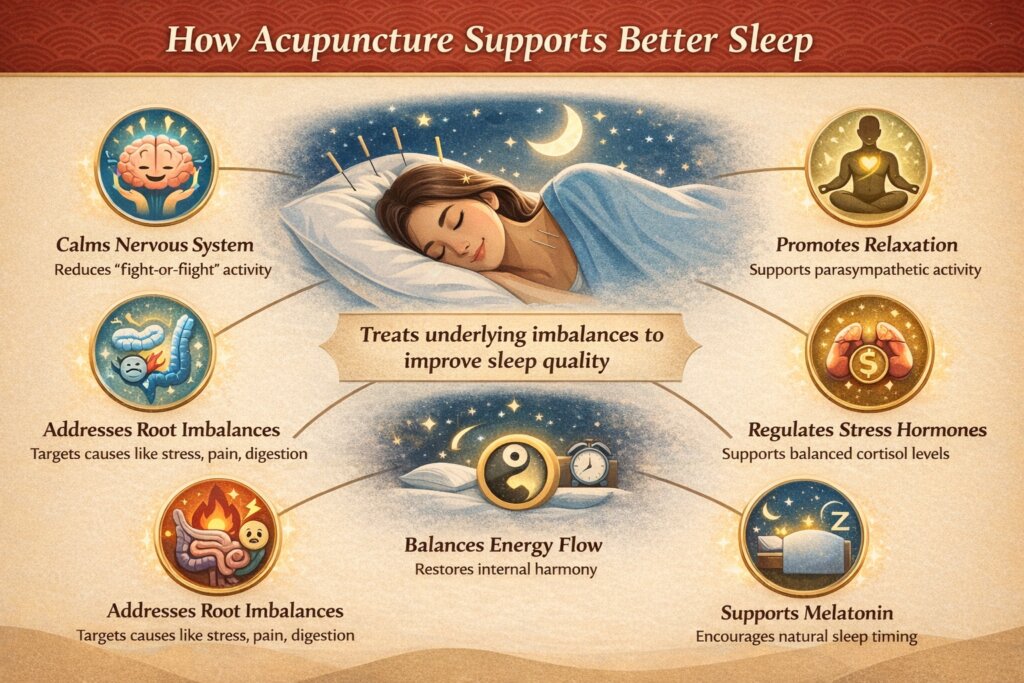
Acupuncture supports better sleep by addressing the underlying imbalances that contribute to insomnia instead of simply covering up symptoms. It helps calm an overactive nervous system, regulate stress response, and create the internal conditions your body needs for restful sleep. With consistent care, these changes can gradually restore a healthier sleep cycle and improve sleep quality.
- Calms the nervous system and reduces “fight-or-flight” activation that keeps the mind alert at night
- Promotes relaxation by supporting parasympathetic “rest-and-digest” activity
- Helps regulate stress hormones, which can reduce nighttime wake-ups and tension
- Supports healthier melatonin patterns to encourage more natural sleep timing
- Addresses common root contributors to insomnia, such as stress, pain, poor digestion, and emotional strain
- Improves overall balance in the body’s energy systems, which TCM links to deeper, more restorative rest
From a Traditional Chinese Medicine perspective, insomnia often reflects disrupted energy flow caused by stress, discomfort, digestive strain, or emotional overload. Acupuncture works by stimulating specific points that help settle the mind, ease tension, and restore internal balance, so sleep comes more naturally. Over time, this root-focused approach can lead to deeper rest, better recovery, and more stable energy during the day.
Comparing Acupuncture Timelines to Other Natural Sleep Remedies
If you’re exploring natural ways to improve sleep, it helps to understand how quickly different options tend to work and what they actually address. Some remedies provide short-term support, while others build results gradually by targeting deeper drivers of insomnia. The comparison below gives a general timeline and key considerations, though individual responses vary and combining approaches often works best.
| Remedy | Typical Timeline | Considerations |
|---|---|---|
| Acupuncture | 3–10 weeks for noticeable improvement | Addresses root causes; cumulative effects; requires consistency |
| Melatonin supplements | 1–2 weeks | May help short-term; does not address underlying issues |
| Cognitive behavioral therapy for insomnia (CBT-I) | 4–8 weeks | Effective for chronic insomnia; requires active participation |
| Herbal teas (chamomile, valerian) | A few days to 2 weeks | Mild effects; works best for occasional sleeplessness |
| Sleep hygiene changes | 1–3 weeks | Essential foundation; supports all other approaches |
In many cases, sleep hygiene provides the base, while other remedies layer on targeted support depending on the cause of your sleep disruption. Acupuncture and CBT-I often take longer up front, but they’re commonly chosen for more persistent insomnia because they aim to shift patterns, not just create temporary drowsiness. If you want the most durable improvements, a combined plan—built around your symptoms, stress load, and overall health—tends to deliver the best long-term results.
Supporting Your Acupuncture Treatment With Healthy Habits
Acupuncture works best when combined with lifestyle practices that support sleep and reduce stress. While acupuncture addresses the root causes of insomnia, the choices you make between sessions can either accelerate your progress or slow it down. Small, consistent changes often make a big difference.
Start by creating a calming bedtime routine that signals to your body that it is time to wind down. Dim the lights an hour before bed, avoid screens, and consider gentle stretching or breathing exercises.
Stay hydrated throughout the day, especially in Colorado Springs’ dry, high-altitude climate. Dehydration can worsen stress and disrupt sleep quality. Limit caffeine after noon and be mindful of alcohol, which may help you fall asleep but often causes fragmented sleep later in the night. If stress or anxiety is a major factor in your insomnia, practices like journaling, walking outdoors, or mindfulness meditation can help calm your nervous system and complement your acupuncture sessions.
Why Personalized Care Matters for Insomnia Treatment
No two people experience insomnia in the same way, and sleep disruption rarely has just one cause. For some, it starts with stress and an overactive nervous system; for others, pain, digestion, hormones, or mental load play the bigger role—or several of these overlap. Because the drivers differ, the same “sleep fix” won’t work equally well for everyone, which is why personalized care matters for lasting improvement.
At Acupuncture Colorado Springs, we tailor each plan to your health history, lifestyle, and goals instead of relying on generic protocols. We take time to identify your patterns, choose points and supportive strategies that match your presentation, and adjust care as your sleep improves and your body responds. This root-focused, flexible approach helps you move beyond temporary symptom relief toward deeper, more sustainable sleep.
Conclusion
Acupuncture offers a natural, root-focused approach to insomnia that supports lasting sleep improvements over time. Most people begin noticing changes within three to five sessions, with deeper results emerging over eight to twelve weeks of consistent care. Personalized treatment, healthy lifestyle habits, and patience all play a role in helping you reclaim restful, restorative sleep.
Acupuncture Colorado Springs offers personalized acupuncture treatment to help restore sleep naturally. Our root-cause approach targets the patterns of insomnia for lasting relief. Get started today.
FAQs
How Many Acupuncture Sessions Does It Take to See Results?
For insomnia, many people notice meaningful changes within 4–8 sessions, though some feel improvement sooner. At Acupuncture Colorado Springs, we tailor the frequency and techniques to your sleep patterns, stress levels, and overall health so that results are both noticeable and sustainable.
How Soon Will I Feel Relief After Acupuncture?
Some patients feel calmer or sleepier the same day—sometimes after the first treatment—while others notice changes over the next 24–72 hours. Because insomnia often involves stress, nervous system dysregulation, or underlying patterns, the most consistent improvements typically build over a few visits.
Does Acupuncture Work Immediately or Take Time?
You may feel immediate relaxation, but lasting sleep improvements often develop gradually as your body resets its stress response and sleep-wake rhythm. We focus on root-cause care, which may take a bit longer but tends to hold better over time.
How Long Do the Effects of Acupuncture Last?
Early on, benefits may last a few days to a week, and with a short course of care, they often become more stable and longer-lasting. Many patients transition from more frequent visits to maintenance care as sleep becomes consistent.
What Factors Affect How Quickly Acupuncture Works?
Common factors include how long you’ve had insomnia, stress levels, anxiety or pain, medication use, caffeine/alcohol intake, shift work, and overall health. Consistency of treatment, lifestyle habits, and whether we incorporate supportive therapies such as herbal guidance or cupping can also influence how quickly you improve.