Mental health challenges like anxiety, depression, and chronic stress affect millions of people every day. Many are searching for natural, sustainable solutions that don’t rely solely on medications or quick fixes. Acupuncture for mental health offers a gentle, evidence-informed approach to emotional wellness by addressing the root causes of imbalance in the body and mind.
In this article, you’ll learn how acupuncture supports emotional health, what the research says about its effectiveness, and how personalized care at our acupuncture wellness center in Colorado Springs can help you find relief from anxiety, depression, and stress. We’ll also explore what to expect during treatment and how this ancient practice is gaining recognition in modern mental health care.
Key Takeaways
- Acupuncture has been shown in recent studies to significantly reduce anxiety and depression symptoms.
- This natural therapy works by regulating the nervous system and supporting the body’s stress response.
- Treatment plans are personalized based on your unique health history, lifestyle, and emotional wellness goals.
- Research from 2025 and 2026 confirms acupuncture’s safety and long-term benefits for mental health.
- Our clinic in Colorado Springs combines acupuncture with complementary therapies like massage and herbal support for comprehensive care.
How Acupuncture for Mental Health Works in the Body

Acupuncture is rooted in Traditional Chinese Medicine, which views emotional health as inseparable from physical health. When you experience prolonged stress, anxiety, or sadness, your body’s energy flow becomes disrupted. This can manifest as tension, poor sleep, digestive issues, or a sense of being stuck emotionally. Acupuncture works by inserting thin, sterile needles at specific points on the body to restore balance and encourage the natural flow of energy, or Qi.
From a modern physiological perspective, acupuncture influences the nervous system. It activates the parasympathetic response, which helps your body shift out of fight-or-flight mode and into a state of rest and repair. Studies show that acupuncture can increase the release of endorphins and serotonin, both of which play key roles in mood regulation and emotional resilience.
The treatment also reduces inflammation and cortisol levels, which are often elevated in people dealing with chronic stress or depression. By calming the nervous system and supporting healthy brain chemistry, acupuncture creates the conditions for your body to heal from the inside out.
What the Research Says About Acupuncture and Emotional Wellness
Research on acupuncture and emotional wellness has expanded in recent years, giving both patients and providers more reasons to consider it as part of a broader care plan. Recent studies have explored how acupuncture may help reduce symptoms linked to anxiety, depression, and stress-related conditions. This growing body of evidence also shows increasing interest in acupuncture as a supportive option alongside conventional treatment.
2026 Systematic Review on Anxiety and Depression in Women With PCOS
A 2026 systematic review of 12 randomized controlled trials involving more than 2,100 participants found that acupuncture significantly reduced anxiety and depression scores in women with polycystic ovary syndrome. The review also noted that manual acupuncture appeared to be more effective than electroacupuncture for easing emotional distress.
2026 Pilot Study on Acupuncture and Antidepressant Therapy
Another 2026 pilot study examined acupuncture used together with antidepressant medication in older adults with mild to moderate depression. Early findings suggest that this combination may improve depressive symptoms and cognitive function more effectively than medication alone, while also offering better tolerability and fewer side effects.
2025 Study on Long-Term Relief for Pain and Anxiety
A 2025 study published in Medical Xpress reported that acupuncture reduced chronic pain, disability, and anxiety symptoms more effectively than usual care alone. One especially promising finding was that the improvements remained visible at six and twelve months, pointing to longer-term support rather than only short-term relief.
Growing Mainstream Acceptance in Modern Healthcare
Acupuncture is also gaining wider acceptance in mainstream medicine as research continues to support its role in overall wellness, including mental health. More healthcare providers and institutions are beginning to include it in treatment plans for people looking for holistic and non-pharmaceutical options.
Taken together, these findings show that acupuncture is being studied with greater seriousness in the context of emotional wellness. While more large-scale research is still valuable, current evidence points to meaningful potential benefits for certain groups of patients. For individuals seeking a more natural and supportive approach to mental health care, acupuncture continues to stand out as a promising option.
A 2025 meta-analysis in Psychiatry Investigation reviewed 12 randomized controlled trials involving 1,240 adults and found improved anxiety symptoms compared to control groups, though its authors said acupuncture should be part of comprehensive care, not a first-line standalone treatment. For depression, a systematic review of 76 randomized controlled trials covering 5,864 participants found possible short-term improvement, particularly alongside SSRIs, with evidence certainty ranging from very low to moderate.
Common Mental Health Conditions Supported by Acupuncture Wellness
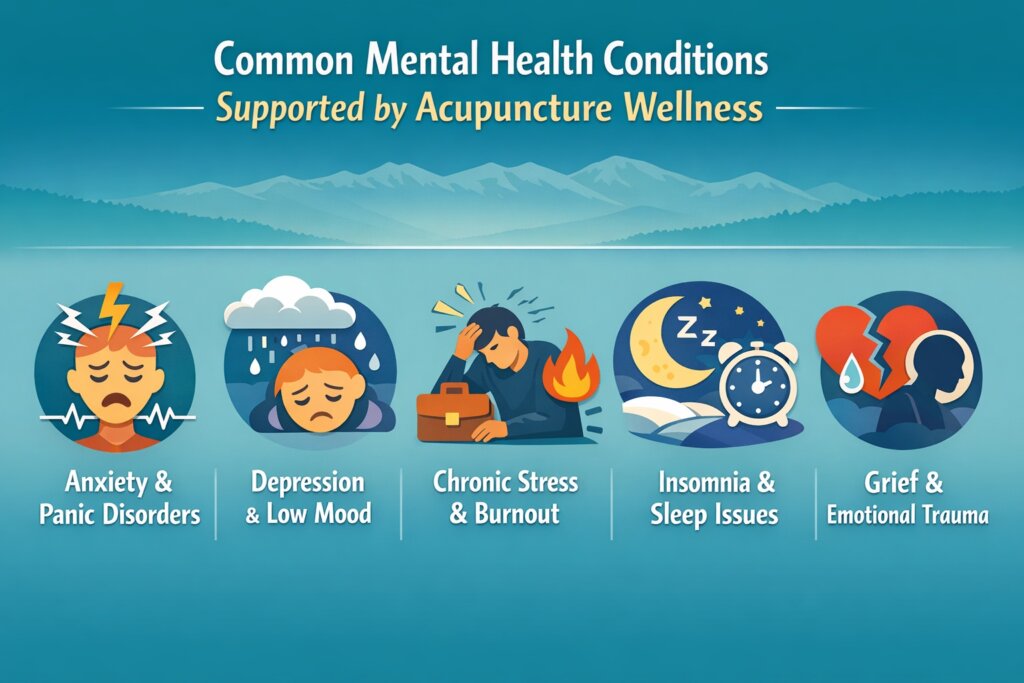
Acupuncture can be a valuable tool for a wide range of emotional and mental health concerns. While it’s not a replacement for professional mental health care, it can complement therapy, lifestyle changes, and other treatments. Here are some of the most common conditions we support at our acupuncture wellness center in Colorado Springs.
1. Anxiety and Panic Disorders
Anxiety can feel overwhelming, especially when it interferes with daily life. Acupuncture helps calm the nervous system and reduce the physical symptoms of anxiety, such as rapid heart rate, shallow breathing, and muscle tension. Many patients report feeling more grounded and less reactive after just a few sessions.
2. Depression and Low Mood
Depression often involves a combination of emotional flatness, fatigue, and difficulty finding motivation. Acupuncture supports mood regulation by encouraging the release of neurotransmitters like serotonin and dopamine. It also addresses physical symptoms like poor sleep and low energy, which can worsen depressive feelings.
3. Chronic Stress and Burnout
Living in Colorado Springs means juggling work, family, outdoor activities, and the demands of high-altitude living. Chronic stress can leave you feeling wired but tired, with trouble sleeping and constant tension. Acupuncture helps reset your stress response and supports your body’s ability to recover from prolonged strain.
4. Insomnia and Sleep Disturbances
Poor sleep and mental health are closely linked. Acupuncture can improve sleep quality by calming the mind and regulating circadian rhythms. Better sleep often leads to better mood, clearer thinking, and more emotional resilience.
5. Grief and Emotional Trauma
Processing grief or trauma takes time, and the body often holds onto emotional pain in the form of tension, fatigue, or physical discomfort. Acupuncture provides a safe space to release stored stress and support the healing process on a deeper level.
What to Expect During Acupuncture for Mental Health at Our Clinic
If you’re new to acupuncture, you might be wondering what a session looks like. At our clinic, every treatment begins with a thorough conversation about your health history, current symptoms, lifestyle, and emotional wellness goals. We don’t use generic treatment plans. Instead, we design a personalized approach based on what your body needs right now.
During your first visit, your acupuncture therapist will ask about your sleep patterns, stress levels, digestion, energy, and any physical symptoms you’re experiencing. This helps us understand the underlying patterns contributing to your mental health concerns. From there, we’ll create a treatment plan that may include acupuncture, cupping, or guidance on Chinese herbal support.
The acupuncture session itself is calm and relaxing. You’ll lie comfortably on a treatment table while we insert thin, sterile, single-use needles at specific points on your body. Most people feel little to no discomfort. Many patients describe a sense of deep relaxation or even fall asleep during treatment. Sessions typically last 45 to 60 minutes, and you’ll leave feeling more centered and at ease.
For mental health concerns, we often recommend a series of treatments over several weeks. Some patients notice improvements after just one or two sessions, while others benefit from ongoing care to maintain balance and prevent relapse. We’ll work with you to determine the right frequency and duration based on your progress and goals.
How Many Acupuncture Sessions Are Needed for Mental Health?
This is one of the most common questions we hear. The answer depends on your unique situation, including the severity of your symptoms, how long you’ve been experiencing them, and how your body responds to treatment. Some people notice improvements after just one or two sessions, while others benefit from a longer course of care.
For acute stress or mild anxiety, you might need four to six sessions over a few weeks. For chronic depression, burnout, or long-standing emotional imbalance, we often recommend weekly or biweekly treatments for several months, followed by maintenance sessions to support ongoing wellness.
The good news is that acupuncture’s benefits tend to build over time. As your nervous system becomes more regulated and your body’s natural healing mechanisms are activated, you’ll likely find that you feel more resilient, calm, and balanced in your daily life.
Dry Needling vs. Acupuncture
People sometimes confuse dry needling with acupuncture. Both involve thin needles, but the training, rationale, and targets differ. Dry needling is often performed by physical therapists or chiropractors with shorter coursework, targets muscle trigger points, and is primarily used for musculoskeletal pain. Acupuncture has been studied in clinical trials for anxiety and depression, and its safety evidence is more extensive.
Why Choose Acupuncture Colorado Springs for Mental Health Support
When you’re looking for natural, compassionate care for mental health, it’s important to work with a licensed, experienced practitioner who understands both the science and the art of acupuncture. At Acupuncture Colorado Springs, we bring decades of clinical experience and a deep commitment to personalized, root-cause-focused care.
Led by David W. Armstrong, L.Ac., a board-certified acupuncturist, our clinic serves the greater Colorado Springs area, including Manitou Springs, Old Colorado City, and Woodland Park. We operate under Colorado state law and comply with all safety, hygiene, and licensing regulations, using only sterile, single-use needles and professionally sourced herbal products.
Our calm, welcoming clinic environment is designed to help you relax, reset, and reconnect with your body’s natural ability to heal. We believe healing should be natural, accessible, and individualized. That’s why we look beyond surface symptoms to address the underlying patterns causing stress, anxiety, and imbalance. Whether you’re dealing with burnout, depression, or just feeling off, we’ll partner with you on a clear, compassionate path toward less pain, better function, and a more balanced, energized life.
Conclusion
Acupuncture for mental health offers a safe, natural, and evidence-informed path to emotional wellness. Whether you’re dealing with anxiety, depression, stress, or simply feeling out of balance, personalized acupuncture care can help you reconnect with your body’s ability to heal and thrive. If you’re ready to explore how acupuncture can support your mental health journey, we invite you to schedule a consultation at our Colorado Springs clinic and take the first step toward a calmer, more balanced life.
Acupuncture Colorado Springs offers personalized Traditional Chinese Medicine to help reduce stress and restore emotional balance. Our root-cause approach supports lasting mental wellness naturally. Learn more today.
FAQs
Can Acupuncture Help With Anxiety and Depression?
Acupuncture may help reduce symptoms of anxiety and depression for some people by calming the nervous system, easing physical tension, and supporting more stable sleep and mood. At Acupuncture Colorado Springs, we tailor care to your full health picture—stress load, sleep, digestion, and energy—so treatment supports both short-term relief and long-term emotional resilience.
How Does Acupuncture Work for Mental Health?
Acupuncture works by gently stimulating specific points to influence the body’s stress response, circulation, and neurochemical signaling, which can affect mood, sleep, and relaxation. From a Traditional Chinese Medicine perspective, we also address underlying patterns (such as chronic stress, depletion, or “stagnation”) that can contribute to emotional symptoms.
How Many Acupuncture Sessions Are Needed for Anxiety or Depression?
It varies based on symptom severity, duration, and overall health, but many people start with 1 session per week for several weeks, then adjust as symptoms improve. We review your response regularly and refine the plan so it fits your goals, schedule, and progress—rather than using a one-size-fits-all protocol.
Is Acupuncture Effective for Stress and Insomnia?
Acupuncture is commonly used to help with stress and insomnia by promoting relaxation, reducing muscle tension, and supporting healthier sleep onset and quality. We often combine acupuncture with lifestyle guidance and, when appropriate, Chinese herbal medicine education to improve sleep consistency and daytime calm.
Are There Any Side Effects or Risks of Acupuncture for Mental Health?
When performed by a licensed practitioner using sterile, single-use needles, acupuncture is generally low risk. Possible side effects include mild soreness, small bruising, lightheadedness, or temporary fatigue; serious complications are rare. We follow Colorado safety and hygiene standards and adjust treatment to your comfort level and medical history.