
Many people seeking natural relief from pain, stress, or chronic health concerns find themselves exploring Traditional Chinese Medicine options. Two of the most well-known approaches are acupuncture and acupressure. While both work with the same underlying principles and target similar points on the body, they differ in technique, depth of treatment, and the types of conditions they address most effectively. Understanding these differences can help you decide which approach might best support your wellness goals.
This article breaks down the key differences between acupuncture and acupressure, explains the benefits of each, and offers guidance on when professional acupuncture care may be the right choice for your health journey. You’ll also learn how these practices fit into modern evidence-informed care and what to expect if you’re considering treatment at a licensed clinic.
Key Takeaways
- Acupuncture uses fine, sterile needles inserted at specific points, while acupressure applies manual pressure to the same points without breaking the skin.
- Both practices aim to restore balance in the body’s energy pathways, known as meridians, to support pain relief, stress reduction, and overall wellness.
- Research shows acupuncture can significantly reduce anxiety, depression, chronic pain, and cognitive difficulties in clinical populations.
- Acupressure is a helpful self-care tool, but professional acupuncture offers stronger, more targeted therapeutic effects for chronic or complex conditions.
- Licensed acupuncturists provide personalized treatment plans based on your health history, lifestyle, and specific symptoms.
What Are Acupuncture and Acupressure?

Both acupuncture and acupressure are rooted in Traditional Chinese Medicine, a system that views health as a balance of energy, or qi, flowing through pathways in the body called meridians. When this flow becomes blocked or imbalanced, symptoms like pain, fatigue, digestive upset, or emotional distress can arise. The goal of both practices is to restore smooth flow and support the body’s natural ability to heal.
Acupuncture involves inserting thin, sterile, single-use needles into specific points along the meridians. These points correspond to different organ systems and functions. The insertion is typically painless and can trigger the release of endorphins, reduce inflammation, and calm the nervous system.
Acupressure uses fingertip or hand pressure on the same points without needles. It’s gentler and can be done by a practitioner or learned for self-care at home. While it can offer relief for mild symptoms or stress, it doesn’t reach the same depth or precision as needle-based treatment.
Core Differences Between Acupuncture and Acupressure
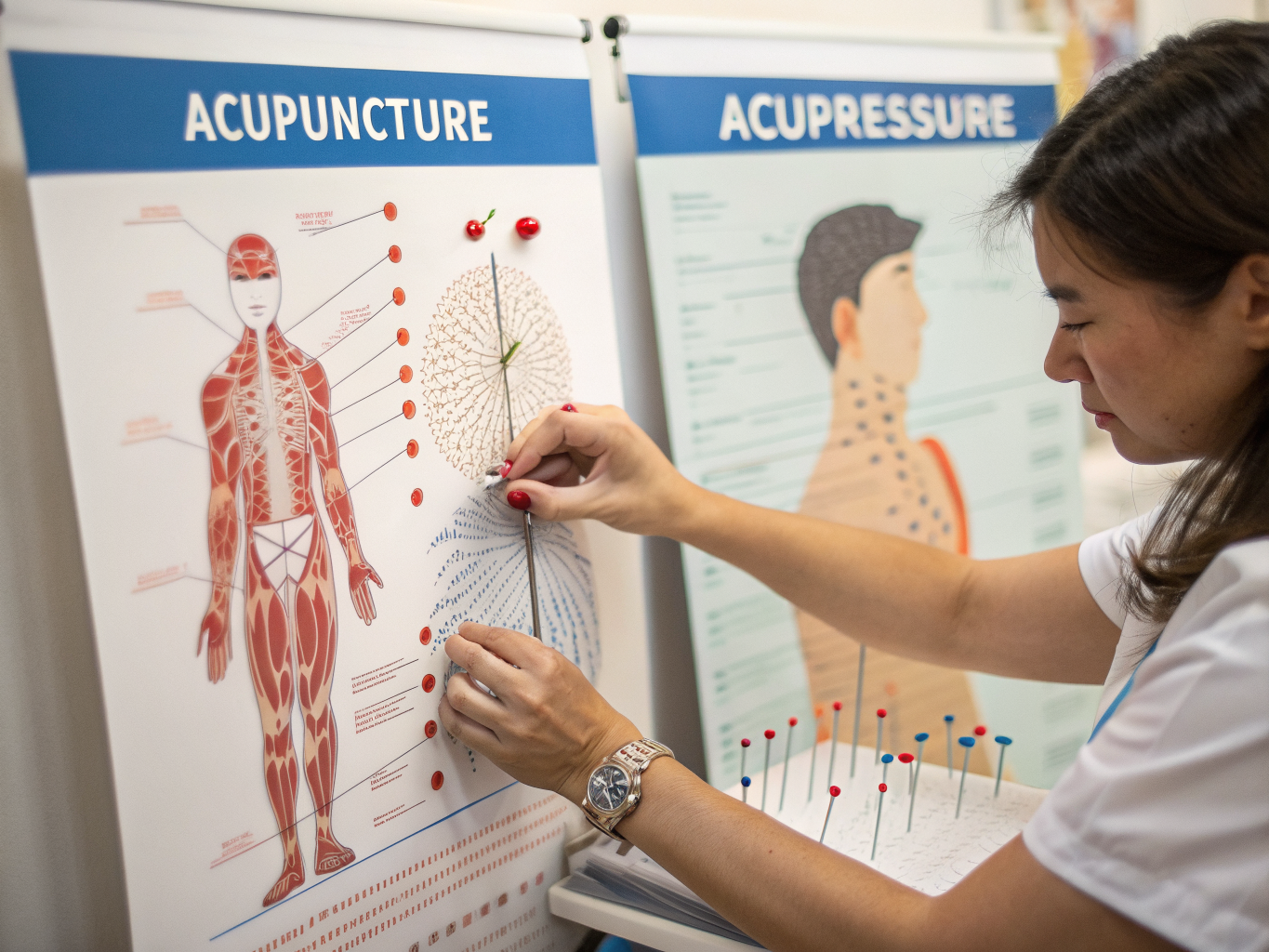
Acupuncture and acupressure use the same meridian and point framework, but they differ in how stimulation is delivered and how deeply it affects the body. These differences influence what each method is best suited for, who can administer it, and the level of research supporting its outcomes. Understanding the contrast helps you choose the most appropriate approach for a person’s needs, comfort level, and condition severity.
| Aspect | Acupuncture | Acupressure |
|---|---|---|
| Method | Insertion of fine needles at specific depths | Manual pressure applied with fingers or hands |
| Depth of Stimulation | Reaches deeper tissues and nerve pathways | Surface-level stimulation |
| Administered By | Licensed acupuncturist with formal training | Practitioner, therapist, or self-administered |
| Best For | Chronic pain, anxiety, hormonal imbalance, digestive disorders | Mild tension, stress relief, headache support |
| Research Support | Extensive clinical trials and WHO recognition | Limited clinical evidence, mostly anecdotal |
Both approaches can be valuable, especially when matched to the right situation and patient preference. Acupuncture is generally better for deeper, more persistent issues that require precise stimulation, while acupressure shines as an accessible option for mild symptoms and self-care support. When safety, training, and expected outcomes are weighed together, it becomes easier to decide which method is the best fit—or how they can complement each other.
Acupuncture Benefits Backed by Research

Acupuncture has been studied extensively in clinical settings, and the evidence continues to grow. Here are some of the most well-documented benefits supported by recent research.
1. Reduces Anxiety and Depression
A meta-analysis of 12 randomized controlled trials involving over 2,000 patients with polycystic ovary syndrome found that acupuncture significantly reduced anxiety and depression scores. Manual acupuncture was more effective than electroacupuncture for these outcomes.
2. Improves Cognitive Function in Cancer Survivors
A 2025 phase II trial of 260 breast cancer survivors found that real acupuncture improved perceived cognitive impairment by 10.3 points at 10 weeks compared to 4.8 points in the usual care group. These benefits persisted through 26 weeks, suggesting long-term support for brain fog and memory concerns.
3. Lowers Healthcare Costs for Chronic Pain
Enhanced acupuncture reduced annual healthcare costs for chronic low back pain by $491 per older adult participant compared with usual medical care. This suggests that acupuncture is not only effective but also cost-saving over time.
4. Supports Pain Relief and Mobility
Acupuncture is widely used to treat musculoskeletal pain, including lower back, neck, and shoulder pain, as well as osteoarthritis. It works by releasing endorphins, reducing inflammation, and calming overactive pain signals in the nervous system.
5. Balances Hormones and Supports Women’s Health
Acupuncture can help regulate menstrual cycles, reduce PMS symptoms, and support fertility by improving blood flow to the reproductive organs and balancing hormone levels. It’s often used alongside other treatments for conditions like endometriosis and PCOS.
6. Calms the Nervous System and Improves Sleep
By stimulating the parasympathetic nervous system, acupuncture helps the body shift out of fight-or-flight mode. This can improve sleep quality, reduce stress, and support recovery from burnout or chronic fatigue.
Acupressure Points and Self-Care Uses
Acupressure can be a useful tool for managing mild symptoms at home or between professional treatments. While it doesn’t replace the depth and precision of acupuncture, it can offer temporary relief and support relaxation.
Some commonly used acupressure points include LI4 (between the thumb and index finger) for headaches and stress, PC6 (on the inner wrist) for nausea and anxiety, and GB20 (at the base of the skull) for neck tension and headaches. Applying firm, steady pressure for 30 to 60 seconds can help release tension and promote circulation.
Acupressure mats are another popular tool. These mats feature small plastic spikes that stimulate multiple points on the back at once. They can help with relaxation and mild muscle tension, but do not target specific meridian points the way professional acupuncture does.
When to Choose Professional Acupuncture Over Acupressure
If you’re dealing with chronic pain, recurring health issues, or symptoms that interfere with daily life, professional acupuncture is the better choice. Acupressure can offer short-term relief, but it lacks the precision and therapeutic depth needed to address root causes or complex patterns.
At Acupuncture Colorado Springs, we begin every treatment with a thorough conversation about your health history, lifestyle, and goals. We don’t use generic protocols. Instead, we design a personalized care plan that addresses the underlying patterns causing your symptoms, whether that’s pain, stress, digestive upset, or hormonal imbalance.
Our clinic is led by David W. Armstrong, L.Ac., a board-certified acupuncturist with decades of experience blending Traditional Chinese Medicine with modern, evidence-informed techniques. We serve the greater Colorado Springs area, including Manitou Springs, Old Colorado City, and Woodland Park, and we understand the unique health challenges that come with living at high altitude in a dry, active environment.
Acupuncture, Acupressure, and the Importance of Professional Care
While acupressure can be a helpful self-care tool, it’s not a replacement for professional acupuncture when you’re dealing with persistent or complex health concerns. Acupuncture offers stronger therapeutic effects, is backed by extensive research, and is delivered by licensed practitioners who understand the body’s systems and how to address root causes.
If you’re curious about how acupuncture might support your health, we invite you to schedule a consultation at Acupuncture Colorado Springs. We’ll listen to your story, answer your questions, and create a clear, compassionate plan to help you move, sleep, and live with more comfort and ease.
Conclusion
Acupuncture and acupressure share a common foundation but differ in depth, precision, and therapeutic impact. Professional acupuncture offers research-backed benefits for pain, stress, and chronic conditions. If you’re ready to explore root-focused care, our clinic is here to support your journey.
Acupuncture Colorado Springs offers personalized acupuncture treatment tailored to your unique health needs. Our board-certified practitioner helps relieve pain and restore balance naturally. Get started today.
FAQs
What Is the Difference Between Acupuncture and Acupressure?
Acupuncture uses very thin, sterile needles inserted at specific points to influence the nervous system, circulation, and pain signaling. Acupressure uses firm, sustained finger (or tool) pressure on similar points without needles. Both come from Traditional Chinese Medicine, but acupuncture is typically more precise and can create a stronger, longer-lasting therapeutic effect when performed by a licensed practitioner.
Is Acupressure as Effective as Acupuncture?
It depends on the condition and severity. Acupressure can be very helpful for mild to moderate symptoms and day-to-day self-care, while acupuncture is often more effective for persistent pain, complex patterns (such as chronic stress or digestive issues), and cases that require deeper regulation. In our clinic, we often combine acupuncture with point guidance to help you maintain results between visits.
What Conditions Can Acupuncture and Acupressure Help With?
Both are commonly used to support pain relief (neck, back, headaches), stress and sleep, tension-related symptoms, nausea, and overall wellness. Acupuncture is also frequently used for more stubborn or multi-system concerns where a personalized, root-cause-focused plan is needed. Your best options depend on your health history and goals, which we review in detail before treatment.
Are Acupuncture and Acupressure Safe, and What Are the Side Effects?
When performed correctly, both are generally safe. Acupuncture side effects may include mild soreness, small bruising, temporary fatigue, or brief symptom shifts as your body adjusts; serious complications are rare when done by a licensed professional using sterile, single-use needles. Acupressure side effects are usually limited to temporary tenderness or light bruising if pressure is too strong. We follow Colorado safety and hygiene standards and tailor intensity to your comfort.
Can You Do Acupressure on Yourself at Home?
Yes—many acupressure points can be safely used at home for stress, tension, mild pain, and sleep support. Use steady, comfortable pressure for 30–90 seconds while breathing slowly, and stop if you feel sharp pain, dizziness, or worsening symptoms. If you’re pregnant, on blood thinners, or managing a complex condition, it’s best to get point guidance from a trained clinician first.