Living with nerve pain is exhausting. Whether it burns, shoots, or feels like constant electric shocks, neuropathic pain disrupts sleep, work, and daily life in ways that are hard to explain to someone who hasn’t felt it. Many people in Colorado Springs are already taking neuropathic medications—gabapentin, duloxetine, amitriptyline, or pregabalin—and still searching for more relief. That search often leads them to acupuncture.
This article breaks down what neuropathic medications do, how acupuncture works alongside them, and whether combining both is actually safe. You’ll also find guidance on what to watch for, questions to ask your doctor, and how a personalized care plan can make a real difference in your pain management journey.
Key Takeaways
- NICE recommends amitriptyline, duloxetine, gabapentin, and pregabalin as first-line neuropathic medications for adults with nerve pain.
- Acupuncture is not a replacement for prescribed neuropathic medications but may work alongside them to support pain relief.
- Combining acupuncture with nerve pain medications is generally considered safe when care is coordinated between your prescriber and licensed acupuncturist.
- Neuropathic medications can cause side effects, but evidence that acupuncture directly relieves these medication-related reactions remains limited.
- Acupuncture Colorado Springs provides individualized, root-cause-focused care designed to complement your existing medical treatment plan.
Can Neuropathic Medications and Acupuncture Be Used Together Safely?

Acupuncture can often be used alongside prescribed neuropathic medications, including gabapentin, pregabalin, duloxetine, and amitriptyline. However, patients should consult their prescribing clinician and inform their licensed acupuncturist about their medications, medical history, and existing health conditions. Individual safety considerations may affect whether acupuncture is appropriate.
That said, safe does not mean casual. If you are taking psychotropic medications, antidepressants used for nerve pain, or alpha-2-delta ligands like gabapentin or pregabalin, your acupuncturist needs to know. Some neuropathic drugs affect blood pressure, sedation levels, or mood—factors that matter when planning a session. Open communication between your prescribing physician and your acupuncture provider is the most important safety step you can take.
You might be wondering whether acupuncture could reduce your need for medication over time. Some patients do report that consistent acupuncture sessions allow them to have more comfortable days with fewer flare-ups. But this is a conversation to have with your doctor—never adjust or stop neuropathic medications without medical guidance.
What Neuropathic Medications Are Commonly Prescribed

Before exploring how acupuncture fits in, it helps to understand what these medications are doing in your body. Neuropathic pain does not respond well to standard pain relievers like ibuprofen. It requires drugs that target the nervous system more directly, and the options vary by mechanism and side effect profile.
According to NICE guidelines, the recommended first-line options for adult neuropathic pain include amitriptyline, duloxetine, gabapentin, and pregabalin. The 2025 NeuPSIG guidance from the International Association for the Study of Pain places tricyclic antidepressants, SNRIs, and alpha-2-delta ligands in the first-line category, while reserving opioids for third-line use due to risks of dependence and overdose.
| Medication Type | Examples | Common Side Effects | Line of Treatment |
|---|---|---|---|
| Tricyclic Antidepressants | Amitriptyline | Drowsiness, dry mouth, weight gain | First-line |
| SNRIs | Duloxetine | Nausea, fatigue, insomnia | First-line |
| Alpha-2-delta Ligands | Gabapentin, Pregabalin | Dizziness, sedation, swelling | First-line |
| Topical Agents | Capsaicin cream/patch | Local skin irritation | Adjunct/alternative |
| Opioids | Tramadol, others | Dependence, constipation, sedation | Third-line (selected cases) |
NICE also identifies topical capsaicin as an option for localized neuropathic pain when oral medicines are unsuitable or not tolerated. Each of these medications carries its own risk profile, and many patients find that side effects—nausea, sedation, weight changes—become a secondary problem on top of the pain itself.
How Acupuncture Addresses Neuropathic Pain Through a Different Pathway
Acupuncture works by inserting fine, sterile needles into specific points on the body to influence the nervous system, promote blood flow, and encourage the release of natural pain-modulating compounds like endorphins and serotonin. From a Traditional Chinese Medicine perspective, nerve pain often reflects a disruption in the flow of qi—the body’s functional energy—along specific pathways called meridians. Restoring that flow is the goal of every session.
Acupuncture has been investigated as a complementary approach to managing neuropathic pain, including symptoms associated with diabetic peripheral neuropathy. Some studies suggest potential benefits for pain and overall comfort, but research quality and findings vary across neuropathy conditions. More high-quality clinical evidence is needed to establish its effectiveness for specific types of nerve pain.
This is not the same as saying acupuncture replaces medication. Think of it this way: neuropathic medications calm the electrical misfiring in damaged nerves, while acupuncture supports the surrounding tissue, circulation, and nervous system tone. They are addressing overlapping problems from different angles, which is why many pain specialists and integrative medicine practitioners now consider them complementary rather than competing.
Side Effects of Neuropathic Medications That Acupuncture May Help Ease
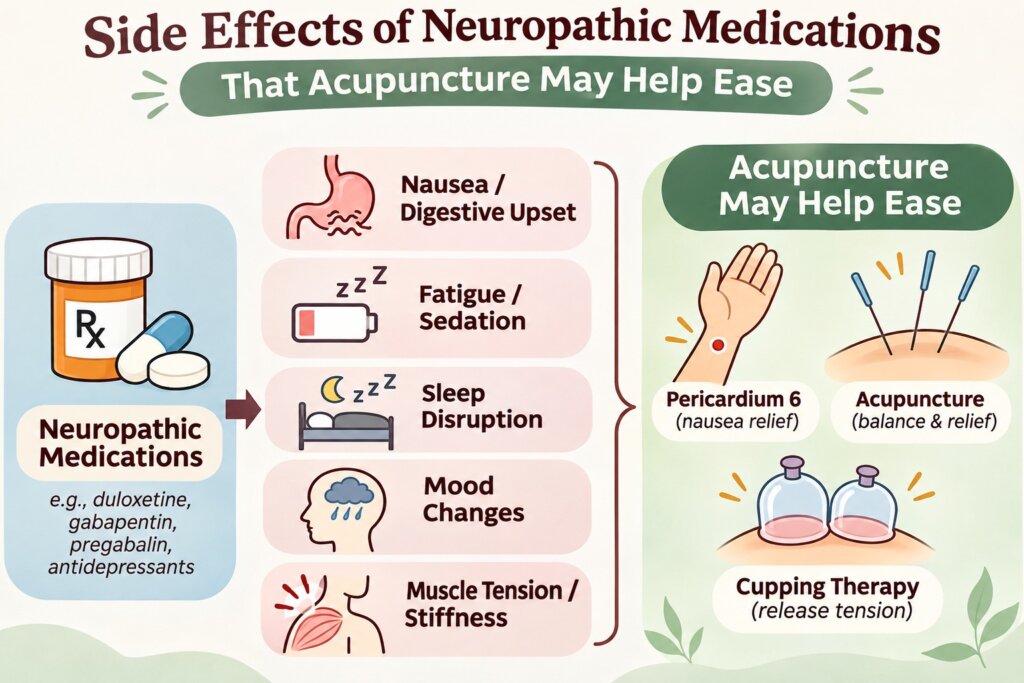
One reason patients seek out acupuncture while already on nerve pain medications is that the drugs themselves can cause discomfort. Nausea from duloxetine, sedation from gabapentin, and the dry, fatigued feeling that often comes with antidepressants used as psychotropic medications—these side effects are real and can significantly affect quality of life.
Acupuncture and related point-stimulation techniques have been studied for certain types of nausea, particularly postoperative and chemotherapy-related nausea. However, evidence that acupuncture specifically reduces nausea caused by neuropathic medications remains limited. Patients experiencing persistent medication side effects should consult their prescribing clinician to discuss appropriate management options.
Here are some side effects of neuropathic medications that acupuncture may help address:
- Nausea and digestive discomfort: Duloxetine may cause nausea, particularly when treatment begins. Evidence for acupuncture specifically treating duloxetine-related nausea is limited, so persistent symptoms should be discussed with a prescribing clinician.
- Fatigue and sedation: Gabapentin and pregabalin can cause drowsiness or dizziness. Acupuncture has not been established as a reliable treatment for these medication side effects, and patients should seek medical advice if symptoms affect daily activities.
- Sleep disruption caused by antidepressants or nerve pain itself—acupuncture has been studied for its calming effects on the nervous system and sleep quality.
- Mood changes: Certain medications may affect mood or emotional well-being. Patients who notice new or worsening mood symptoms should contact their prescribing healthcare provider for assessment rather than relying on complementary treatment alone.
- Muscle tension and stiffness that often accompanies chronic nerve pain—cupping therapy at our clinic can help relieve the physical tension that builds around painful areas.
What to Tell Your Providers Before Combining Treatments
Coordination between your medical team and your acupuncturist is not optional—it is the foundation of safe integrative care. If you are taking antipsychotic medications, antipsychotic drugs, or any psychotropic medications as part of your pain or mental health management, your acupuncturist needs a full picture of your health history before your first session.
At Acupuncture Colorado Springs, every new patient begins with a thorough intake conversation. David W. Armstrong, L.Ac. reviews your current medications, health history, lifestyle, and pain patterns before designing any treatment plan. This is not a generic intake form—it is a real conversation about what is happening in your body and what your goals are.
Here is what to share with both your prescriber and your acupuncturist:
- List all current medications. Include neuropathic medications, antidepressants used as psychotropic medications, buspirone medication if prescribed for anxiety, nausea medications, and any supplements or herbal products you take on your own.
- Describe your pain clearly. Where is it, how long has it been there, what makes it better or worse, and how it affects your daily function—these details shape your acupuncture treatment plan.
- Share your goals. Are you hoping to reduce pain intensity, sleep better, or eventually work toward lower medication doses with your doctor’s guidance? Your goals matter.
- Report any reactions after sessions. Some people feel temporarily tired or emotionally tender after acupuncture. This is usually normal but worth mentioning to both providers.
- Ask your prescriber directly. Most physicians who are familiar with integrative care will have no objection to acupuncture alongside neuropathic medications. If yours is unfamiliar, share research or ask for a referral to an integrative medicine specialist.
Who Is a Good Candidate for Combined Neuropathic Medication and Acupuncture Care
Not everyone with nerve pain is in the same situation, and the right approach depends on your diagnosis, medication regimen, and overall health. That said, many people find that combined care makes sense—especially when medications alone are not providing enough relief or when side effects are becoming a problem in themselves.
You might be a good candidate for combining neuropathic medications with acupuncture if you:
- Are already on first-line neuropathic medications but still experiencing significant pain or sleep disruption
- Are dealing with side effects from antidepressants or alpha-2-delta ligands that reduce your quality of life
- Want to explore non-drug support without stopping your current prescriptions
- Have been told by your doctor that your nerve pain is likely long-term and you are looking for sustainable management strategies
- Are managing related conditions—anxiety treated with buspirone medication, mood concerns addressed with antipsychotic drugs, or digestive issues from nausea medications—and want a more whole-body approach
Patients who are managing complex medication regimens, including antipsychotic medications or multiple psychotropic medications, should always get explicit clearance from their prescriber before starting acupuncture. This is standard practice and something we take seriously at our clinic.
How Acupuncture Colorado Springs Supports Patients on Neuropathic Medications
Our clinic is built around one principle: care that fits the person, not a protocol. When you come to Acupuncture Colorado Springs with nerve pain and a list of medications, we do not hand you a standard treatment sheet. David Armstrong takes time to understand your full picture—your pain, your medications, your lifestyle here in Colorado Springs, and your long-term health goals.
Our clinic emphasizes individualized care, appropriate safety precautions, and communication about existing medical treatments. David W. Armstrong, L.Ac., considers each patient’s health history, symptoms, and current medications when discussing acupuncture care. Patients are encouraged to maintain communication with their prescribing healthcare providers while exploring complementary approaches to neuropathic pain.
If you are in the Colorado Springs area—whether you are in Manitou Springs, Old Colorado City, Woodland Park, or elsewhere in El Paso County—and you are looking for a licensed acupuncturist who understands how to work alongside your medical care team, we invite you to schedule a consultation at our clinic located at 2525 W Pikes Peak Ave, Suite B, Colorado Springs, CO 80904. The first step is simply a conversation.
Conclusion
Neuropathic medications and acupuncture may be used together when individual health needs and appropriate safety precautions are considered. Although acupuncture may offer complementary support for some patients, evidence for relieving medication-related side effects remains limited. Contact Acupuncture Colorado Springs to discuss whether acupuncture may be appropriate alongside your existing medical treatment plan.
Acupuncture Colorado Springs offers individualized acupuncture care for patients exploring complementary approaches to neuropathic pain. David W. Armstrong, L.Ac., considers your symptoms, medical history, and current treatments when discussing your care options. Contact our Colorado Springs clinic to schedule a consultation.
FAQs
What Is the Best Medication for Neuropathic Pain?
There isn’t one “best” medication for everyone—neuropathic pain treatment is individualized based on the cause, symptoms, and side-effect tolerance. Common effective options include gabapentin or pregabalin, SNRIs like duloxetine, and TCAs like nortriptyline or amitriptyline; topical lidocaine or capsaicin can help for more localized nerve pain. Many patients also use acupuncture alongside medication to support pain control, sleep, and stress while addressing contributing patterns.
What Is the First-Line Drug for Neuropathic Pain?
First-line medications typically include gabapentin or pregabalin, SNRIs (such as duloxetine), and TCAs (such as nortriptyline or amitriptyline), depending on your health history and the type of neuropathic pain. Your prescribing clinician chooses based on safety, other conditions, and potential interactions; acupuncture is commonly used at the same time as a non-drug therapy to improve comfort and function.
What Is the Safest Drug for Nerve Pain?
“Safest” depends on your age, kidney/liver function, other medications, and fall or sedation risk. For localized neuropathic pain, topical lidocaine (and sometimes capsaicin) is often considered lower-risk than systemic drugs; for widespread symptoms, duloxetine, gabapentin/pregabalin, or low-dose TCAs may be appropriate with monitoring. If you are considering acupuncture alongside nerve pain medication, inform both your prescribing clinician and acupuncturist so they can assess relevant precautions based on your medical history and treatment needs.
What Is the Strongest Prescription Medication for Nerve Pain?
For severe neuropathic pain, higher-potency options may include combination approaches (for example, a gabapentinoid plus an SNRI or TCA) or specialist-directed treatments; opioids are generally not preferred for chronic neuropathic pain due to limited long-term benefit and higher risk. The “strongest” plan is the one that provides meaningful relief with acceptable side effects, and acupuncture is often used as an adjunct to reduce pain intensity and improve quality of life.
What Medications Are Used to Treat Neuropathy?
Medications used for neuropathy symptoms commonly include gabapentin or pregabalin, SNRIs (duloxetine, venlafaxine), TCAs (nortriptyline, amitriptyline), and topical agents like lidocaine or capsaicin; specific causes may require targeted treatment (for example, diabetes management, vitamin deficiency correction, or antiviral therapy). Many patients in our Colorado Springs clinic use acupuncture alongside these therapies to support pain relief, circulation, sleep, and stress regulation as part of a personalized plan