Your hands hold more than you might expect. In Traditional Chinese Medicine (TCM), the hands are considered a map of the body’s internal systems, with specific hand acupuncture points linked to organs, energy pathways, and health functions that extend far beyond the fingers themselves. Whether you are dealing with chronic pain, stress, or digestive discomfort, understanding these points can open a new perspective on how the body communicates and heals.
This article walks you through the most commonly used hand acupuncture points, what each one is traditionally associated with, and how professional acupuncture care can take this knowledge further. You will also find a reference to hand acupressure points charts, an overview of hand reflexology points, and practical insight into what a clinical session focused on the hands might look like.
Key Takeaways
- Hand acupuncture points connect to meridians that influence organs, emotions, and physical function throughout the body.
- The lung meridian runs along the thumb side of the hand and includes points LU7 through LU11.
- Heart 7 (HT7) is one of the most frequently used hand acupressure points for stress and sleep support.
- Small Intestine 3 (SI3) on the hand is traditionally linked to neck pain, headaches, and spinal tension.
- Hand reflexology points differ from acupuncture points but share a similar philosophy of systemic connection through the hands.
- Professional acupuncture treatment personalizes point selection based on your specific health patterns, not a general chart.
Before exploring each point in depth, it helps to understand why the hands are such a significant area in TCM practice and how hand acupuncture points relate to the broader meridian system.
What Hand Acupuncture Points Are and Why They Matter
In TCM, the body is organized around a network of meridians, or energy channels, through which qi (pronounced “chee”) flows. When that flow is disrupted, pain, fatigue, stress, and illness can follow. The hands are where several major meridians either begin or end, making them a concentrated area for therapeutic access. Looking at any hand acupressure points chart, you can see how much information is packed into a relatively small area of the body.
There are six meridians that pass through the hands. Three are yin meridians (Lung, Heart, and Pericardium), and three are yang meridians (Large Intestine, Small Intestine, and Triple Warmer). Each carries a different set of functions and connects to different organ systems. Stimulating these points through needling or pressure can influence the corresponding systems, which is why hand acupuncture is used for conditions that seem unrelated to the hand itself.
This is what makes hand acupuncture genuinely interesting from a clinical standpoint. A point on your palm might be used to calm anxiety. A point near your wrist might support digestion. The hand is not just a tool for gripping things; in TCM, it is a gateway to the whole body.
Common Hand Acupuncture Points on the Acupressure Hand Chart
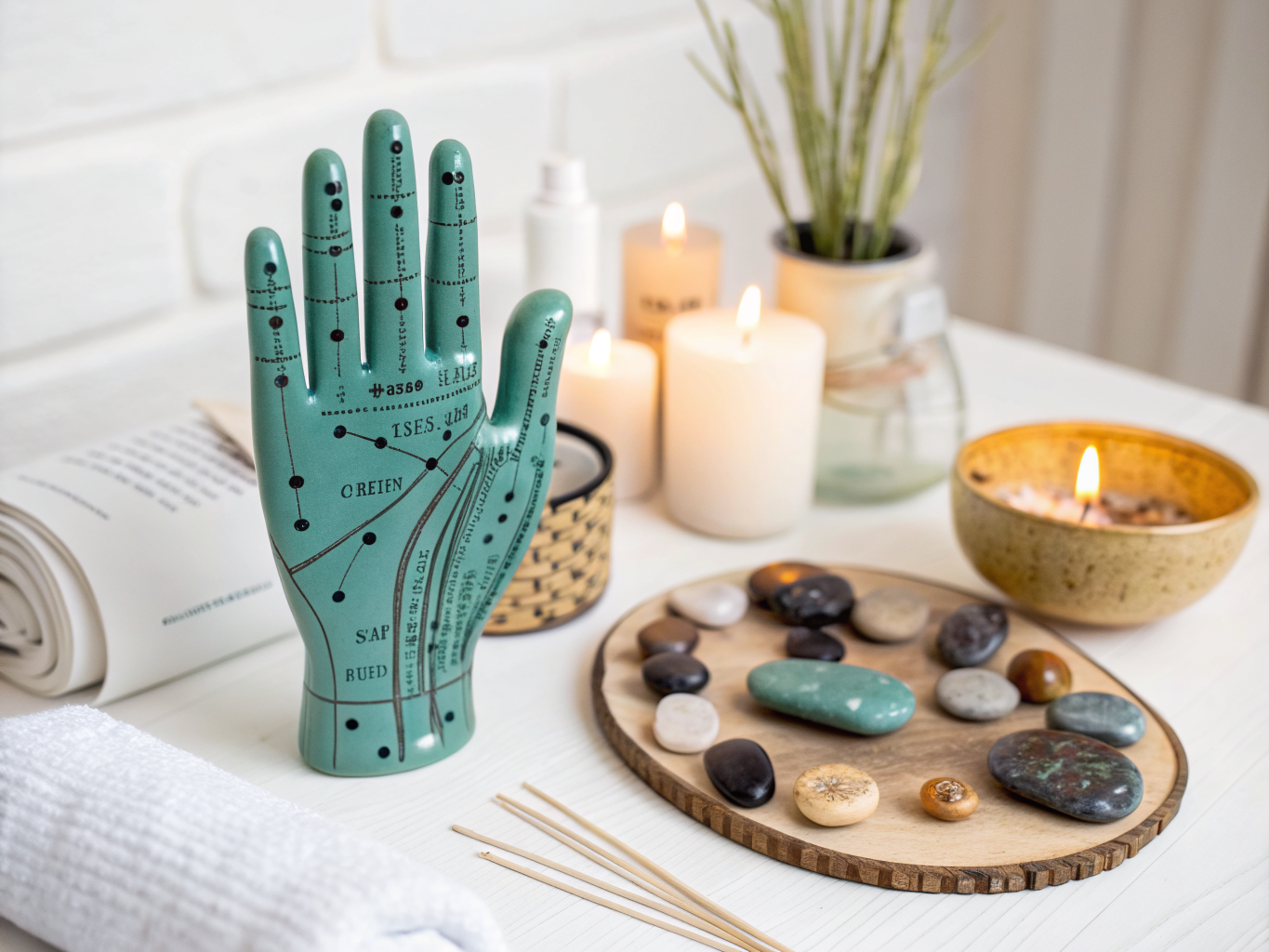
Referencing a standard hand acupuncture points guide or acupressure hand chart reveals several points that practitioners return to again and again. Each has a specific location, a traditional function, and a clinical application that has been used for centuries. Below are the most recognized points and what they are traditionally used for.
1. Heart 7 (HT7) — Shenmen, or Spirit Gate
Heart 7 is located at the wrist crease on the ulnar (pinky) side of the hand, just inside the tendon. It is one of the most well-known hand acupressure points in clinical practice. Traditionally, HT7 is used to calm the mind, support sleep, and ease anxiety, making it a go-to point for patients dealing with stress-related patterns.
In a clinical setting, HT7 is often combined with other points when treating insomnia, restlessness, or emotional overwhelm. If you have ever felt that racing-mind feeling late at night, this is one of the points a licensed acupuncturist might target.
2. Lung 7 (LU7) — Lieque, or Broken Sequence
LU7 sits just above the wrist on the radial (thumb) side of the forearm, slightly proximal to the hand. It is considered a master point of the lung meridian and is traditionally linked to respiratory health, immune support, and the release of grief or sadness held in the lungs. The lung meridian pathway includes five points in the hand and wrist region, from LU7 through LU11.
Clinically, LU7 is used for coughs, sinus congestion, and immune system support. In Colorado Springs, where dry air and altitude can stress the respiratory system, this point comes up often in treatment plans during the colder months.
3. Lung 10 (LU10) — Yuji, or Fish Border
LU10 is found at the midpoint of the first metacarpal bone, on the thumb side of the palm, in the fleshy area near the base of the thumb. Traditionally, it is used for sore throat, cough, and fever. It is also associated with lung heat patterns in TCM, which can present as dry throat, hoarseness, or a persistent tickle in the chest.
4. Lung 11 (LU11) — Shaoshang, or Lesser Shang
LU11 is located at the outer corner of the thumbnail, near the base of the nail. It is the terminal point of the lung meridian and is traditionally used for acute throat pain, tonsillitis, and high fever. This point is sometimes stimulated with pressure rather than needles in self-care contexts, though clinical needling is more precise and targeted.
5. Small Intestine 3 (SI3) — Houxi, or Back Ravine
SI3 is found on the ulnar side of the hand, just below the knuckle of the little finger, in the crease that forms when you make a loose fist. This is one of the more structurally significant hand acupuncture points because it connects to the governing vessel, a central meridian that runs along the spine. Traditionally, SI3 is used for neck stiffness, headaches at the back of the head, and upper back tension.
For a patient managing chronic shoulder and upper back pain from construction work, SI3 is a point worth knowing about. It is often incorporated into treatments targeting the cervical spine and upper body.
6. Pericardium 8 (PC8) — Laogong, or Palace of Labor
PC8 sits in the center of the palm, between the second and third metacarpal bones. Traditionally, it is associated with calming the heart, clearing heat, and supporting emotional balance. It is sometimes used in treatments for anxiety, palpitations, and excessive sweating related to stress.
This point is also referenced in hand reflexology points systems, where the center of the palm is associated with the heart and solar plexus. While reflexology and acupuncture are distinct practices, they share a common belief in the hand as a reflection of the body’s internal state.
7. Large Intestine 4 (LI4) — Hegu, or Joining Valley
LI4 is arguably the most well-known acupuncture point in the entire system. It is located in the webbing between the thumb and index finger. Traditionally, LI4 is used for headaches, facial pain, toothache, neck tension, and immune support. It is also frequently used to promote the smooth flow of qi throughout the upper body.
You might be wondering why a point in the hand would affect a headache. In TCM, the large intestine meridian travels from the hand up the arm, across the shoulder, and up the neck to the face. Stimulating LI4 can influence the entire pathway, which is why it is so widely used across a range of conditions.
At Acupuncture Colorado Springs, David W. Armstrong, L.Ac., regularly incorporates LI4 into treatment plans for patients dealing with tension headaches, jaw tightness, and sinus pressure. If you are looking for natural, non-pharmaceutical support for recurring head pain, scheduling a consultation at our clinic at 2525 W Pikes Peak Ave, Suite B, Colorado Springs, CO 80904 is a practical next step.
How Hand Acupressure Points Differ From Hand Reflexology Points
It is easy to confuse hand acupressure points with hand reflexology points, and the two are related in philosophy but different in practice. Both systems treat the hand as a microcosm of the body, but they use different maps and different methods. Understanding the distinction helps you make more informed decisions about the type of care you are seeking.
| Feature | Hand Acupuncture Points | Hand Reflexology Points |
|---|---|---|
| System Origin | Traditional Chinese Medicine | Western reflexology tradition |
| Point Map | Meridian-based, organ-connected | Zone-based, organ-mapped on palm and dorsum |
| Method | Needles or acupressure | Thumb and finger pressure techniques |
| Clinical Use | Systemic and localized conditions | General wellness and relaxation |
| Practitioner | Licensed acupuncturist (L.Ac.) | Certified reflexologist |
| Regulation | State-licensed, board-certified | Varies by region and training |
Acupuncture is a licensed medical practice in Colorado, regulated under state law. At our clinic, all treatments are performed by David W. Armstrong, L.Ac., using sterile, single-use needles and evidence-informed protocols. Reflexology, while beneficial for relaxation, is a separate modality with a different scope of practice.
What to Expect During a Hand Acupuncture Session
A session focused on hand acupuncture points does not mean needles are placed only in the hands. In most cases, the hands are part of a broader treatment plan that addresses your specific health pattern. David begins every session with a thorough intake conversation covering your health history, current symptoms, sleep, digestion, stress levels, and lifestyle.
From there, point selection is individualized. You might receive needles in the hands, wrists, arms, and other areas of the body depending on what your pattern calls for. The needles used are extremely fine, and most patients report little to no discomfort. Sessions typically last between 45 and 60 minutes, and many patients feel noticeably relaxed by the end.
If you are new to acupuncture and curious about what the experience is actually like, our blog post What to Expect at Your First Acupuncture Visit walks through the full process from intake to follow-up. Knowing what to expect ahead of time makes the first visit much more comfortable.
Acupuncture Colorado Springs also offers complementary services including cupping therapy and Chinese herbal medicine guidance. For patients whose hand or wrist pain has a muscular or structural component, combining acupuncture with cupping can support faster, more lasting relief. You can explore all available services on our services page and reach out to schedule a consultation that fits your schedule and health goals.
Who Benefits Most From Acupuncture Hand Point Treatment
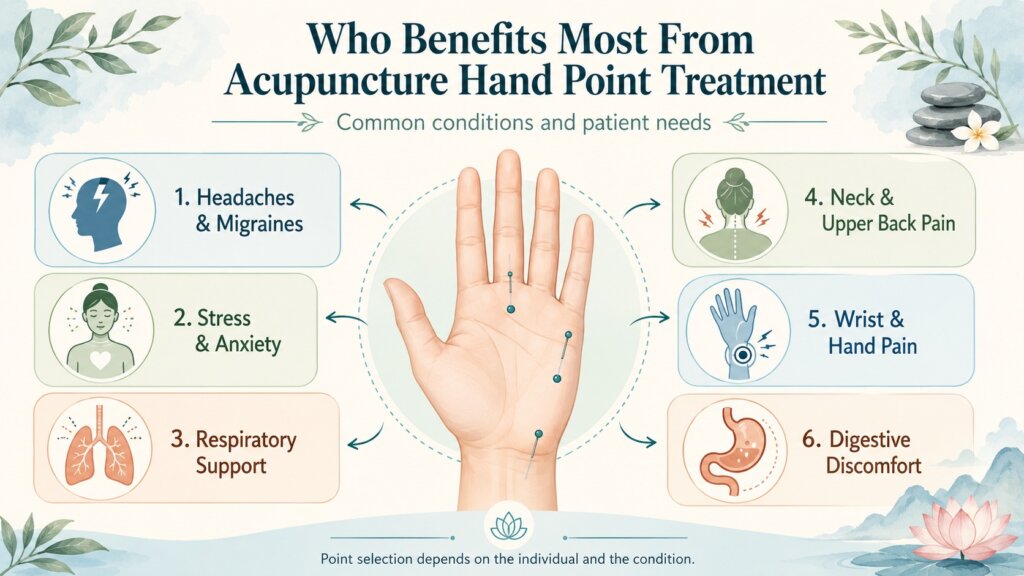
Hand acupuncture points are used across a wide range of conditions and patient types. The following are some of the most common presentations where hand point treatment plays a meaningful role in a broader care plan.
- Chronic headaches and migraines: LI4 and other hand points are frequently used to reduce frequency and intensity of head pain without relying on daily medication.
- Stress and anxiety: HT7 and PC8 are used to calm the nervous system and support emotional regulation in patients experiencing burnout or chronic stress.
- Respiratory issues: The lung meridian points from LU7 to LU11 are used to support breathing, address sinus congestion, and strengthen immune function, particularly relevant in Colorado’s dry, high-altitude climate.
- Neck and upper back pain: SI3 connects to the governing vessel and is used in treatments for cervical tension, stiffness, and referred pain into the shoulders.
- Wrist and hand pain: Local points around the wrist and hand are used for conditions like carpal tunnel syndrome, arthritis, and repetitive strain injuries.
- Digestive discomfort: Several hand points connect to the large intestine and stomach meridians, making them useful in treatments for bloating, constipation, and irregular digestion.
The most appropriate acupuncture points depend on the underlying concern and the individual being treated. A licensed acupuncturist can evaluate symptoms and determine whether hand points should be included with other acupuncture techniques. This personalized approach allows treatment to address both localized symptoms and broader patterns identified during the consultation.
Conclusion
Hand acupuncture points offer a precise, time-tested way to address conditions that range from everyday tension headaches to deeper patterns of stress and imbalance. A qualified practitioner does not just pick points from a hand acupressure points chart; they select points based on your full health picture, your constitution, and what your body needs right now. If you are ready to explore what personalized acupuncture care can do for you, Acupuncture Colorado Springs welcomes you to book an appointment with David W. Armstrong, L.Ac., and take a grounded, individualized step toward feeling better.
Acupuncture Colorado Springs offers board-certified acupuncture care tailored to your unique health needs. David W. Armstrong, L.Ac. applies traditional hand points with modern, evidence-informed techniques. Book your consultation today—get started on your path to lasting relief.
FAQs
What Is Acupuncture in the Hand Used For?
Hand acupuncture is commonly used to help relieve pain (especially in the hands, wrists, and arms), reduce headaches and tension, calm stress, and support overall balance by stimulating specific points that influence circulation, nerves, and muscle tone. At Acupuncture Colorado Springs, we choose hand points based on your full pattern and symptoms rather than using a one-size-fits-all approach.
Does Hand Acupuncture Really Work?
For many people, yes—hand points can be very effective, particularly for pain, tightness, and stress-related symptoms, and they’re often used as part of a broader, evidence-informed treatment plan. Results vary by condition and individual, which is why we tailor point selection and frequency to your goals and how your body responds.
What Is the Acupuncture Point in the Hand for Pain Relief?
A commonly used point for general pain and tension is LI4 (Hegu), located in the webbing between the thumb and index finger. It’s often used to support pain relief and head/face tension, but it’s not appropriate for everyone (including during pregnancy), so a licensed practitioner should confirm what’s safest and most effective for you.
Is Acupuncture in the Hand Painful?
Most patients feel little to no pain—more often a brief pinch, pressure, warmth, or a dull ache that fades quickly. The hands can be more sensitive than some areas, but with gentle technique and sterile, single-use needles, treatments are typically very tolerable and relaxing.
Are There Any Risks or Side Effects of Hand Acupuncture?
Side effects are usually mild and temporary, such as brief soreness, slight bruising, or lightheadedness. More serious complications are rare when performed by a properly licensed acupuncturist using sterile, single-use needles and appropriate point selection, which is standard in our Colorado Springs clinic.