Peripheral neuropathy affects millions of people, causing burning pain, numbness, and weakness—often in the hands and feet. If you have been searching for answers beyond prescription medications, you are not alone. Many people living with nerve damage are looking for approaches that address the root of their symptoms, not just the surface discomfort.
This article walks you through the latest treatment for peripheral neuropathy, from conventional medications to emerging therapies and the growing role of acupuncture. You will also learn how a personalized, whole-body approach may offer real relief—especially for those in the Colorado Springs area seeking natural, evidence-informed care.
Key Takeaways
- The latest treatment for peripheral neuropathy includes both conventional medications and newer non-drug options like neuromodulation and photobiomodulation.
- Acupuncture has growing clinical support as a complementary approach for nerve damage and neuropathic pain.
- ICD peripheral neuropathy coding varies by cause, which affects how treatment plans are documented and covered by insurance.
- Isoniazid peripheral neuropathy is a well-known drug-induced form that may improve after stopping the medication and adding vitamin B6.
- Neuropathy in hands and feet responds differently depending on whether the cause is metabolic, autoimmune, or medication-related.
- Personalized care plans that address underlying patterns—not just symptoms—tend to produce better long-term outcomes.
Understanding your options starts with knowing what peripheral neuropathy actually is and why treatment is rarely one-size-fits-all.
What Is Peripheral Neuropathy and Why Does the Latest Treatment for Peripheral Neuropathy Matter?

Peripheral neuropathy is damage to the peripheral nervous system—the network of nerves outside the brain and spinal cord. This damage disrupts the signals your nerves send to your muscles, skin, and organs, leading to symptoms like tingling, sharp pain, numbness, or loss of balance. According to the Cleveland Clinic, the condition has many causes, including diabetes, chemotherapy, autoimmune disorders, and certain medications.
The ICD peripheral neuropathy classification system distinguishes between focal neuropathy—such as neuropathy in hands—and generalized polyneuropathy. That distinction matters because it guides which treatments are appropriate and what insurance will cover.
Treatment is not a single path. It depends heavily on the underlying cause, the severity of nerve damage, and how long symptoms have been present.
Conventional and Latest Treatment for Peripheral Neuropathy: Nerve Damage Options Reviewed
Standard care for peripheral neuropathy usually begins with identifying and treating the underlying cause. However, patients who continue to experience pain, numbness, tingling, or weakness may need additional treatment options. Several emerging and non-drug therapies are now being studied for their potential to improve symptom control and quality of life.
Nav1.8 Sodium-Channel Blockers
Nav1.8 sodium-channel blockers are designed to target specific pathways involved in transmitting pain signals through the nerves. Drugs such as suzetrigine and VX-993 may offer more targeted pain relief with fewer systemic side effects than some traditional medications. These treatments are still being investigated for their potential role in managing peripheral neuropathy and nerve damage.
AAK1 Inhibitors and Chemokine-Receptor Antagonists
AAK1 inhibitors and chemokine-receptor antagonists represent another emerging approach to neuropathic pain treatment. Pilavapadin, also known as LX9211, is being studied for painful diabetic peripheral neuropathy, while chemokine-receptor antagonists target inflammatory pathways associated with nerve damage. Both approaches remain in clinical development but may support more personalized, mechanism-based care.
High-Concentration Capsaicin Patches
The capsaicin 8% patch, commonly known as Qutenza, may help reduce localized neuropathic pain in the hands or feet. It works by temporarily desensitizing pain receptors in the skin and may provide longer-lasting relief than standard topical creams. Because the treatment can cause temporary discomfort, it must be applied by a qualified healthcare provider.
Neuromodulation Therapies
Neuromodulation treatments include spinal cord stimulation, scrambler therapy, and transcutaneous electrical nerve stimulation. These approaches use electrical signals to interrupt or modify pain messages before they are fully processed by the brain. They may be considered for patients who cannot tolerate medication or who have not improved with first-line treatments.
Photobiomodulation and Shockwave Therapy
Photobiomodulation uses low-level light or laser energy to support cellular activity and potentially encourage nerve recovery. Shockwave therapy uses controlled acoustic waves that may improve circulation and reduce pain in affected areas. Early research suggests these treatments may be useful as complementary options, particularly for chemotherapy-induced peripheral neuropathy.
Cognitive-Behavioral Therapy
Cognitive-behavioral therapy helps patients manage the emotional, behavioral, and sleep-related effects of chronic nerve pain. It may reduce pain perception, improve coping skills, and help patients remain active despite ongoing symptoms. CBT is generally most effective when combined with medical care, rehabilitation, or other pain-management treatments.
These newer treatment options show how peripheral neuropathy care is moving toward more targeted, non-drug, and integrative strategies. Some therapies are already available, while others remain experimental and require further research. Patients should work with a qualified healthcare provider to determine which treatments are safe and appropriate for their condition.
Can Acupuncture Help? Latest Treatment for Peripheral Neuropathy Through a TCM Lens
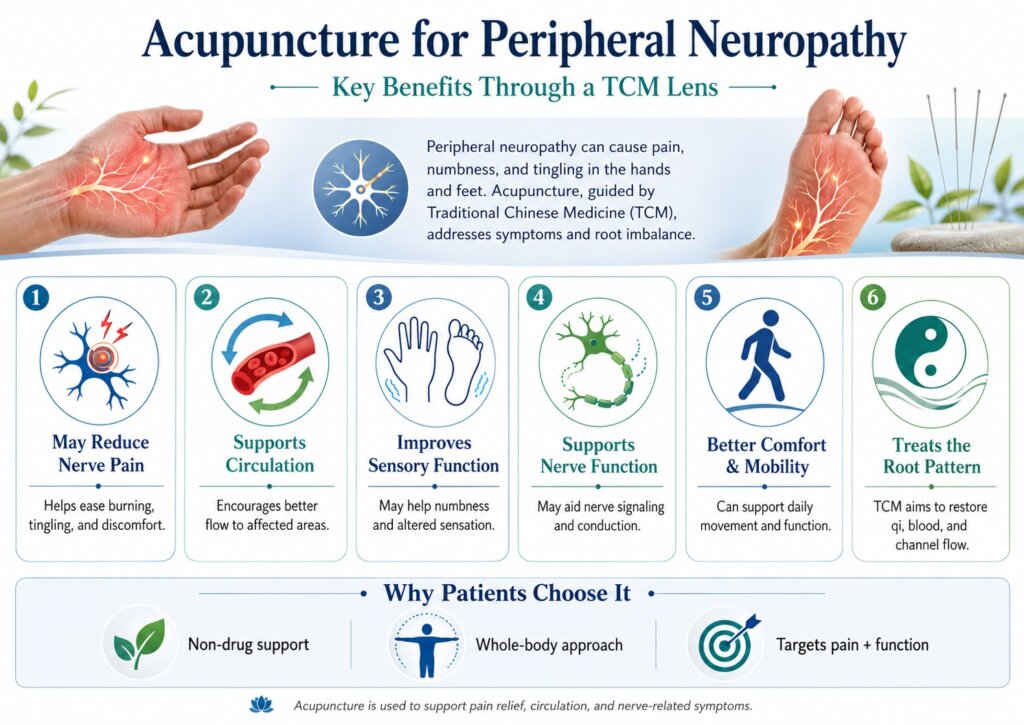
Acupuncture is not a new idea—it has been used in Traditional Chinese Medicine for thousands of years to address pain, circulation, and nerve-related conditions. What is newer is the growing body of clinical research examining how it performs specifically for peripheral neuropathy and nerve damage. Several systematic reviews and clinical trials have found that acupuncture may help reduce neuropathic pain, improve sensory function, and support nerve conduction in patients with diabetic and chemotherapy-induced neuropathy.
From a TCM perspective, neuropathy is often linked to patterns of blocked circulation, deficient qi and blood, or internal cold and dampness obstructing the channels that run through the limbs. Treatment focuses on restoring flow to the affected areas—not just masking pain.
This root-cause approach is exactly what sets acupuncture apart from many conventional options.
How Acupuncture Works for Nerve Damage and Neuropathy in Hands
Fine, sterile needles are placed at specific points along the body’s meridian pathways—many of which correspond to nerve-rich areas in the hands, feet, and lower legs. This stimulation may trigger the release of endorphins, improve local blood flow, and modulate the nervous system’s pain response. Some research also suggests acupuncture may support myelin repair and reduce neuroinflammation, though more study is needed.
Sessions are typically 45 to 60 minutes. Most patients begin with a series of weekly treatments, with the frequency tapering as symptoms improve.
Results vary, but many patients report reduced burning and tingling, better sleep, and improved sensation in the feet and hands after a consistent course of care.
What to Expect From Acupuncture Care for Peripheral Neuropathy at Our Clinic
At Acupuncture Colorado Springs, every patient with peripheral neuropathy starts with a thorough intake conversation. David W. Armstrong, L.Ac., takes time to understand your health history, medication use, lifestyle, and the specific pattern of your symptoms—whether that is neuropathy in hands, burning in the feet, or balance problems affecting your daily activity. This is not a generic protocol. It is a plan built around you.
Treatment may include acupuncture, Chinese herbal medicine guidance, and supportive at-home care depending on what your pattern calls for. We use only sterile, single-use needles and comply fully with Colorado state licensing and safety standards.
If you are in Colorado Springs, Manitou Springs, Old Colorado City, or Woodland Park and want to explore whether acupuncture could support your neuropathy care, we invite you to schedule a consultation with David. It is a good first step toward understanding your options.
| Treatment Type | Mechanism | Best For | Acupuncture Comparable? |
|---|---|---|---|
| Gabapentin / Pregabalin | Reduces nerve excitability | General neuropathic pain | Complementary |
| Capsaicin 8% Patch | Desensitizes pain receptors | Localized foot/hand pain | May combine well |
| TENS / Neuromodulation | Alters pain signal transmission | Medication-resistant cases | Similar mechanism pathway |
| Acupuncture | Modulates nervous system, improves circulation | Pain, tingling, sensory loss | Core integrative option |
| CBT | Addresses psychological pain response | Chronic pain with anxiety/sleep issues | Works well alongside acupuncture |
| Nav1.8 Blockers (pipeline) | Targets specific pain channels | Future use for refractory pain | Not yet available |
The table above shows that acupuncture sits comfortably alongside—not in competition with—many of the latest treatment approaches for peripheral neuropathy. It fills gaps that medications alone often leave open.
Integrating Acupuncture With Conventional Care for ICD Peripheral Neuropathy Management
One of the most practical things to understand about acupuncture is that it does not require you to stop other treatments. Most patients who come to us are already working with a neurologist, primary care doctor, or pain specialist. Acupuncture fits into that care plan as a complementary layer—one that addresses the nervous system, circulation, and whole-body balance in ways that medications typically do not.
For patients managing isoniazid peripheral neuropathy or chemotherapy-induced nerve damage, acupuncture may help ease residual symptoms that persist even after the offending drug has been stopped. That lingering tingling or weakness does not always resolve on its own, and targeted acupuncture care may support the recovery process.
Communication between your providers matters. We are happy to coordinate with your existing medical team and document your progress clearly.
Who Is a Good Candidate for Acupuncture as a Latest Treatment for Peripheral Neuropathy and Nerve Damage?
Acupuncture tends to work well for people who are motivated to take an active role in their health and who are open to a multi-visit approach. It is not a one-session fix—nerve conditions generally require consistent care over several weeks to show meaningful change. That said, many patients notice improvements in sleep, pain intensity, and mood relatively early in the process.
You might be a good fit if you are dealing with diabetic neuropathy, chemotherapy-related nerve damage, drug-induced neuropathy, or idiopathic peripheral neuropathy with no clear cause identified. People with neuropathy in hands or feet who find daily tasks difficult—buttoning a shirt, walking on uneven ground, sleeping through the night—often see meaningful quality-of-life improvements with regular acupuncture care.
Our services also include Chinese herbal medicine guidance, which can support circulation and nerve health between acupuncture sessions. Learn more about our full range of services and how they might apply to your situation.
Building Your Daily Foot Care Routine
- Check your feet daily for cuts, blisters, swelling, or color changes. Use a mirror or ask someone to help if flexibility is limited.
- Warm foot soaks can improve circulation, while cool applications may reduce burning sensations. Test water temperature with your hand first.
- Simple ankle circles, toe flexing, and calf stretches promote blood flow and maintain joint mobility.
- Choose shoes with adequate toe room, cushioned soles, and breathable materials, and avoid walking barefoot, even indoors.
- Keep a simple log of pain levels, sleep quality, and activity tolerance to share with your healthcare team.
Contact your healthcare provider promptly if you experience sudden weakness, rapidly worsening numbness, new wounds that won’t heal, or signs of infection like fever, red streaking, or unusual drainage.
Conclusion
The latest treatment for peripheral neuropathy spans a wide range—from established medications to pipeline sodium-channel blockers, neuromodulation, and integrative therapies like acupuncture. No single approach works for everyone, and the best outcomes usually come from care that addresses both the cause and the full experience of living with nerve damage. If you are in Colorado Springs and want to explore what acupuncture and TCM-based care could offer your neuropathy symptoms, David W. Armstrong, L.Ac. at Acupuncture Colorado Springs is ready to have that conversation with you.
Acupuncture Colorado Springs offers board-certified acupuncture care targeting the root causes of peripheral neuropathy. David W. Armstrong, L.Ac. builds personalized treatment plans for lasting nerve relief. Get started today by booking your consultation.
FAQs
What Is the Newest Treatment for Peripheral Neuropathy?
There isn’t one single “newest” treatment that fits everyone; current advances focus on identifying and treating the underlying cause (like diabetes, vitamin deficiency, or nerve compression) and combining therapies such as targeted medications, physical therapy, and sometimes neuromodulation techniques. Many people also add evidence-informed acupuncture to help reduce pain, tingling, and sensitivity while supporting circulation and nerve function as part of a personalized plan.
Can Peripheral Neuropathy Be Reversed or Cured?
Sometimes—especially when the cause is found early and addressed (for example, improving blood sugar control, correcting a B12 deficiency, or stopping a triggering medication). When nerves are significantly damaged, the goal often shifts to symptom relief and preventing progression. A root-cause-focused approach, which is how we practice at Acupuncture Colorado Springs, can help many patients improve comfort, function, and quality of life.
What Is the Best Medication for Peripheral Neuropathy Pain?
The “best” medication depends on the person, but common first-line options include certain antidepressants (like duloxetine), anti-seizure medications (like gabapentin or pregabalin), and topical treatments (like lidocaine or capsaicin). Your prescribing clinician will weigh benefits, side effects, and other health factors. Many patients use medication alongside non-drug options such as acupuncture, movement therapy, and stress reduction for more complete relief.
What Vitamins or Supplements Help Peripheral Neuropathy?
Helpful supplements depend on the cause; commonly discussed options include vitamin B12 (especially if deficient), folate, vitamin B6 (only at appropriate doses), alpha-lipoic acid, and acetyl-L-carnitine. Because some supplements can interact with medications or be harmful at high doses, it’s best to confirm deficiencies and dosing with your clinician. We can also coordinate holistic, evidence-informed guidance as part of your overall care plan.
What Is the Latest Treatment for Diabetic Neuropathy?
The most effective “latest” approach remains tight blood sugar management plus a multimodal plan for pain and nerve support, which may include medications (such as duloxetine or pregabalin), topical agents, exercise/physical therapy, and lifestyle changes that improve circulation and inflammation. Many patients also explore acupuncture as a complementary option to help manage pain, sleep, and stress—factors that can meaningfully affect diabetic neuropathy symptoms.