High blood pressure affects millions of Americans, and many people are looking for ways to support their cardiovascular health beyond medication alone. Acupuncture, rooted in Traditional Chinese Medicine, has gained attention as a complementary approach that may help manage blood pressure over time. If you have been asking yourself how often should I get acupuncture for high blood pressure, you are not alone, and the answer depends on several personal factors worth understanding.
This article walks you through what the research says about acupuncture frequency for high blood pressure, what a realistic treatment plan looks like, how related factors like dehydration and stress play a role, and how Acupuncture Colorado Springs can help you build a care plan that fits your life and health goals.
Key Takeaways
- Most clinicians recommend weekly acupuncture sessions for 6 to 10 weeks when starting treatment for high blood pressure.
- Maintenance visits every 3 to 4 weeks may help sustain the benefits after the initial treatment phase.
- Acupuncture can modestly lower systolic blood pressure by about 6 to 8 mm Hg and diastolic by about 4 mm Hg over 8 weeks.
- Effects tend to fade after treatment stops, which is why consistent follow-up matters.
- Acupuncture should complement, not replace, prescribed medications and lifestyle changes.
- Factors like dehydration, stress, and lifestyle habits all influence how well your blood pressure responds to treatment.
How Often Should I Get Acupuncture for High Blood Pressure? A Clear Starting Point
The most direct answer is this: most practitioners recommend starting with weekly acupuncture sessions for 6 to 10 weeks. Research published in peer-reviewed journals, including studies reviewed by the American Heart Association, supports this general framework for patients using acupuncture alongside antihypertensive medications. After that initial phase, if you are seeing results, maintenance visits every 3 to 4 weeks can help preserve those gains.
It is worth noting that the benefits of acupuncture for blood pressure are real but modest. Studies using Traditional Chinese Medicine protocols have shown reductions of approximately 6 to 8 mm Hg in systolic pressure and around 4 mm Hg in diastolic pressure over an 8-week period. Those numbers matter clinically, but they are not a substitute for medication if your doctor has prescribed it.
The effects also tend to fade when treatment stops. This is not a flaw in the therapy so much as a reminder that blood pressure management, like most chronic health concerns, requires ongoing attention.
At Acupuncture Colorado Springs, every patient begins with a thorough intake conversation with David W. Armstrong, L.Ac., covering health history, current medications, lifestyle, and stress levels. From there, we design a treatment schedule that makes sense for your specific pattern, not a generic protocol pulled from a chart. If you are curious about what that first visit looks like, you can schedule a consultation and we will walk you through it together.
What Factors Influence How Often You Should Get Acupuncture for High Blood Pressure?
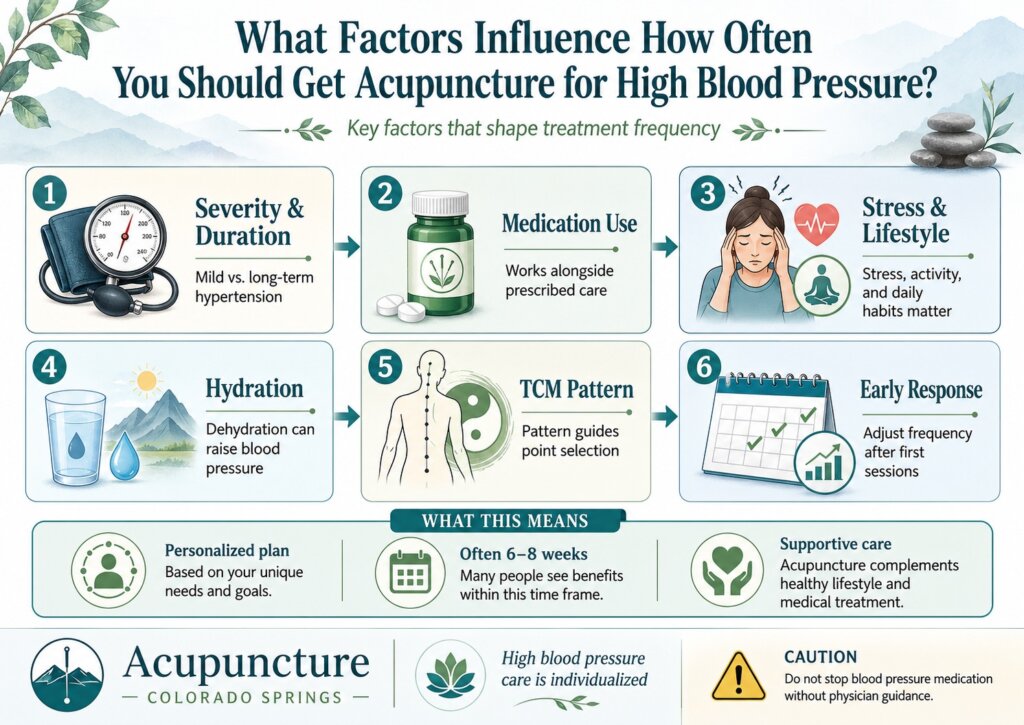
Not every patient with high blood pressure is the same, and that matters when building a treatment plan. Several factors shape how frequently acupuncture may be needed and how well it works alongside your existing care.
1. Severity and Duration of Your High Blood Pressure
Someone with mildly elevated blood pressure who was recently diagnosed will likely respond differently than someone managing stage 2 hypertension for years. More established patterns often require more consistent treatment before noticeable shifts occur.
2. Whether You Are on Medication
Acupuncture appears to work best as a complement to antihypertensive drugs rather than a standalone treatment. If you are already on medication, acupuncture may help improve the overall response and reduce stress-related spikes. Never adjust or stop medication without your prescribing physician’s guidance.
3. Stress Levels and Lifestyle Habits
Chronic stress is one of the most common drivers of elevated blood pressure. In a city like Colorado Springs, where many residents balance demanding jobs, active lifestyles, and the physical demands of high altitude, stress accumulates in ways that show up in cardiovascular health. Acupuncture has been shown to support the nervous system’s ability to shift out of a stress response, which directly influences blood pressure regulation.
4. Will Dehydration Cause High Blood Pressure?
Yes, mild dehydration can raise blood pressure. When your body loses fluid, it activates stress hormones and causes blood vessels to constrict, pushing pressure up. Colorado’s dry, high-altitude climate makes dehydration a real and underappreciated factor for many residents here. Staying well hydrated is a simple but meaningful part of any blood pressure management plan, and it can also affect how your body responds to acupuncture treatment.
5. Your Overall Constitution in TCM Terms
Traditional Chinese Medicine looks at blood pressure through patterns of imbalance, such as Liver Yang Rising or Kidney Deficiency, rather than a single number. Your TCM pattern influences which acupuncture points are selected and how frequently treatment is needed to shift that underlying pattern.
6. Response After the First Few Sessions
Some patients notice a shift in how they feel within the first two or three sessions. Others need the full 6 to 8 weeks before seeing measurable changes. Your response guides how we adjust the plan going forward.
Does High Blood Pressure Cause Headaches, and Can Acupuncture Help?

This is a question that comes up often, and the answer is more nuanced than most people expect. High blood pressure does not reliably cause headaches in everyday situations. Most people with chronically elevated blood pressure feel no symptoms at all, which is part of what makes it dangerous over time.
That said, a hypertensive crisis, meaning a sudden and severe spike in blood pressure, can cause headaches along with vision changes, chest discomfort, or shortness of breath. If you experience any of those symptoms together, that is a medical emergency requiring immediate care, not an acupuncture appointment.
For the more common experience of tension headaches or stress headaches that accompany chronically elevated blood pressure, acupuncture may offer real relief. Treatments that target stress regulation, nervous system balance, and muscle tension around the neck and shoulders can reduce headache frequency for many patients. It is one of the areas where acupuncture’s broader calming effects overlap helpfully with blood pressure support.
What Causes Low Blood Pressure, and Is It Something Acupuncture Addresses?
You might be wondering whether acupuncture is only relevant for high blood pressure or whether it plays a role when pressure runs too low. The answer is that TCM approaches both as expressions of different imbalances, not opposite ends of the same switch.
| Condition | Common Causes | Symptoms | Acupuncture Role |
|---|---|---|---|
| High Blood Pressure | Stress, diet, genetics, dehydration, lifestyle | Often none; headaches during crisis | May modestly lower readings, supports stress regulation |
| Low Blood Pressure | Dehydration, medications, heart issues, infection | Dizziness, fainting, fatigue, nausea | May support circulation and energy patterns in TCM |
What causes low blood pressure varies widely. Common causes include dehydration, blood loss, heart failure, severe infection, certain medications, endocrine disorders, and positional changes like standing up too quickly. Symptoms of very low blood pressure include dizziness, fainting, blurred vision, fatigue, nausea, cold or clammy skin, and confusion. These symptoms signal that the body is not circulating blood effectively to the brain and organs.
In TCM, low blood pressure is often associated with patterns of deficiency, where the body lacks the energy or substance to maintain adequate circulation. Acupuncture and Chinese herbal support can be used to address these underlying patterns, though, as with high blood pressure, this should always be coordinated with your primary care provider.
A Realistic Acupuncture Treatment Timeline for High Blood Pressure
Understanding what to expect across a full course of treatment helps you commit to the process with realistic expectations. Here is how a typical plan might unfold at our clinic.
1. Initial Assessment (Session 1)
David W. Armstrong, L.Ac. conducts a detailed intake covering your blood pressure history, medications, diet, sleep, stress, and TCM pulse and tongue assessment. This session establishes your baseline and informs the treatment approach.
2. Active Treatment Phase (Weeks 1 Through 8)
Weekly sessions are scheduled during this phase. Each session typically lasts 45 to 60 minutes and may include acupuncture, cupping, or other bodywork depending on your presentation. You may also receive guidance on lifestyle adjustments, including hydration, since, as noted above, dehydration can raise blood pressure in ways that undermine your progress.
3. Reassessment (Around Week 6 to 8)
We review how your blood pressure readings have changed, how you feel overall, and whether the TCM pattern is shifting. This informs whether to continue weekly sessions or begin spacing them out.
4. Maintenance Phase (Monthly or Every 3 to 4 Weeks)
Once you have established a response, maintenance visits help sustain the benefit. Think of this phase less as ongoing treatment and more as regular support for a system that is working better but still benefits from periodic attention.
5. Coordination With Your Medical Team
We encourage all patients managing high blood pressure to keep their prescribing physician informed about their acupuncture care. Acupuncture Colorado Springs works alongside your medical team, not in place of it. If your readings improve consistently, your doctor may reassess your medication needs over time.
If you are ready to explore what a personalized plan might look like for you, our team is here to help. You can learn more about our services, including acupuncture, cupping, and Chinese herbal medicine guidance, or reach out directly to schedule your first visit at our clinic on 2525 W Pikes Peak Ave, Suite B, Colorado Springs, CO 80904.
Supporting Your Blood Pressure Between Acupuncture Sessions
Acupuncture works best when it is part of a broader approach to your health. What you do between sessions shapes how much benefit you carry forward from each treatment.
- Stay hydrated throughout the day, especially given Colorado’s dry climate and altitude, since mild dehydration can raise blood pressure by constricting blood vessels.
- Reduce sodium intake and prioritize whole foods where possible.
- Get consistent sleep, as poor sleep is closely linked to elevated blood pressure.
- Practice some form of daily movement, even a short walk, to support cardiovascular health.
- Manage stress actively, whether through breathwork, time outdoors, or regular acupuncture sessions that help regulate your nervous system.
- Take your prescribed medications as directed and communicate any changes in how you feel to your physician.
These habits do not replace treatment, but they create the conditions where treatment can actually work. Acupuncture is most effective when the body has the basic inputs it needs to regulate itself.
Wrapping Up: What to Do Next
Managing high blood pressure takes time, consistency, and a plan that fits your actual life. Acupuncture Colorado Springs offers personalized, evidence-informed care designed to support your cardiovascular health as part of a complete approach. Reach out today to schedule a consultation with David W. Armstrong, L.Ac., and take a clear, grounded step toward better balance.
Acupuncture Colorado Springs offers personalized, root-cause-focused acupuncture care to help manage high blood pressure naturally. Board-certified practitioner David W. Armstrong designs treatment plans tailored to your unique health needs. Get started today—call our Colorado Springs clinic and take control of your wellness.
FAQs
Can Acupuncture Lower High Blood Pressure?
Acupuncture may help support healthier blood pressure by calming the stress response, improving sleep, and supporting circulation and nervous system balance. At Acupuncture Colorado Springs, we focus on your underlying patterns (not just the numbers) and coordinate care as a supportive, evidence-informed approach—not a replacement for medical treatment.
How Many Acupuncture Sessions Are Needed to See Results for High Blood Pressure?
Many people notice changes in stress, sleep, or tension within a few visits, but blood pressure support typically takes a consistent course of care. A common starting plan is 1–2 sessions per week for 4–8 weeks, then tapering to maintenance based on your response and goals.
Where Are the Acupuncture Points for High Blood Pressure?
There isn’t one universal “blood pressure point”—treatment is individualized. Commonly used points may include areas on the wrist/forearm, below the knee, the foot/ankle, and sometimes the ear, selected based on your full Traditional Chinese Medicine assessment and any related symptoms like headaches, stress, or poor sleep.
Is Acupuncture Safe to Use Alongside Blood Pressure Medication?
For most people, yes—acupuncture is commonly used alongside blood pressure medication. We use sterile, single-use needles and tailor treatment to your health history, while recommending you continue prescribed medications and monitor readings with your prescribing clinician, especially if your numbers begin to improve.
How Long Do the Effects of Acupuncture Last for Blood Pressure?
Effects vary by person and by the drivers of elevated blood pressure (stress, sleep, pain, inflammation, lifestyle). Some people feel benefits for a few days after a session early on; with a consistent treatment plan and supportive lifestyle changes, improvements may last longer and require less frequent maintenance visits.