Stress doesn’t follow a schedule. It builds quietly—through long workdays, disrupted sleep, tight shoulders, and a mind that won’t stop running. If you’ve been curious about acupuncture as a way to manage that load, one of the first questions you probably have is: how often do you actually need to go? It’s a fair question, and the honest answer is that it depends on your body, your stress patterns, and how long the tension has been building.
This article breaks down what research and clinical practice suggest about acupuncture frequency for stress relief. You’ll learn how treatment schedules typically work, what factors influence how often you should come in, and how Acupuncture Colorado Springs approaches personalized care for people dealing with chronic stress, burnout, and anxiety.
Key Takeaways
- Most people start with one to two acupuncture sessions per week for the first two to six weeks.
- An adequate treatment course is generally six to twelve sessions before assessing full results.
- Chronic stress often requires a longer initial phase compared to acute stress responses.
- Maintenance sessions every two to four weeks can support long-term stress regulation.
- Your treatment frequency should be based on your individual health history, not a generic plan.
- Does acupuncture really work for stress? Evidence from major health systems supports its use for stress-related conditions.
How Often Do You Need Acupuncture for Stress Relief Right Away?
When stress is at its peak—affecting your sleep, your mood, your digestion, your ability to focus—starting with more frequent sessions tends to produce better results. Clinical guidance and acupuncture practice both point to one to two sessions per week during the first phase of care. This initial phase typically runs two to six weeks, depending on how your body responds.
Think of it like physical therapy. You wouldn’t expect one session to resolve a months-long problem. The body needs repeated input to shift out of a stress state it may have been locked into for a long time.
Research supports this approach. Studies suggest that higher frequency treatment—at least two sessions per week—produces better outcomes than lower-frequency care, particularly when addressing pain and nervous system dysregulation. Stress and anxiety share many of the same physiological pathways as chronic pain, so this principle applies directly.
How Often Do You Need Acupuncture Based on Stress Type?
Not all stress looks the same. The right frequency for your situation depends on whether you’re dealing with a short-term stress spike or a long-standing pattern of tension and exhaustion. Here’s a general breakdown of how treatment schedules shift based on stress type.
| Stress Type | Recommended Frequency | Typical Duration |
|---|---|---|
| Acute stress (recent event, short-term) | 2–3 sessions per week | 2–3 weeks |
| Chronic stress or burnout | 1–2 sessions per week | 4–6 weeks |
| Maintenance and prevention | Once every 2–4 weeks | Ongoing as needed |
| Seasonal or situational stress | Weekly for 3–4 weeks | Tied to the stressor |
This table reflects general practice patterns. Your actual schedule may look different based on how your body holds stress and what else is going on with your health.
At Acupuncture Colorado Springs, David W. Armstrong, L.Ac. takes time at the start of every new patient relationship to understand your full picture—not just your stress level, but your sleep quality, digestion, energy, and lifestyle. That conversation shapes a treatment plan built around your needs, not a one-size-fits-all protocol.
How Many Sessions Do You Need for Stress and Anxiety?
For stress and anxiety, most practitioners recommend starting with six to twelve sessions, scheduled one to two times per week. Some people notice a meaningful shift after just three to four visits, while others with deeper or longer-standing patterns may need more time. Acute stress, the kind tied to a specific event or short-term pressure, often responds faster. Long-term anxiety that has been present for months or years typically takes longer to address at the root level.
Does Acupuncture Really Work for Stress, or Is It Just Relaxation?
You might be wondering whether acupuncture does anything beyond making you feel calm for an hour. It’s a reasonable question, and one that comes up often—including in places like Reddit threads where people share their real experiences with acupuncture for anxiety and stress.
The short answer is that acupuncture does more than create a temporary sense of calm. Evidence-based reviews from institutions like the Cleveland Clinic confirm that acupuncture can support the body’s response to stress by influencing the autonomic nervous system, regulating cortisol levels, and promoting the release of endorphins. These are measurable physiological changes, not just relaxation.
What is acupuncture good for beyond stress? The same mechanisms that help with stress also support better sleep, reduced muscle tension, improved digestion, and more stable mood—all of which tend to suffer when stress goes unmanaged. So when people ask does acupuncture work, the clinical answer is yes, particularly for stress-related and pain-related conditions, when treatment is consistent and appropriately dosed.
What the Research Shows About Acupuncture Frequency for Anxiety
Most studies demonstrating positive results involved six to twelve sessions spread over six to eight weeks. A comprehensive analysis of 41 randomized controlled trials involving 3,209 participants found that acupuncture alone reduced Hamilton Anxiety Rating Scale scores significantly more than medication alone. The same analysis showed that acupuncture combined with medication produced even better results, with fewer adverse events reported compared to medication-only approaches.
How Often Do You Need Acupuncture to See Real Results for Stress?
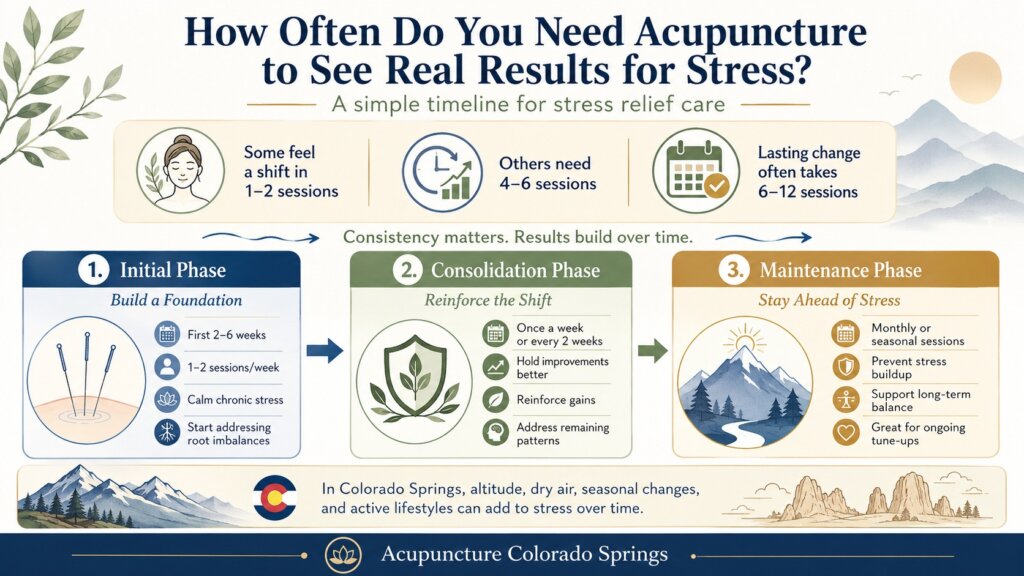
This is where expectations matter. Some people notice a shift after their first or second session. Others need four to six sessions before they feel a meaningful difference. Neither experience is wrong—it simply reflects how individual bodies respond to treatment.
Clinical research suggests that a meaningful course of acupuncture involves at least six to twelve sessions. That’s the threshold where most people begin to see lasting change rather than temporary relief. Spacing those sessions too far apart, especially at the start, can slow progress because the cumulative effect of treatment builds over time.
Here’s a simple way to think about the phases of care:
1. Initial Phase: Building a Foundation
This is the first two to six weeks, with sessions one to two times per week. The goal here is to move your nervous system out of a chronic stress pattern and start addressing the root imbalances driving your symptoms. Consistency during this phase matters more than any other.
2. Consolidation Phase: Reinforcing the Shift
Once your symptoms start to improve, sessions often taper to once a week or once every two weeks. Your body is now holding the changes better, and the goal shifts to reinforcing those gains and addressing any remaining patterns.
3. Maintenance Phase: Staying Ahead of Stress
Many patients choose to continue with monthly or seasonal sessions after their primary concerns are resolved. This is especially relevant in Colorado Springs, where altitude, dry air, seasonal shifts, and an active lifestyle can all add to the body’s stress load over time. A monthly tune-up keeps your system regulated before stress has a chance to accumulate again.
What Factors Influence How Often You Need Acupuncture for Stress Relief?
Frequency isn’t just about the condition—it’s about the whole person. Several factors shape how your treatment plan should be structured.
1. How Long You’ve Been Stressed
Stress that has been building for months or years is more deeply embedded in the nervous system than a recent stressor. Longer-standing patterns generally require a longer initial treatment phase to shift.
2. Your Overall Health Picture
If stress is layered on top of sleep problems, digestive issues, or hormonal imbalance, treatment may need to address multiple systems at once. This can influence both frequency and the types of techniques used in each session.
3. Your Lifestyle and Schedule
Life in Colorado Springs is active and often demanding. Whether you’re managing a high-pressure job, keeping up with kids and a household, or pushing through physical training, your daily output affects how quickly your body recovers between sessions.
4. Your Response to Treatment
Some people are highly responsive to acupuncture and notice significant shifts early on. Others need more time. David tracks your progress carefully and adjusts the plan based on how you’re actually responding—not a predetermined timeline.
5. Whether You’re Using Complementary Support
Acupuncture works well alongside other supportive practices. At our clinic, we may recommend Chinese herbal guidance or cupping therapy to complement your acupuncture sessions. These additions can deepen the effect of treatment and help your body maintain balance between appointments. If you’re curious about what a combined approach might look like for your stress, explore our full range of services.
Does Red Light Therapy Actually Work the Same Way as Acupuncture for Stress?
Some patients ask about red light therapy as an alternative or addition to acupuncture, particularly since both are discussed in wellness circles as natural approaches to pain and stress. It’s worth addressing directly.
Red light therapy has emerging evidence for skin health, wound healing, and some pain and inflammation applications. But mainstream medical centers still view it as promising rather than definitively proven—especially compared to acupuncture’s more established clinical evidence base. Does red light therapy actually work for stress the way acupuncture does? The honest answer is that the research isn’t there yet to make that comparison confidently.
Acupuncture has decades of clinical study behind it, with documented effects on the autonomic nervous system, cortisol regulation, and inflammatory markers. That’s a different category of evidence than what currently exists for red light therapy. If you’re weighing your options, it’s worth knowing that distinction.
How to Get Started With the Right Acupuncture Frequency for Your Stress
Starting acupuncture for stress doesn’t have to be complicated. The most important step is getting a proper assessment so your treatment plan reflects your actual needs rather than a generic schedule.
At Acupuncture Colorado Springs, your first visit begins with a thorough conversation about your health history, stress patterns, sleep, digestion, and goals. David uses that information to design a care plan that fits your life—including a realistic treatment frequency you can actually commit to. We serve patients across Colorado Springs and surrounding El Paso County communities, including Manitou Springs, Old Colorado City, and Woodland Park, from our clinic at 2525 W Pikes Peak Ave, Suite B.
You might be wondering whether you need to commit to a long treatment plan before you even know if acupuncture is right for you. That’s a fair concern. We recommend starting with an initial series of four to six sessions and reassessing together. Most patients have a clear sense of whether acupuncture is helping them well before the twelve-session mark. Schedule a consultation to talk through what a starting plan might look like for you.
Conclusion
How often you need acupuncture for stress relief depends on how long you’ve been stressed, how your body responds, and what else is going on with your health. Most people start with one to two sessions per week for several weeks, then taper to maintenance. Consistent, personalized care produces better results than occasional drop-in visits. If you’re ready to address the root of your stress rather than manage symptoms on the surface, we’re here to help you build a plan that works.
Acupuncture Colorado Springs offers personalized stress-relief acupuncture tailored to your unique needs. Board-certified practitioner David W. Armstrong builds custom treatment plans targeting the root causes of stress. Get started today by booking your first appointment.
FAQs
How Often Should You Get Acupuncture for Best Results?
Most people get the best results with 1–2 sessions per week for the first 2–4 weeks, then taper to weekly or every other week as symptoms improve. At Acupuncture Colorado Springs, we tailor frequency to your stress level, health history, and how your body responds.
How Many Acupuncture Sessions Do You Need to See Results?
Some people notice changes after 1–3 sessions, while longer-standing stress patterns often take 6–10 sessions for more consistent, lasting improvement. Your plan may also include supportive options like cupping or Chinese herbal medicine guidance when appropriate.
How Many Acupuncture Sessions Do You Need for Anxiety?
Most people start with 6–10 sessions, then adjust based on response. Weekly visits for the first 3–6 weeks can build momentum, then taper to every other week or monthly for maintenance once symptoms are steadier.
How Long Does It Take for Acupuncture to Work for Anxiety?
Some patients feel calmer after the first session, but more consistent, lasting change commonly takes 3–6 treatments.
Is Acupuncture Effective for Anxiety and Panic Attacks?
Acupuncture can be helpful for many people by supporting nervous system regulation, reducing physical tension, and improving sleep, factors that often drive anxiety and panic symptoms. Results vary.
Is It OK to Do Acupuncture Every Day?
Daily acupuncture can be appropriate short-term in specific situations (such as acute flare-ups or intensive care plans), but it’s not necessary for most stress-relief goals. We typically recommend spacing sessions to allow your nervous system time to integrate changes and to track progress clearly.
Is 10 Acupuncture Sessions Enough?
Ten sessions is often enough to make meaningful progress for many concerns, including stress and anxiety, but it depends on severity, duration, and contributing factors. We reassess along the way and refine your plan so you’re not doing more care than you need.
How Long Do Acupuncture Results Last?
Relief may last a few days at first, then often extends to weeks as your system stabilizes with consistent care. Many patients maintain benefits with periodic “tune-up” visits (such as monthly or seasonally), depending on stress load and lifestyle factors.
How Often Should You Get Acupuncture for Chronic Pain?
For chronic pain, a common starting point is 1–2 times per week for 4–6 weeks, then tapering as pain decreases and function improves. We focus on root-cause patterns and long-term stability, not just short-term symptom control.