If you have ever looked at an acupuncture points chart and felt a little overwhelmed, you are not alone. The head and scalp alone contain dozens of points, each with a specific role in Traditional Chinese Medicine. Some target pain. Others address mental clarity, emotional balance, or even digestive function. The connections are not always obvious at first glance, but they follow a clear and time-tested logic.
This article walks you through the major acupuncture points on the head, what they have traditionally been used for, and how modern clinical practice continues to apply them. You will also learn how scalp acupuncture differs from standard head point work, what the research says, and what to expect if you are considering this type of care.
Key Takeaways
- Acupuncture head points have been used for centuries to address pain, mental fog, headaches, and neurological function.
- Scalp acupuncture maps specific zones of the scalp to corresponding regions of the cerebral cortex.
- Head points are used in both Traditional Chinese Medicine and modern clinical settings for conditions ranging from migraines to post-stroke recovery.
- An acupuncture points chart can help you understand the location and function of each point before your first visit.
- Acupuncture and pain management often begin at the head, especially for chronic headache and tension patterns.
- Working with a licensed practitioner ensures that point selection is tailored to your specific health picture, not a generic formula.
What Acupuncture Head Points Actually Are
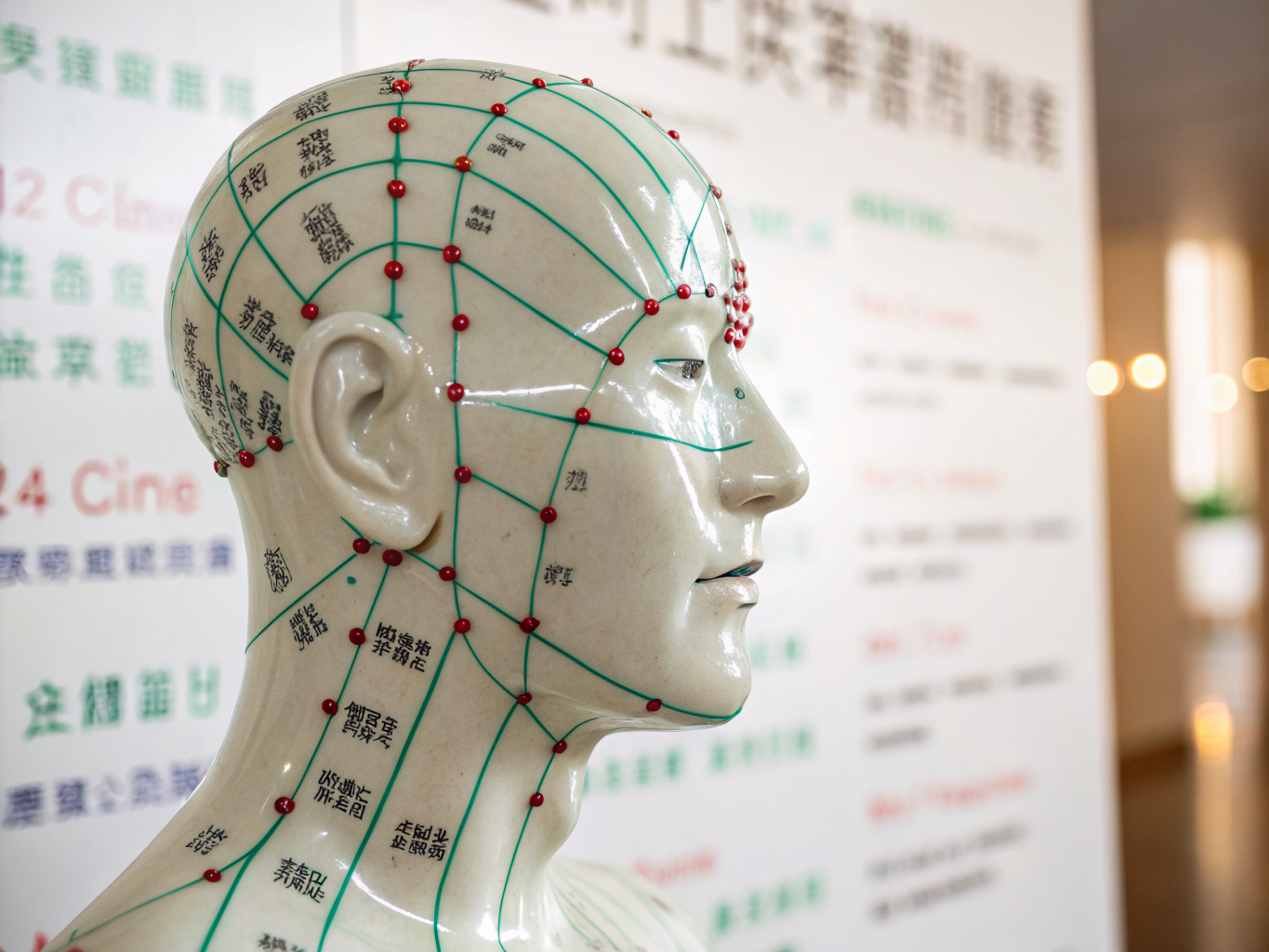
In Traditional Chinese Medicine, acupuncture points are specific locations on the body where needles are inserted to influence the flow of Qi, or vital energy, through pathways called meridians. The head is a meeting point for several major meridians, including the Governing Vessel, Bladder, Gallbladder, Stomach, and Triple Warmer channels. Because so many pathways converge here, head points can affect a wide range of functions throughout the body.
Major medical centers describe acupuncture as inserting very thin needles into specific acupuncture points to help manage pain and other symptoms by rebalancing energy and triggering the release of natural chemicals, including endorphins and neurotransmitters. The head is one of the most clinically active regions on the body for this reason.
You might be wondering how a needle placed on the top of your head could affect something like lower back pain or digestive discomfort. The answer lies in the meridian system and, more specifically, in how scalp zones correspond to the brain regions that regulate those functions.
Key Acupuncture Points on the Head and Their Traditional Uses
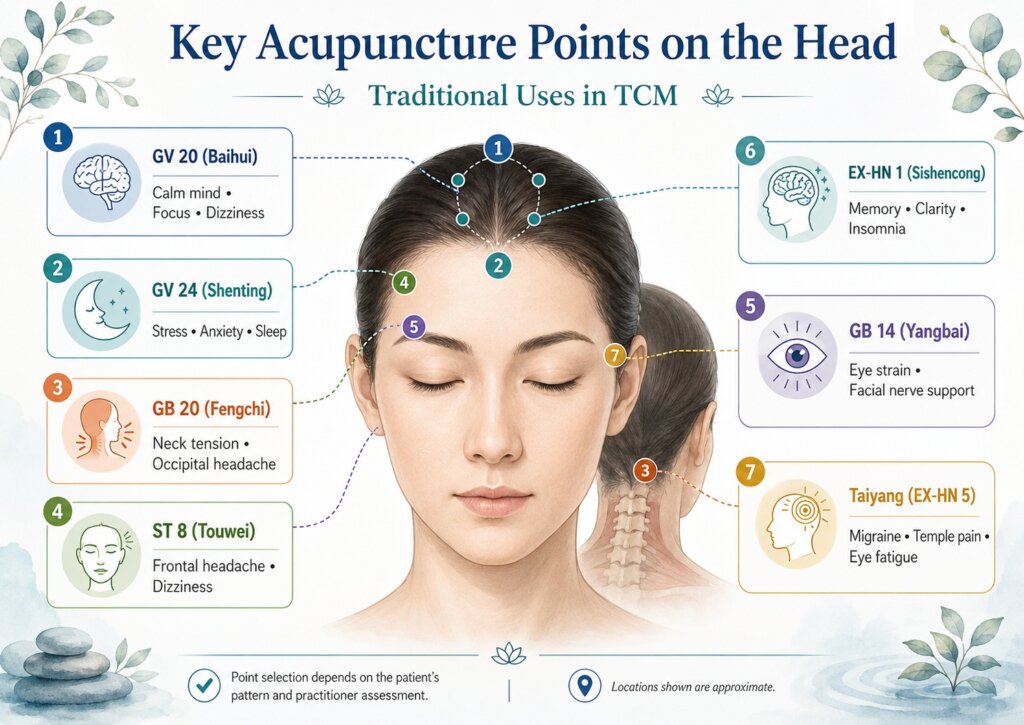
There are several well-documented acupuncture points located on and around the head. Each has a distinct traditional function and a corresponding modern application. The following points appear frequently in both classical texts and current clinical practice.
1. GV 20 (Baihui) — The Crown Point
Located at the very top of the head, Governing Vessel 20 is one of the most widely used acupuncture points in all of TCM. Traditionally, it is used to lift yang energy, calm the mind, and address conditions like dizziness, headache, and mental fatigue. Acupuncture on the top of the head at this point is reported to improve cerebral circulation, reduce brain fog, and enhance focus and clarity, particularly in patients with attention and concentration difficulties.
2. GV 24 (Shenting) — Spirit Court
Shenting sits just inside the hairline at the forehead. It is traditionally associated with calming the spirit and addressing anxiety, insomnia, and emotional restlessness. In modern clinical use, this point is often selected for patients dealing with stress-related headaches or difficulty settling the nervous system.
3. GB 20 (Fengchi) — Wind Pool
Found at the base of the skull, Gallbladder 20 is a go-to point for neck tension, occipital headaches, and what TCM calls wind invasion, which often presents as sudden onset headache, stiff neck, or cold and flu symptoms. It is also used to support eye health and reduce tension that radiates up from the shoulders into the head.
4. ST 8 (Touwei) — Head’s Binding
Stomach 8 is located at the corner of the forehead near the hairline. Traditionally used for frontal headaches, dizziness, and eye pain, this point connects the Stomach meridian to the head and is often selected when digestive imbalance is contributing to recurring head pain. The connection between digestion and head symptoms is something TCM practitioners take seriously, and it shows up clearly in point selection.
5. GB 14 (Yangbai) — Yang White
Gallbladder 14 sits above the eyebrow and is commonly used for frontal headaches, eye strain, and facial nerve conditions. It is also selected in treatments for drooping eyelids or facial paralysis, where the goal is to stimulate nerve function and improve local circulation.
6. EX-HN 1 (Sishencong) — Four Alert Spirit
This is actually a group of four points surrounding GV 20 at the crown. Sishencong is traditionally used for poor memory, anxiety, epilepsy, and insomnia. In contemporary practice, these points are often incorporated into treatments for cognitive support and mental clarity, making them relevant for patients experiencing burnout or chronic stress.
7. Taiyang (EX-HN 5) — Sun Point
Located in the temple region, Taiyang is an extra point not found on the main meridian channels but widely used in clinical practice. It is most commonly selected for temporal headaches, eye fatigue, and migraine prevention. Patients who experience one-sided head pain often find this point particularly relevant to their treatment plan.
Understanding where these points sit and how they function gives you a clearer picture of why an acupuncturist might choose one over another. It is not random. Every point selection reflects an assessment of your specific pattern.
How Scalp Acupuncture Differs From Standard Acupuncture Head Points
Scalp acupuncture is a more specialized technique that developed in the mid-twentieth century by mapping scalp areas to regions of the cerebral cortex. It is distinct from classical head point work in that it targets reflex zones in the loose tissue layer of the scalp to stimulate underlying brain neurons, regulating brain and body functions through the central nervous and endocrine systems. Think of it less like meridian-based acupuncture and more like a neurological map drawn directly onto the scalp.
Clinical and patient reports indicate that scalp acupuncture is used for chronic headaches, spinal pain, traumatic brain injury, post-stroke aphasia, and other brain-related issues. It has also shown promise in pain management for conditions like phantom limb pain and complex regional pain syndrome.
| Feature | Classical Head Acupuncture Points | Scalp Acupuncture |
|---|---|---|
| Basis | TCM meridian theory | Neuroanatomical cortex mapping |
| Needle placement | Specific named points on the head | Zones along the scalp surface |
| Primary uses | Headache, stress, mental clarity, emotional balance | Stroke recovery, CNS disorders, chronic pain |
| Technique | Standard needle insertion | Shallow, nearly horizontal needle placement |
| Evidence base | Centuries of clinical use plus modern research | Growing body of clinical trial data |
Both approaches can be used together, and an experienced practitioner will determine which is most appropriate based on your health history and goals.
Acupuncture and Pain Management: What the Research Suggests
Authoritative reviews note that acupuncture is most often used for chronic pain conditions such as headaches and migraines, with benefits including reduced pain, fewer headache days, and improved quality of life, while typically causing fewer side effects than some medications. The Migraine Trust and physiotherapy sources report evidence that acupuncture can help prevent migraine attacks, reduce migraine-day frequency and intensity, and modulate brain regions and neurotransmitters involved in pain perception.
This is where acupuncture and pain management intersect in a meaningful way. The head points described above are not just theoretical. They are applied in real clinical settings, often with measurable outcomes for patients who have not found adequate relief through other means.
At Acupuncture Colorado Springs, David W. Armstrong, L.Ac., works with patients who are dealing with exactly these kinds of challenges, chronic head pain, tension that never fully resolves, migraines that disrupt work and family life. Every treatment plan begins with a thorough intake conversation to understand your specific pattern, not just your symptoms. If head and scalp acupuncture are appropriate for your situation, David will explain why and what to expect before any needles are placed. You can book an appointment to get started with a personalized assessment.
What to Expect During an Acupuncture Head Treatment
Many people feel uncertain about having needles placed on their head or scalp. That is a fair concern, and it is worth addressing directly. The needles used are extremely fine, much thinner than a standard hypodermic needle, and most patients report little to no discomfort during insertion. Some describe a mild tingling or a sense of warmth at the point site.
Here is a general outline of what a head-focused acupuncture session typically involves:
- Intake and assessment: Your practitioner reviews your health history, current symptoms, and goals. For head-related concerns, this often includes questions about headache patterns, sleep quality, stress levels, and digestion.
- Point selection: Based on your pattern, specific points are chosen. This might include GV 20 for clarity and energy, GB 20 for neck tension and headache, or Taiyang for temporal pain.
- Needle placement: Sterile, single-use needles are inserted at the selected points. You remain still and resting for 20 to 40 minutes.
- Needle removal: Points are cleared and any immediate observations are noted. Many patients feel noticeably calmer or lighter after the session.
- Follow-up planning: Your practitioner discusses frequency of visits and any complementary support, such as herbal guidance or lifestyle adjustments.
Our clinic uses only sterile, single-use needles and follows all Colorado state safety and hygiene regulations. Every session is designed around you, not a standard script.
Traditional Uses of Acupuncture Head Points: A Practical Summary
It helps to see the traditional applications of these points laid out clearly. The table below summarizes the most common head points and their primary traditional uses.
| Point | Location | Traditional Uses |
|---|---|---|
| GV 20 (Baihui) | Crown of the head | Brain fog, dizziness, headache, mental clarity, yang deficiency |
| GV 24 (Shenting) | Forehead hairline | Anxiety, insomnia, emotional restlessness, stress headache |
| GB 20 (Fengchi) | Base of the skull | Neck tension, occipital headache, wind invasion, eye health |
| ST 8 (Touwei) | Corner of forehead | Frontal headache, dizziness, digestive-related head pain |
| GB 14 (Yangbai) | Above the eyebrow | Eye strain, frontal headache, facial nerve conditions |
| EX-HN 1 (Sishencong) | Around GV 20 | Memory, anxiety, insomnia, cognitive support |
| Taiyang (EX-HN 5) | Temple region | Temporal headache, eye fatigue, migraine prevention |
Knowing these points and their functions can help you have a more informed conversation with your practitioner about what might be most relevant to your situation.
How Acupuncture Colorado Springs Approaches Head and Scalp Care
At Acupuncture Colorado Springs, we take head-related concerns seriously because we see how much they affect daily life. Chronic headaches, persistent brain fog, migraines that knock you out for a full day, these are not minor inconveniences. They affect your work, your relationships, and your ability to enjoy life in a place as active and outdoor-focused as Colorado Springs.
David W. Armstrong, L.Ac., brings decades of clinical experience to each session. He does not approach head pain with a one-size-fits-all protocol. Instead, he looks at the full picture: your sleep, your stress load, your digestion, your posture, and how all of those factors might be contributing to what is happening in your head. From there, he selects the points most likely to address the root cause, not just the surface symptom.
Beyond acupuncture, our clinic also offers Chinese herbal medicine guidance and cupping therapy, both of which can complement head and scalp treatments depending on your pattern. If you are dealing with recurring headaches, post-tension fog, or stress-related head pain, exploring our full range of services may offer more lasting support than any single treatment alone. You can learn about our services or reach out to schedule a consultation.
Wrapping Up
Acupuncture head points carry centuries of clinical history and a growing body of modern research behind them. Whether you are dealing with migraines, mental fog, or chronic tension, these points offer a targeted and personalized path toward relief. Working with a licensed practitioner who understands both the traditional roots and the current evidence is the most direct way to find out what this approach can do for you.
Acupuncture Colorado Springs offers board-certified acupuncture care targeting head points for pain and stress relief. David W. Armstrong, L.Ac. personalizes every treatment to your unique needs. Get started today by booking your first appointment.
FAQs
What Is Acupuncture on the Head Used For?
Head (and scalp) acupuncture is commonly used to support headaches, migraines, sinus and jaw tension, stress, sleep issues, dizziness, and overall nervous system regulation. In Traditional Chinese Medicine, specific head points are selected based on your symptom pattern and root cause, not just where it hurts—an approach we emphasize at Acupuncture Colorado Springs to support both relief and longer-term balance.
Does Acupuncture Help Headaches and Migraines?
Yes—acupuncture is widely used for both headaches and migraines, often helping reduce frequency, intensity, and muscle tension triggers. Results vary by person, but a personalized treatment plan (including point selection, lifestyle factors, and sometimes Chinese herbal guidance) is typically more effective than a one-size-fits-all approach.
Is Scalp Acupuncture Safe?
Scalp acupuncture is generally very safe when performed by a licensed, board-certified practitioner using sterile, single-use needles. At our Colorado Springs clinic, we follow all Colorado safety and hygiene regulations and tailor techniques to your comfort and health history.
What Are the Side Effects of Acupuncture for Headaches?
Most side effects are mild and temporary, such as brief soreness, slight bruising, lightheadedness, or fatigue; some people feel deeply relaxed afterward. Serious complications are rare when acupuncture is performed correctly, and we review your medical history and medications to minimize risk.
How Many Acupuncture Sessions Are Needed for Headaches?
It depends on the type and duration of your headaches, your overall health, and your triggers. Many people notice changes within 1–3 sessions, while chronic or frequent headaches often require a short series (commonly 6–10 sessions) with periodic maintenance; we reassess regularly and adjust the plan based on your response.