Nerve pain is different from ordinary muscle soreness. It burns, tingles, shoots, or numbs—and it often shows up without warning. For people living with neuropathy, sciatica, or other forms of nerve discomfort, finding consistent relief can feel like an ongoing challenge that medications alone do not always solve.
This article explores the relationship between acupuncture and nerve pain—what the research shows, how the process works at a biological level, and what you can realistically expect from treatment. You will also learn how targeted acupuncture care at a local clinic may support your comfort and daily function in a way that fits your life.
Key Takeaways
- Acupuncture and nerve pain research shows measurable reductions in pain intensity compared to sham or no treatment.
- Acupuncture works by modulating pain signals at the nerve, spinal cord, and brain levels.
- Acupressure points and acupuncture points both play a role in calming overactive pain pathways.
- Relief from acupuncture and pain management approaches may last weeks to months in chronic nerve conditions.
- Acupuncture works best as part of a broader care plan, not as a standalone replacement for medical treatment.
- Personalized treatment at Acupuncture Colorado Springs addresses root causes, not just surface symptoms.
What Acupuncture and Nerve Pain Research Actually Shows

You might be wondering whether acupuncture is backed by real evidence or just anecdote. A 2023 meta-analysis published in a peer-reviewed journal reviewed eight randomized controlled trials involving 338 participants with neuropathic pain. The results showed that acupuncture reduced pain intensity more than sham treatment or no treatment, with a standardized mean difference of negative 0.59. Side effects were mild and reversible.
That is a meaningful finding. It suggests acupuncture is not simply a placebo, and it offers genuine support for people dealing with nerve discomfort.
What the same research also found is that acupuncture produced similar pain relief to conventional drugs in those trials. That places it in a useful role as an adjunct—something that works alongside other care rather than replacing it entirely. For people who want to reduce medication dependence or who have not found full relief through drugs alone, that distinction matters.
How Acupuncture and Nerve Pain Signals Interact in the Body
Understanding the biology helps explain why acupuncture and pain management go together more logically than many people expect. Nerve pain is not just a sensation—it is a pattern of overactivation in the nervous system. Damaged or irritated nerves send signals that the brain interprets as burning, stabbing, or electric pain, even when no ongoing injury is present.
Acupuncture works by interrupting and rebalancing those signals at multiple levels.
Mechanistic studies show that acupuncture and electroacupuncture target peripheral nerves and the spinal cord. They reduce the activation of pain-related ion channels such as TRPV1, dampen spinal protein kinase signaling, and suppress overactive glial cells—including microglia and astrocytes—along with inflammatory cytokines. Together, these effects quiet the neuropathic pain loop rather than simply masking it.
Major pain organizations describe acupuncture as a neuromodulation therapy. Fine needles placed at specific acupuncture points trigger local release of adenosine and other mediators, activate spinal inhibitory circuits, engage descending brain pathways, and stimulate endogenous opioids. The result is pain relief that, in some chronic conditions, can persist for months or longer.
Acupuncture Points and Acupressure Points: What Is the Difference in Nerve Pain Care
Both acupuncture points and acupressure points refer to specific locations on the body where stimulation influences nerve and tissue function. Acupuncture uses fine, sterile needles inserted at these sites. Acupressure uses firm manual pressure on the same locations without needles. Both approaches can alter pain-processing brain networks and modulate the immune and inflammatory response.
For nerve pain specifically, the choice between the two depends on the patient, the condition, and the practitioner’s assessment.
| Feature | Acupuncture Points (Needles) | Acupressure Points (Manual Pressure) |
|---|---|---|
| Method | Fine sterile needle insertion | Firm finger or tool pressure |
| Depth of stimulation | Deeper tissue and nerve layers | Surface and superficial nerve pathways |
| Best for | Chronic nerve pain, neuropathy, sciatica | Mild discomfort, maintenance, self-care |
| Duration of effect | Weeks to months in some cases | Hours to days typically |
| Practitioner required | Yes, licensed acupuncturist | Can be self-applied with guidance |
Clinical and translational research—including neuroimaging and animal studies—shows that both methods can provide longer-lasting pain relief compared to sham treatment in chronic pain trials, sometimes up to approximately 12 weeks. At our clinic, David W. Armstrong, L.Ac. assesses which approach fits your specific nerve pain pattern, your sensitivity, and your overall health picture before recommending a path forward.
Types of Nerve Pain That Acupuncture and Pain Management May Support
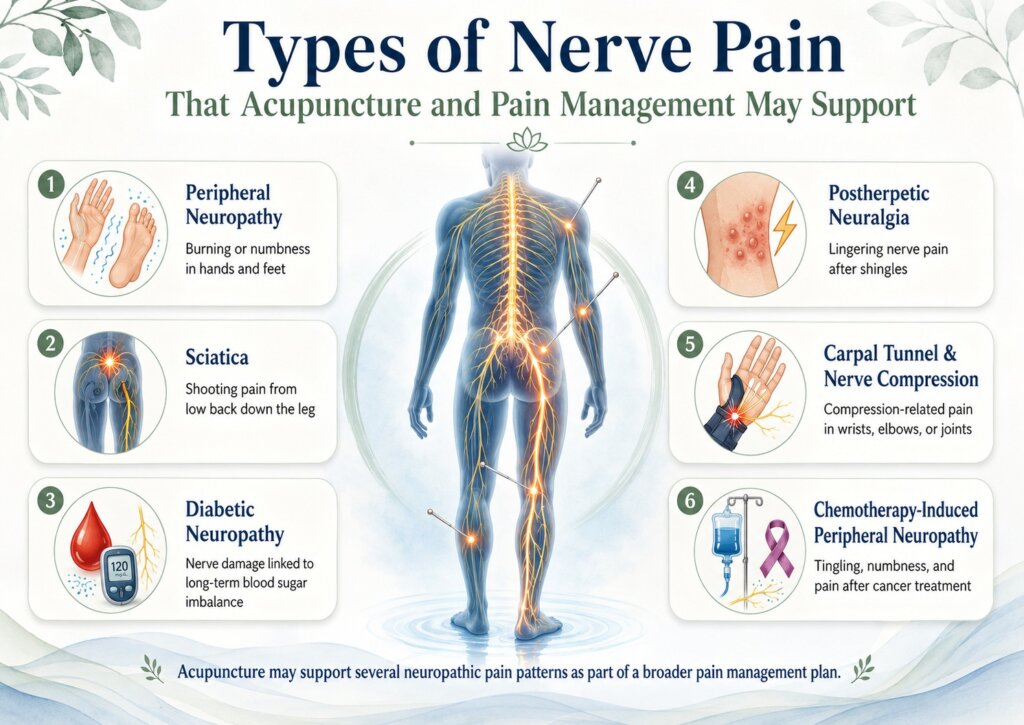
Nerve pain appears in many forms, and acupuncture and pain management research covers several of them. Not every condition has the same level of evidence, but the mechanisms described above apply broadly to neuropathic pain patterns.
Here are the nerve pain types most commonly addressed through acupuncture care:
1. Peripheral Neuropathy
Peripheral neuropathy involves damage to the nerves outside the brain and spinal cord, often causing burning or numbness in the feet and hands. In clinical practice, targeted acupuncture points along the affected nerve pathways are used to reduce inflammation and improve local circulation.
2. Sciatica
Sciatica is compression or irritation of the sciatic nerve, producing shooting pain from the lower back down through the leg. Acupuncture and nerve pain treatment for sciatica often targets lumbar and gluteal acupoints to decompress the nerve pathway and reduce surrounding muscle tension.
3. Diabetic Neuropathy
Diabetic neuropathy affects people with long-term blood sugar imbalance, damaging peripheral nerves over time. Acupuncture is used to support nerve function and reduce pain intensity as part of a broader diabetes management plan.
4. Postherpetic Neuralgia
This is the nerve pain that persists after a shingles outbreak, sometimes lasting months. Acupuncture and acupressure along the affected dermatome may reduce the hypersensitivity that drives this type of chronic pain.
5. Carpal Tunnel and Nerve Compression Syndromes
Repetitive strain and compression at the wrist, elbow, or other joints can irritate nearby nerves. Local and distal acupuncture points are used to reduce swelling, ease compression, and restore normal nerve signaling.
6. Chemotherapy-Induced Peripheral Neuropathy
Some cancer treatments damage peripheral nerves, causing tingling, numbness, and pain. Acupuncture is increasingly used as a supportive therapy in oncology settings to manage this side effect without adding more medications.
What to Expect From Acupuncture and Nerve Pain Treatment at Our Clinic
If you are considering acupuncture for nerve pain in Colorado Springs, understanding the process helps you set realistic expectations. At Acupuncture Colorado Springs, every treatment begins with a thorough intake conversation—your health history, lifestyle, current symptoms, and goals all shape the plan David builds for you.
No two nerve pain cases are the same, and our approach reflects that.
Here is a general outline of what the treatment process looks like:
- Initial Consultation: David reviews your full health picture, including the nature, location, and duration of your nerve pain. This conversation helps identify the root patterns in Traditional Chinese Medicine terms alongside your Western diagnosis.
- Point Selection: Based on your assessment, specific acupuncture points are chosen. These may include local points near the pain site and distal points along related nerve or meridian pathways.
- Needle Placement: Sterile, single-use needles are placed at selected acupoints. Most patients feel minimal sensation—often described as a mild pressure or brief ache that fades quickly.
- Rest Period: You rest with the needles in place for approximately 20 to 30 minutes. Many patients report feeling calm or even drowsy during this time.
- Post-Treatment Assessment: David checks in on your response and notes any immediate changes in sensation or comfort. This informs the next session.
- Follow-Up Plan: A series of sessions is typically recommended. Nerve pain often responds gradually, with improvement building over multiple visits rather than in a single appointment.
For patients dealing with chronic nerve conditions, we may also discuss complementary support through Chinese herbal medicine guidance or cupping therapy, both of which can reinforce the effects of acupuncture between sessions. If you want to explore what a full care plan might look like for your situation, you are welcome to schedule a consultation at our clinic on West Pikes Peak Avenue.
How Acupuncture and Acupressure Fit Into a Broader Nerve Pain Care Plan
One of the most common questions we hear is whether acupuncture replaces other treatments. The honest answer is that it works best alongside them. The 2023 meta-analysis noted that acupuncture produced similar results to conventional drugs but is most effective as an adjunct—meaning it adds value to a care plan rather than standing entirely on its own.
That framing is actually freeing for most patients. It means you do not have to choose between your current care and acupuncture.
What acupuncture and pain management together can offer is a way to address the nerve pain cycle from multiple angles. Medications may reduce acute signals. Acupuncture may quiet the underlying neurological overactivation. Lifestyle adjustments, movement, and stress reduction support the nervous system’s ability to regulate itself over time. At our clinic, we help you think through all of these layers, not just the needle portion.
For patients in Colorado Springs who lead active lives—hiking, cycling, working physical jobs—nerve pain that limits movement is not a minor inconvenience. It affects your ability to do what you love. That is exactly the kind of problem we take seriously here, and it is why we design care plans around your actual life, not a generic protocol.
Why Local Acupuncture Care for Nerve Pain Makes a Difference
Living at altitude in Colorado Springs brings its own physical demands. Dry air, temperature swings, and an active outdoor culture mean your body is working harder in ways that can amplify nerve sensitivity and inflammation. These are factors a local practitioner understands in a way that a general online resource simply cannot address.
David W. Armstrong, L.Ac. has worked with patients across the Colorado Springs area—from Manitou Springs to Woodland Park—managing pain conditions that are shaped by both individual health histories and the regional environment. That local context informs how treatment is approached here.
Beyond acupuncture itself, our clinic offers cupping therapy as part of a broader toolkit for nerve and musculoskeletal pain. Cupping can help decompress tissue layers around irritated nerves, while therapeutic massage addresses the secondary muscle tension that often builds up around a nerve pain site. These services complement acupuncture well and are available as part of a coordinated care plan. You can explore our full range of services to see what might fit your needs.
Conclusion
Acupuncture and nerve pain relief share a growing body of evidence, a clear biological rationale, and a practical role in holistic pain management. It may support your comfort, reduce pain intensity, and help quiet an overactive nervous system—especially when combined with other care. If you are ready to explore what personalized acupuncture treatment could do for your nerve pain, Acupuncture Colorado Springs is here to help you take that next step with clarity and confidence.
Acupuncture Colorado Springs offers board-certified acupuncture care targeting the root causes of nerve pain. David W. Armstrong, L.Ac. builds personalized treatment plans for lasting relief. Get started today and take your first step toward a pain-free life.
FAQs
Can Acupuncture Help Nerve Pain?
Acupuncture may help support nerve pain relief by calming an overactive nervous system, improving local circulation, reducing inflammation, and easing muscle tension that can irritate nerves. Many patients use it as part of a personalized plan to improve comfort and function, especially when care is tailored to the root pattern behind the symptoms.
How Many Acupuncture Sessions Are Needed for Nerve Pain?
It depends on the cause, severity, and how long the nerve pain has been present, but many people start with 6–10 sessions and then reassess. Acute issues may respond sooner, while long-standing neuropathy often benefits from consistent care over a longer period with periodic maintenance.
What Does Acupuncture Do for Neuropathy?
For neuropathy, acupuncture is commonly used to help reduce pain, tingling, burning, and numbness by supporting nerve signaling, improving microcirculation, and regulating pain-processing pathways. In Traditional Chinese Medicine, treatment is customized to address the underlying imbalance contributing to the nerve symptoms.
Where Do They Put Needles for Nerve Pain?
Needle placement is based on your specific diagnosis and symptom pattern, and may include points near the affected area as well as distal points on the arms, legs, hands, feet, and ears that help regulate the nervous system. A skilled practitioner selects points to reduce irritation, improve mobility, and support systemic healing rather than using a one-size-fits-all protocol.
Is Acupuncture Safe for Neuropathy?
Acupuncture is generally considered safe when performed by a properly licensed, board-certified practitioner using sterile, single-use needles. For neuropathy, treatments are typically gentle and adapted to sensation changes, medical history, and medications to keep care both comfortable and appropriate.