Athletes push their bodies hard. Training cycles, competition schedules, and recovery demands create unique physical stress that requires more than ice baths and foam rolling. Acupuncture has become a go-to recovery tool for runners, cyclists, climbers, and weekend warriors across Colorado Springs—but how often should you actually schedule sessions to see real benefits?
This guide breaks down acupuncture frequency for athletic recovery, from acute injury care to maintenance sessions that support long-term performance. You’ll learn how treatment schedules shift based on your training phase, injury severity, and recovery goals, so you can make informed decisions about integrating acupuncture into your routine.
Key Takeaways
- Acute sports injuries respond best to two to three acupuncture sessions per week for two to three weeks.
- Chronic pain or overuse injuries typically require one to two sessions weekly for four to six weeks, then monthly maintenance.
- Athletes in heavy training phases benefit from weekly sessions to support recovery and prevent injury.
- Treatment frequency should match your training cycle, competition schedule, and individual response to care.
- Personalized acupuncture plans address root causes rather than applying generic protocols to all athletes.
How Often Can You Do Acupuncture for Acute Sports Injuries?
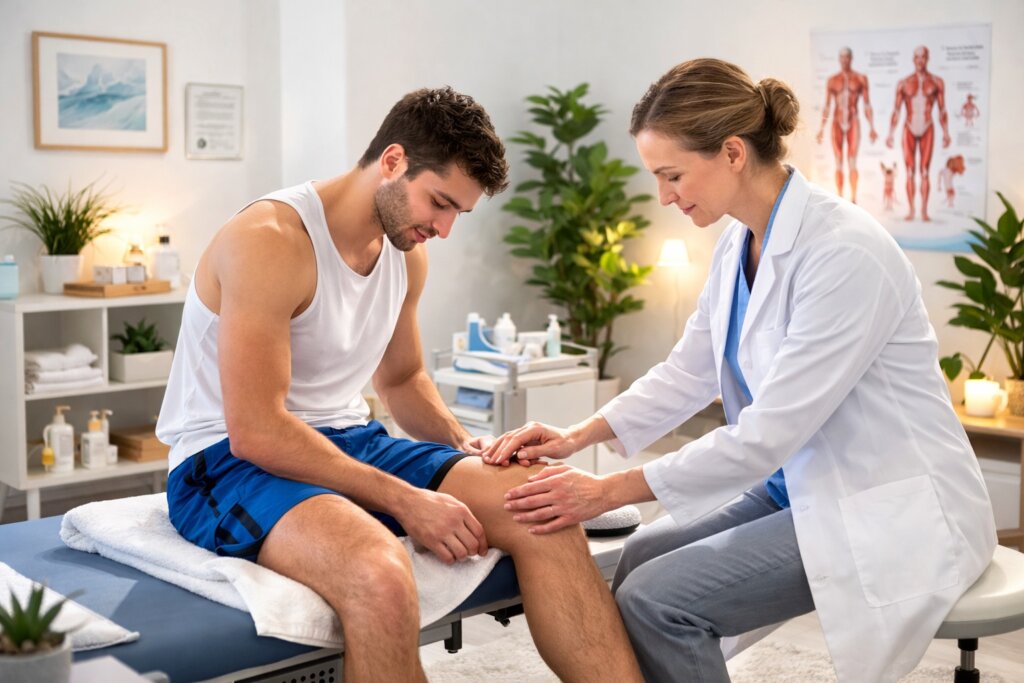
Acute sports injuries place sudden stress on muscles, tendons, and joints, often causing immediate pain, swelling, and loss of function. Because tissue damage is fresh and inflammation is active, the early treatment window is critical for recovery speed and outcome. Acupuncture during this phase is most effective when delivered with higher frequency to support rapid pain reduction and tissue healing.
| Recovery Phase | Typical Frequency | Primary Treatment Goals |
|---|---|---|
| Initial Acute Phase (Days 1–7) | 2–3 sessions per week | Pain reduction, inflammation control, circulation support, protection of injured tissue |
| Early Repair Phase (Week 2) | 2 sessions per week | Pain reduction, inflammation control, circulation support, and protection of injured tissue |
| Functional Recovery Phase (Week 3) | 1–2 sessions per week | Tissue repair support, reduction of residual swelling, and gentle range-of-motion restoration |
| Return-to-Activity Phase | As needed or weekly | Load tolerance support, injury recurrence prevention, performance stabilization |
Most athletes experience noticeable improvement within six to nine sessions when treatment is started early and scheduled consistently. Frequent acupuncture sessions help prevent acute inflammation from becoming chronic, which is a common cause of lingering sports injuries. At Acupuncture Colorado Springs, acute injury care is tailored around your sport, training demands, and recovery timeline, often combining acupuncture with cupping and targeted bodywork to help you heal efficiently and return to activity safely.
How Often Should Athletes Get Acupuncture for Chronic Pain?
Chronic athletic pain tends to build slowly through repeated strain, compensation, and unresolved movement restrictions rather than a single injury event. Because these patterns develop over time, they require a more sustained and structured acupuncture schedule to unwind them safely and effectively. Consistent treatment helps calm nervous system sensitization while restoring balance across muscles, joints, and connective tissue.
| Recovery Phase | Typical Frequency | Primary Treatment Focus |
|---|---|---|
| Reset Phase (Weeks 1–3) | 1–2 sessions per week | Pain pattern interruption, muscle imbalance release, nervous system downregulation |
| Stabilization Phase (Weeks 4–6) | 1 session per week | Symptom stabilization, movement efficiency, tissue resilience building |
| Transition Phase | Every 2–4 weeks | Preventive care, early issue correction, and long-term training support |
| Maintenance Phase | Monthly or as needed | Preventive care, early issue correction, long-term training support |
Most athletes notice meaningful, lasting improvement when they commit to a four- to six-week foundation phase before spacing sessions further apart. This gradual taper allows the body to integrate changes without losing momentum or triggering setbacks. At Acupuncture Colorado Springs, chronic pain care is tailored to your sport, training volume, and recovery goals, so you can train consistently without recurring pain cycles.
Acupuncture Frequency During Different Training Phases
Your training schedule should influence your acupuncture frequency. The base-building, peak-training, competition, and recovery phases all place different demands on your body. Matching acupuncture sessions to these cycles optimizes both performance and recovery.
1. Base Building and Off-Season
During lower-intensity training phases, monthly acupuncture sessions support general wellness and address any lingering issues from previous seasons. This is the ideal time to work on chronic imbalances, old injuries, or movement patterns that need attention before ramping up training intensity.
2. Peak Training Blocks
High-volume or high-intensity training blocks benefit from weekly acupuncture sessions. Frequent treatment during peak training helps manage accumulated fatigue, prevents overuse injuries, and supports recovery between hard workouts. Many athletes schedule sessions the day after their hardest training week to support recovery.
3. Competition Season
During competition phases, acupuncture frequency depends on your event schedule and how your body is responding to training. Some athletes maintain weekly sessions throughout the season. Others schedule sessions strategically—three to five days before key events to optimize recovery and nervous system balance without disrupting training tapers.
4. Recovery and Transition Periods
Post-competition recovery phases are crucial for long-term health. Weekly sessions for two to three weeks after major events help your body fully recover, address any acute issues that developed during competition, and prepare for the next training cycle. This prevents small problems from becoming chronic issues.
5. Injury Prevention Maintenance
Athletes with prior injuries or recurring problem areas benefit from ongoing preventive care. Biweekly or monthly acupuncture sessions help maintain tissue quality, reduce compensation patterns, and catch issues early before they limit training. Preventive treatment keeps the body resilient under ongoing training stress.
When acupuncture is aligned with your training phases, it becomes a strategic part of your performance plan rather than a reactive treatment. Frequency can be adjusted as your workload changes, keeping your body supported without overtreatment. At Acupuncture Colorado Springs, treatment plans are built around your sport, season, and recovery needs to help you train consistently and perform at your best.
Can You Do Acupuncture Too Often for Athletic Recovery?
Athletes sometimes wonder if more frequent treatment produces better results. While acupuncture is safe for frequent use, there are practical limits to how often sessions benefit recovery. Your body needs time between treatments to respond, integrate changes, and show whether adjustments are needed.
Most practitioners recommend no more than three sessions per week, even for acute injuries. Daily acupuncture rarely provides additional benefit over this frequency and can make it harder to assess whether treatment is working. Your body’s response between sessions provides valuable information about what’s helping and what needs adjustment.
For chronic conditions and general performance support, weekly sessions represent the upper limit for most athletes. More frequent treatment doesn’t accelerate the healing of chronic issues and may not be cost-effective. The goal is to find the minimum effective frequency that produces results—not to maximize session count.
Factors That Influence Your Ideal Acupuncture Schedule
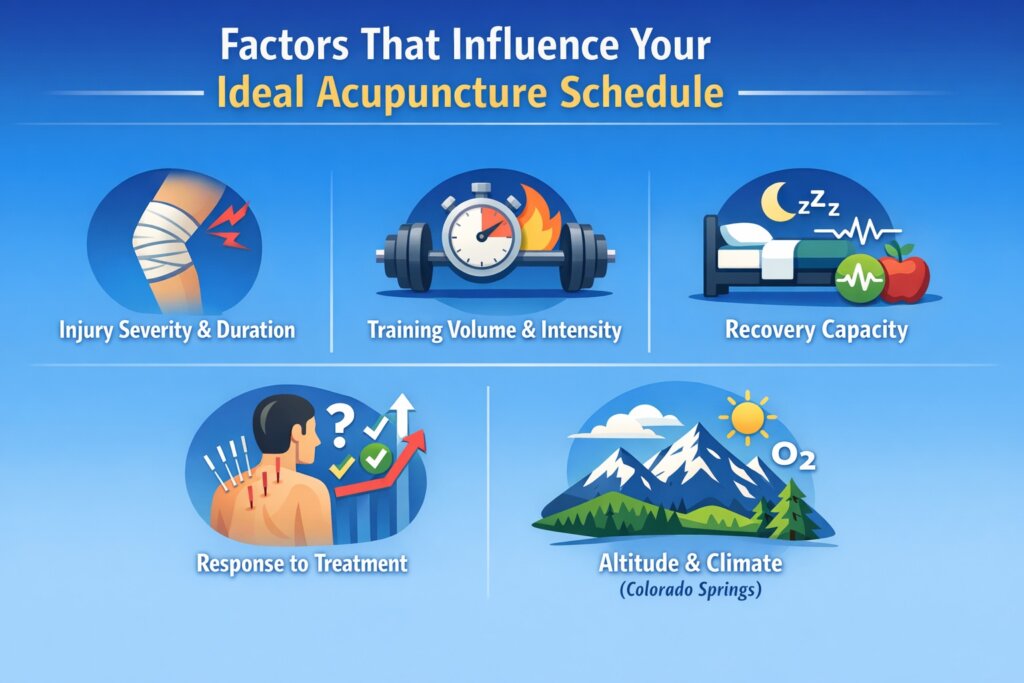
No two athletes respond to acupuncture in exactly the same way, which is why treatment frequency should be personalized rather than standardized. Factors like injury history, training load, recovery habits, and environment all influence how quickly your body adapts and heals. Understanding these variables allows you and your practitioner to build a schedule that supports progress without overloading your system.
1. Injury Severity and Duration
The age and severity of an injury play a major role in how often acupuncture is needed. Recent injuries tend to respond quickly and may resolve with a short, concentrated treatment plan over a few weeks. Long-standing issues usually require a longer course of care, followed by maintenance sessions to prevent recurrence.
2. Training Volume and Intensity
The more you train, the more stress your body must manage. Athletes with high weekly training volumes or intense workloads often benefit from more frequent acupuncture to support recovery and reduce cumulative strain. Lower training loads generally allow for less frequent sessions without compromising results.
3. Recovery Capacity
Your ability to recover between sessions affects how often treatment should occur. Sleep quality, nutrition, stress levels, and age all influence tissue repair and nervous system balance. Athletes with limited recovery capacity may need more frequent sessions early on to build a stronger foundation.
4. Individual Response to Treatment
People respond to acupuncture at different rates. Some notice clear improvements after one or two sessions, while others require several treatments before changes become noticeable. Tracking your response helps fine-tune session frequency as care progresses.
5. Colorado Springs Altitude and Climate
Training at an elevation places additional stress on the body’s recovery systems. The dry climate and altitude in Colorado Springs can increase inflammation and slow tissue repair, especially for athletes new to the area. More frequent acupuncture sessions can help support adaptation during this adjustment period.
When these factors are considered together, acupuncture becomes a targeted recovery tool rather than a one-size-fits-all solution. Frequency can be adjusted according to your condition, training load, and environment as they change over time. At Acupuncture Colorado Springs, scheduling is customized to your body, your sport, and the unique demands of training at altitude.
Signs You Need to Adjust Your Acupuncture Frequency
Your body continuously signals how well your current acupuncture schedule is supporting recovery and performance. Paying attention to changes in pain, energy, and training tolerance helps determine when adjustments are needed. Responding early to these signals prevents small issues from turning into setbacks.
Increase your acupuncture frequency when:
- Pain or tightness returns quickly between sessions
- Progress stalls after early improvement
- You enter a high-volume or high-intensity training block
- Acute flare-ups occur on top of chronic issues
- You’re preparing for an important competition or event
Decrease your acupuncture frequency when:
- Symptoms remain stable for several weeks
- Improvements hold without setbacks
- Training feels consistent and manageable
- You’re in a lighter training or recovery phase
- Sessions feel supportive, but no longer produce noticeable short-term changes
Re-evaluate your plan if you notice:
- Symptoms worsening despite regular treatment
- No meaningful change after six to eight sessions
- Feeling consistently worse after sessions instead of better
- New pain patternsare developing during treatment
- Recovery time increasing instead of improving
Adjusting the frequency of acupuncture is a normal and healthy part of the treatment process. As your training load, recovery capacity, and symptoms change, your schedule should evolve with them. At Acupuncture Colorado Springs, we regularly reassess progress to keep treatment aligned with your body’s needs and your performance goals.
Personalized Athletic Recovery at Acupuncture Colorado Springs
Generic treatment protocols rarely reflect the realities of your sport, training volume, injury history, or recovery capacity. At Acupuncture Colorado Springs, every athletic recovery plan begins with a detailed assessment of your training demands, movement patterns, and performance goals. Led by David W. Armstrong, L.Ac., our care blends board-certified Traditional Chinese Medicine with a practical understanding of Colorado Springs athletes, including altitude adaptation, dry climate stress, and the unique demands of trail running, cycling, climbing, and winter sports.
Treatment plans are designed to fit your life, not disrupt it. We factor in your training calendar, competition schedule, work demands, and budget when recommending frequency, and we integrate acupuncture with cupping therapy and Chinese herbal medicine when appropriate. Serving athletes across Colorado Springs, Manitou Springs, Old Colorado City, and Woodland Park, our goal is sustainable recovery that reduces pain, prevents injury recurrence, and supports long-term performance.
Conclusion
Acupuncture frequency for athletic recovery depends on injury type, training phase, and individual response to treatment. Acute injuries benefit from two to three sessions weekly, while chronic conditions respond to one to two weekly sessions initially, then maintenance care. Your treatment schedule should adapt to your training cycles and recovery needs rather than following rigid protocols. Working with an experienced practitioner who understands the demands of athletics ensures you get the right frequency and approach for your specific situation.
Acupuncture Colorado Springs offers personalized Chinese medicine care to optimize athletic recovery and performance. Our board-certified practitioner designs treatment plans based on your training goals. Get started with a consultation today.
FAQs
How Often Should You Get Acupuncture?
For athletic recovery, many people do well with 1–2 sessions per week during heavy training or when managing an injury, then taper to every 2–4 weeks for maintenance. At Acupuncture Colorado Springs, we tailor frequency to your training load, symptoms, and recovery goals.
Is It OK to Do Acupuncture Every Day?
In some short-term situations—like acute pain, a fresh strain, or intense competition blocks—daily or near-daily acupuncture can be appropriate for a limited time. It should be guided by a licensed practitioner to match your condition, energy levels, and overall recovery plan.
How Many Acupuncture Sessions Do You Need to See Results?
Some athletes feel changes after 1–3 sessions (less pain, better range of motion, improved sleep), while more stubborn or chronic issues often take 6–10 sessions for more lasting results. We track progress and adjust your plan based on how your body responds.
How Long Should You Wait Between Acupuncture Sessions?
For recovery and performance support, spacing is commonly 3–7 days between sessions at first, then longer intervals as symptoms stabilize. The right timing depends on whether you’re addressing acute soreness, an overuse pattern, or long-term prevention.
Can You Do Acupuncture Too Often?
Yes—too-frequent treatments can leave some people feeling temporarily tired or “over-processed,” especially if they’re already run down. The goal is the minimum effective frequency, and we help you find that balance so treatments support recovery without overdoing it.