Walking into your first acupuncture session can feel a little uncertain. You might not know what to wear, what to eat beforehand, or how to behave during treatment. That uncertainty is completely normal, and it does not have to stay that way. Knowing the right acupuncture etiquette before you arrive can make a real difference in how your body responds to treatment and how comfortable the entire experience feels.
This article covers the essential dos and don’ts every patient should know before, during, and after an acupuncture session. Whether you are brand new to Traditional Chinese Medicine or returning after a long break, these practical guidelines will help you prepare well and heal better.
Key Takeaways
- Eating a light meal before your session helps stabilize your energy and prevents lightheadedness during needle insertion.
- Wearing loose, comfortable clothing allows your practitioner easy access to acupuncture points on your arms, legs, and abdomen.
- Arriving early gives you time to complete intake forms and settle into a calm state of mind before treatment begins.
- Avoiding alcohol, caffeine, and heavy exercise before and after a session supports the body’s natural healing response.
- Communicating openly with your acupuncturist about sensations, health changes, and concerns leads to more accurate and effective care.
- Resting after your appointment allows the treatment’s effects to settle without interference from stress or physical exertion.
Understanding proper acupuncture etiquette is not about following rigid rules. It is about showing up in a way that gives your body the best possible conditions to respond to treatment.
What Acupuncture Etiquette Means and Why Acupuncture Benefits Depend on It
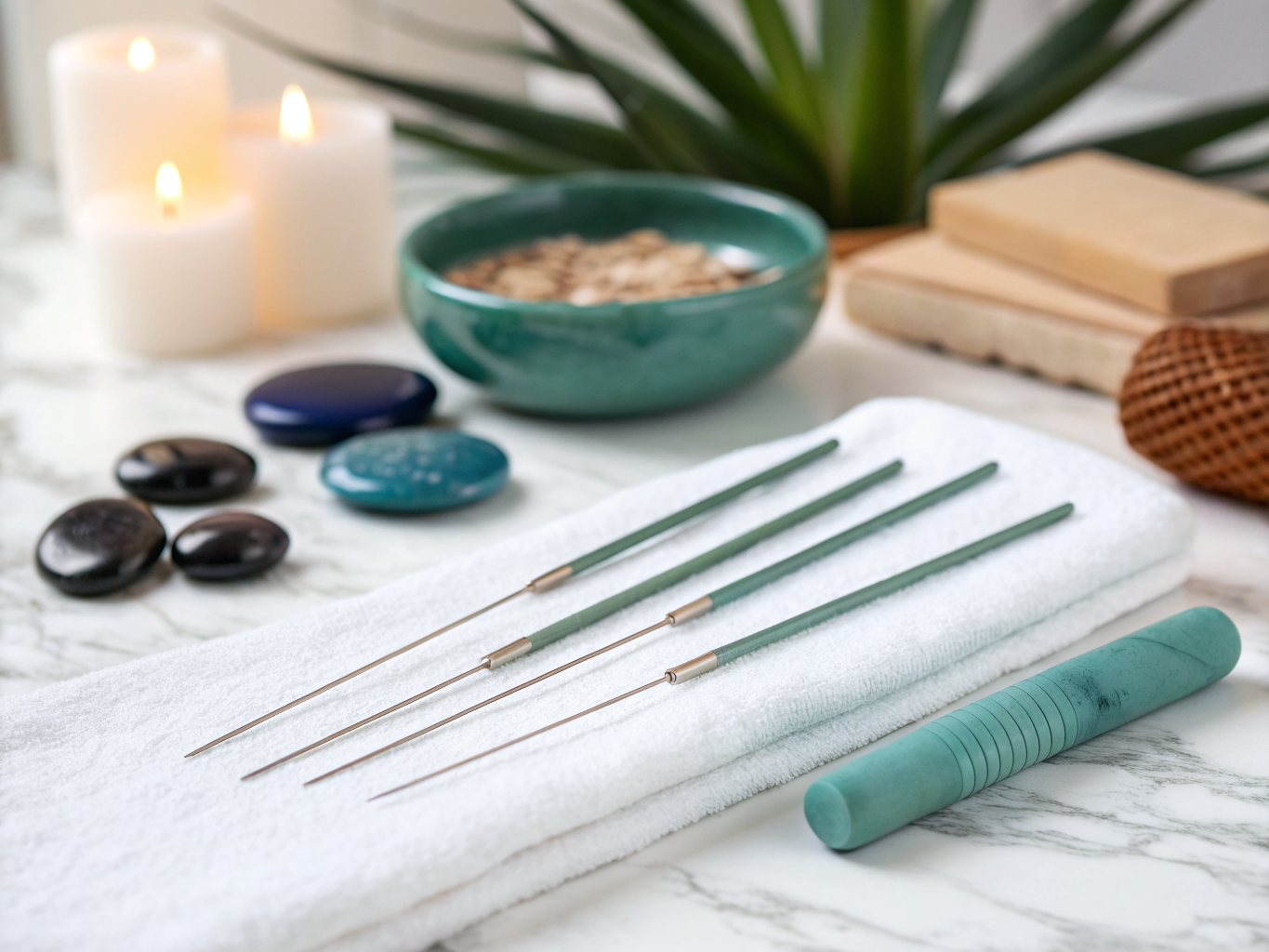
Acupuncture etiquette refers to the set of behaviors and preparation habits that help patients get the most out of each session. It covers everything from what you eat the morning of your appointment to how you communicate with your practitioner during treatment. Many patients underestimate how much these small choices can affect their results.
The benefits of acupuncture are well-documented. Research has shown it may support pain relief, stress reduction, improved sleep, and better digestive function. But those benefits are not automatic. Your preparation and behavior before, during, and after each session play a real role in how effectively your body absorbs and responds to treatment.
Think of it this way: acupuncture works with your body’s existing energy systems. When you arrive dehydrated, rushed, or having skipped a meal, your system is already under strain. That makes it harder for the needles to do their work.
Essential Acupuncture Etiquette Dos: Acupuncture and Pain Management Starts With Preparation
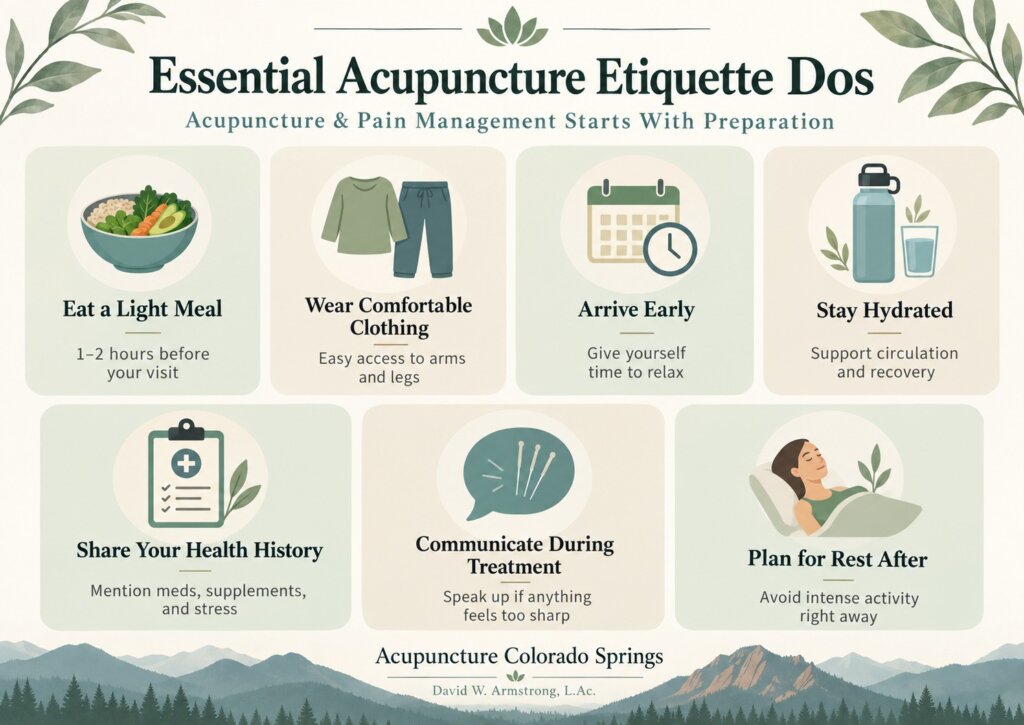
Getting the most from acupuncture and pain management care begins well before you lie down on the treatment table. The way you prepare your body and mind in the hours leading up to your appointment shapes how receptive your system will be to the work being done. These are the key things you should do.
1. Eat a Light Meal Beforehand
Have a small, balanced meal one to two hours before your session. Arriving on an empty stomach can cause lightheadedness or nausea when acupuncture needles stimulate your body’s energy pathways.
2. Wear Loose, Comfortable Clothing
Opt for clothing that can be rolled up easily at the knees, elbows, and wrists. Many acupuncture points are located on the lower legs, forearms, and abdomen, so your practitioner needs reasonable access without asking you to fully undress.
3. Arrive a Few Minutes Early
Give yourself at least ten to fifteen minutes before your appointment to fill out any intake paperwork and decompress from the drive over. Arriving in a calm state helps your nervous system shift out of fight-or-flight mode before treatment begins.
4. Stay Hydrated Throughout the Day
Drink water consistently in the hours before your session. Good hydration supports circulation and helps your body process the effects of needle stimulation more efficiently.
5. Be Honest About Your Health History
Tell your practitioner about any medications, supplements, recent illnesses, surgeries, or significant life stressors. Acupuncture treatment plans are personalized, and accurate information leads to better, safer care.
6. Communicate During the Session
If a needle placement feels sharp, burning, or deeply uncomfortable, say something. A mild aching or tingling sensation is normal and often a sign the point is active. But real discomfort should always be addressed immediately.
7. Plan for Rest After Your Appointment
Avoid scheduling strenuous workouts, high-stress meetings, or emotionally demanding tasks right after your session. Your body needs time to integrate the treatment, and rest is part of that process.
At Acupuncture Colorado Springs, our intake process is designed to make this preparation easy. David W. Armstrong, L.Ac. takes time at the start of every appointment to review your health history and current concerns, so nothing important gets missed before a single needle is placed.
Critical Acupuncture Etiquette Don’ts: What Undermines Acupuncture Benefits
Just as important as what you do is what you avoid. Certain habits and behaviors can interfere with the body’s response to treatment, reduce the effectiveness of each session, or even increase the risk of side effects. Here are the don’ts that every patient should know.
1. Do Not Consume Alcohol Before or After
Alcohol affects your circulation and your nervous system. Drinking before a session can make you feel dizzy or overly sensitive to needle stimulation, while drinking after can interfere with the body’s recovery process.
2. Do Not Drink Excessive Caffeine Beforehand
A strong cup of coffee right before your appointment can leave your nervous system overstimulated. That makes it harder to relax on the table and may reduce how well your body responds to treatment.
3. Do Not Arrive in a Rush
Stress hormones like cortisol actively work against the calming, restorative effects of acupuncture. If you sprint in two minutes late and jump straight onto the table, your body may spend half the session just settling down.
4. Do Not Wear Strong Fragrances
Many acupuncture clinics are scent-sensitive spaces. Strong perfumes or colognes can be disruptive to other patients and, in some cases, may cause sensitivities that affect the treatment environment.
5. Do Not Skip Follow-Up Appointments
Acupuncture is rarely a one-session fix. Most conditions, whether chronic pain, anxiety, or hormonal imbalance, require a series of treatments to produce lasting results. Dropping out after one or two sessions often means the root issue goes unresolved.
6. Do Not Self-Diagnose or Self-Prescribe
You might be wondering whether you can just look up acupuncture points online and try to address your own symptoms between visits. That approach is not recommended. Acupuncture point selection is based on a detailed diagnosis that considers your entire pattern of health, not just one symptom in isolation.
7. Do Not Ignore Post-Treatment Sensations
Some patients feel a little tired, emotionally tender, or mildly sore in the hours after a session. That is often a normal part of the healing response. What you should not do is ignore anything that feels unusual or persists beyond a day or two without telling your practitioner.
Acupuncture Etiquette Around Acupuncture Needles: What to Expect During Your Session
One of the most common sources of anxiety for new patients is the needles themselves. Understanding what to expect when acupuncture needles are placed can help you relax into the process rather than brace against it. The needles used in professional acupuncture are nothing like the hypodermic needles used for injections or blood draws.
Acupuncture needles are extremely fine, roughly the width of a human hair. Most patients describe the sensation as a mild pressure, a dull ache, or a gentle warmth at the insertion site. That sensation, known in Traditional Chinese Medicine as “de qi,” is actually a positive sign that the point has been activated.
At our clinic, we use only FDA-approved, single-use sterile needles. Every session follows strict Clean Needle Technique protocols in compliance with Colorado state licensing requirements. You will never encounter a reused needle at Acupuncture Colorado Springs, and David W. Armstrong, L.Ac. is nationally board-certified through the NCCAOM in both acupuncture and Chinese herbal medicine.
During the session itself, your role is simple: breathe, stay still, and let your body relax. Fidgeting or tensing your muscles around a needle can cause unnecessary discomfort. If you feel anxious, tell your practitioner. Adjustments can almost always be made.
How Acupuncture Etiquette Supports Long-Term Acupuncture and Pain Management Goals
Proper etiquette is not just about being polite in the treatment room. It is a direct investment in your own healing. Patients who follow preparation guidelines consistently tend to report stronger results and shorter recovery timelines, particularly when managing chronic conditions like lower back pain, arthritis, or tension headaches.
Here in Colorado Springs, many of our patients live active, high-altitude lifestyles that put real demands on their bodies. The dry climate, elevation, and physical activity common to this region can intensify musculoskeletal stress and dehydration, both of which affect how the body responds to treatment. Showing up prepared makes a measurable difference.
If you are managing a chronic condition or working through a complex health concern, you might also benefit from our custom Chinese herbal medicine formulas. These are prescribed individually based on your diagnosis and are designed to support your acupuncture treatment between sessions. Herbal therapy and acupuncture work together as part of a whole-system approach, not as separate add-ons.
You might be wondering how many sessions it typically takes to see results. That depends on the condition, its duration, and how consistently you attend. Acute issues may resolve in a few sessions. Chronic patterns often require a longer commitment. Your care plan at our clinic is always built around your specific situation, not a generic protocol.
Acupuncture Etiquette for Specialty Acupuncture Benefits: Cupping, Gua Sha, and Herbal Add-Ons
Many patients at our clinic receive more than just needle-based treatment. Specialty therapies like cupping, Gua Sha, and craniosacral therapy each come with their own preparation considerations worth knowing. Understanding the etiquette around these treatments helps you get the most from each one.
For cupping therapy, avoid applying heavy lotions or oils to your skin on the day of treatment. The suction cups need clean, dry skin to create an effective seal. You should also know that cupping may leave temporary circular marks on the skin, which are not bruises but rather a sign of increased circulation in that area. They typically fade within a few days.
For Gua Sha, similar skin preparation applies. The scraping technique used in this therapy works along the surface of the skin to release tension and promote blood flow. Wearing loose clothing that allows access to the upper back and neck is especially helpful when Gua Sha is part of your session plan.
If herbal medicine has been recommended as part of your care, take your formulas consistently and at the times your practitioner specifies. Skipping doses or taking herbs irregularly reduces their effectiveness. And always let David Armstrong know if you notice any unexpected reactions, even mild ones, so adjustments can be made promptly.
Wrapping Up Your Understanding of Acupuncture Etiquette and Acupuncture Benefits
Good acupuncture etiquette is one of the simplest ways to protect your investment in your own health. When you arrive prepared, communicate openly, and follow post-session care guidelines, you give your body the conditions it needs to respond fully to treatment. If you are ready to experience personalized, root-focused acupuncture care in Colorado Springs, we invite you to book a consultation with Acupuncture Colorado Springs at 2525 W Pikes Peak Ave, Suite B, Colorado Springs, CO 80904, where David W. Armstrong, L.Ac. and our team are ready to guide your healing journey with precision and care.
Acupuncture Colorado Springs offers board-certified personalized acupuncture care to guide you confidently through every session. David W. Armstrong, L.Ac. ensures your experience is safe, comfortable, and effective. Get started today by booking your first appointment.
FAQs
What Should You Not Do Before Acupuncture?
Avoid arriving on an empty stomach, drinking alcohol, or doing an intense workout right beforehand. Try not to come in overly rushed—give yourself a few minutes to settle so your treatment can be as effective and comfortable as possible.
What Should I Wear to an Acupuncture Appointment?
Wear loose, comfortable clothing that allows easy access to your lower arms, legs, and abdomen (common acupuncture areas). If needed, we can also have you change or adjust clothing to maintain comfort and privacy.
Do You Talk During Acupuncture?
You can, but most patients relax quietly once needles are placed. We’ll ask questions at the start to tailor your treatment, then you’re welcome to rest, meditate, or speak up anytime if something feels uncomfortable.
Should You Tip Your Acupuncturist?
Tipping isn’t expected in a clinical setting. The best “thank you” is returning for follow-up care if helpful and sharing your experience with others or leaving a review.
What Should You Do After Acupuncture?
Drink water, eat a balanced meal if you’re hungry, and take it easy for the rest of the day—especially after your first visit. Pay attention to changes in pain, sleep, digestion, or stress levels, and share those updates at your next appointment so we can refine your care plan.